FMC-Licensed Ocean Transportation Intermediary Air · Ocean · Truck · Rail — Worldwide
0%

Global buying depends on more than finding a competitive supplier. It requires dependable Commercial Freight Forwarding from the factory door to the final warehouse. A delayed container can disrupt promotions, production schedules, and customer promises. One missing document can create expensive questions at the port.

These seven tips reflect practical freight experience and proven shipping controls. They cover forwarder selection, accurate cargo details, suitable Incoterms, and realistic transit planning. They also address insurance, document checks, shipment tracking, and communication during disruptions. Ask for clear quotations. Check every surcharge. Confirm whether the quoted service includes pickup, customs coordination, handling, and delivery. Small details matter.

Use measurable information when comparing providers. Review their trade lanes, carrier relationships, service records, and escalation procedures. A strong forwarder should explain risks in plain language. They should also identify responsibilities before booking. For example, confirm who prepares the commercial invoice and who verifies the packing list. Keep product descriptions, quantities, weights, dimensions, and origin details consistent. Errors often begin with rushed data entry.

No checklist is flawless. Experienced buyers still overlook a carton dimension or assume a transit date is guaranteed. Build time for inspections, weather, congestion, and carrier changes. Maintain written approvals and save shipment records. Reliable freight management is not about promising perfect movement. It is about preparing carefully, communicating early, and correcting problems before they become costly. These practical guidelines can help global buyers make safer, more informed shipping decisions.
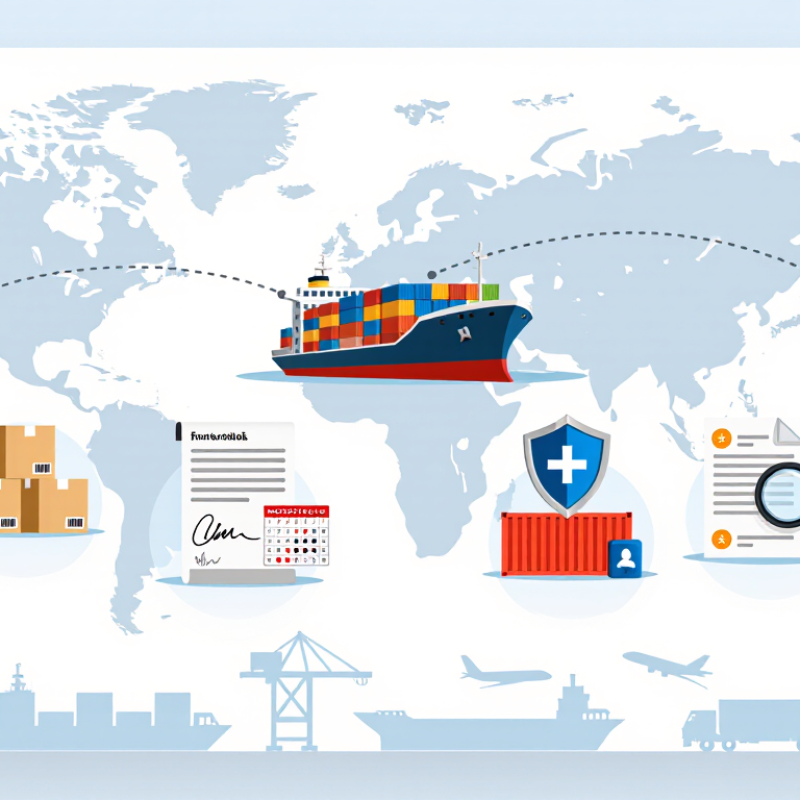
7 Commercial Freight Forwarding Tips for Global Buyers

Understanding Commercial Freight Forwarding for Global Buyers

7 Commercial Freight Forwarding Tips for Global Buyers

Understanding Commercial Freight Forwarding for Global Buyers

Commercial freight forwarding connects suppliers, carriers, customs teams, and buyers across borders. A reliable process begins with accurate product details, including dimensions, weight, materials, and intended use. Small errors can trigger storage fees or delayed loading. Measure twice.

Choose a forwarder with proven experience in your trade routes and product category. Ask how they handle port congestion, damaged cartons, and changing documentation requirements. Their answers reveal practical knowledge better than polished sales language. Request recent performance data when possible.

Compare transport modes before booking. Air freight may protect urgent delivery schedules, while ocean freight often suits heavier shipments. Confirm the full landed cost, including handling, insurance, duties, and destination fees. Review the commercial invoice and packing list carefully. Keep copies. Use clear carton labels and consistent reference numbers. Track milestone updates, not just the final arrival date. Build a small time buffer; real shipments rarely follow perfect plans.

I have seen a one-day document mismatch create a week-long delay.

Check that cargo descriptions and classifications are accurate and lawful in every destination. Work with qualified customs professionals when rules seem unclear. Do not rely on assumptions about restricted materials or import permissions. Also confirm insurance coverage, claim procedures, and who carries risk at each handover. A written escalation plan helps when weather, strikes, or missing paperwork disrupt the route. Even experienced buyers can overlook destination charges. Review them again before approving the shipment.

Evaluating Freight Forwarders and Comparing Service Options

7 Commercial Freight Forwarding Tips for Global Buyers

Evaluating a freight forwarder starts with your exact trade lane, not a generic sales pitch. UNCTAD reports that maritime transport carries over 80% of global merchandise trade by volume. Ask for lane-specific sailing frequency, transit-time history, and recent on-time performance. A forwarder should explain port congestion, transshipment risks, and realistic buffer days. Promises matter less than evidence.

Compare complete landed costs. Request separate figures for freight, fuel adjustments, documentation, customs handling, storage, demurrage, and destination delivery. The cheapest quotation may hide important charges. It happens often. The World Bank’s 2023 Logistics Performance Index evaluates 139 economies across customs, infrastructure, international shipments, logistics competence, tracking, and timeliness. Use these categories to question a provider’s local capabilities. Do not rely on one national score, though. Your actual route may perform differently.

Test visibility before signing a long contract. Ask to see a sample shipment dashboard, milestone alerts, and escalation procedures. Confirm who responds when cargo misses a connection at 11 p.m. Request two or three recent customer references in your product category. A small pilot shipment can reveal document errors, slow replies, or weak destination support. My evaluation would still be imperfect, because seasonal capacity changes quickly. That is why service data should be reviewed quarterly, not accepted once.

7 Commercial Freight Forwarding Tips for Global Buyers

Evaluating freight forwarders requires comparing transit time, customs capability, shipment visibility, cargo protection, consolidation options, pricing transparency, and contingency support.

Typical international transit-time ranges by service option, shown in calendar days. Actual performance depends on route, season, customs clearance, and carrier schedules.

  1. Compare total landed cost, not only the quoted freight rate.
  2. Check whether customs clearance is handled in both origin and destination countries.
  3. Review shipment tracking quality and the frequency of delivery updates.
  4. Confirm cargo insurance coverage, exclusions, and claims procedures.
  5. Evaluate consolidation services for smaller or irregular shipments.
  6. Ask for documented performance on transit times and schedule reliability.
  7. Verify contingency plans for port congestion, delays, and route disruptions.

Selecting the Right Shipping Method, Route, and Trade Terms

7 Commercial Freight Forwarding Tips for Global Buyers

Selecting the right shipping method starts with cargo facts, not habit. Air freight suits urgent, compact goods with high unit value. Ocean freight usually fits heavier shipments and predictable replenishment. Rail or multimodal transport can balance speed, cost, and inland access. Check weight, volume, delivery deadline, product sensitivity, and handling needs before requesting quotes. Small mistakes here become expensive later.

Route planning needs more than a map. Compare port congestion, seasonal weather, border procedures, transshipment points, and final-mile capacity. A shorter route may still arrive later. Ask the forwarder for recent performance data, not only estimated transit time. Request alternatives for peak seasons. Build a realistic buffer.

Trade terms must match your actual control and experience. Under an appropriate Incoterm, clarify who pays freight, insurance, duties, unloading, and customs-related charges. Confirm the named place precisely. “Delivered” is not precise enough. Obtain a landed-cost sheet before signing. Review commercial invoices, packing lists, cargo descriptions, and shipping instructions together. One inconsistent detail can delay clearance. Cargo insurance may be sensible when replacement costs exceed the premium.

Keep written records. Require milestone updates for booking, departure, arrival, and delivery. Check whether quoted surcharges can change. I once treated a low freight quote as the best option, then overlooked destination handling fees. That decision looked efficient on paper. It was not. Recheck assumptions with an independent logistics professional when the route, value, or trade term feels unfamiliar.

Preparing Documents, Packaging, and Customs Compliance

7 Commercial Freight Forwarding Tips for Global Buyers

Accurate documents prevent more delays than faster booking. Prepare the commercial invoice, packing list, bill of lading, and origin certificate together. Match product descriptions, quantities, weights, and tariff codes across every file. Customs officers notice small inconsistencies, especially different carton counts. The World Trade Organization estimates that fully implementing its Trade Facilitation Agreement could reduce global trade costs by 14.3%. That makes careful paperwork a measurable business advantage.

Packaging must survive handling, moisture, stacking, and repeated inspections. Use strong outer cartons, internal cushioning, and visible handling marks. Record each carton’s dimensions and gross weight before pickup. A pallet label should match the packing list exactly. UNCTAD reports that more than 80% of international merchandise trade by volume moves by sea. Ocean freight may face weeks of vibration and humidity. Test weak packaging before shipping. It is cheaper.

Customs compliance needs ownership, not assumptions. Check import permits, labeling rules, valuation methods, and country-specific restrictions before production. The World Bank’s 2023 Logistics Performance Index highlights customs efficiency as a major factor in supply-chain reliability. Keep product specifications, supplier invoices, and classification notes in one accessible folder. Electronic copies help, but local rules may still require originals. I have seen teams trust an old tariff code for too long. That mistake deserves review. A forwarder can advise, but the buyer remains responsible for accurate information.

Managing Costs, Tracking Shipments, and Reducing Delivery Risks

7 Commercial Freight Forwarding Tips for Global Buyers

Tip 1: Compare total landed cost, not only the quoted freight rate. Include handling, storage, documentation, insurance, and possible inspection fees. Tip 2: Request a written rate validity period. Ocean and air charges can change quickly. Tip 3: Consolidate compatible shipments when timing allows. A fuller container may reduce the cost per unit, but delays can erase that saving.

Tip 4: Ask for milestone tracking, including booking confirmation, cargo receipt, departure, arrival, and customs release. A useful tracking system should show timestamps and responsible contacts. Tip 5: Check the forwarder’s experience with your cargo type and destination. Ask for examples of past delivery problems and how they were handled. Tip 6: Build a realistic buffer into your delivery schedule. Weather, port congestion, and document corrections are common. Tight schedules are risky.

Tip 7: Review shipping documents before cargo pickup. Small errors in quantities, addresses, or product descriptions can cause expensive delays. Keep commercial invoices, packing lists, and transport records consistent. I once treated a three-day buffer as generous; it was not. That assumption exposed a weakness in my planning. Use written escalation steps, confirm insurance limits, and keep a backup delivery option. A cheaper quote is not always the safer purchase.

7 Commercial Freight Forwarding Tips for Global Buyers - Managing Costs, Tracking Shipments, and Reducing Delivery Risks

Tip Management Dimension Recommended Practice Typical Planning Data Main Cost or Risk Impact Buyer KPI
1 Select the right transport mode Compare total landed cost and required delivery time before choosing ocean, air, rail, or multimodal transport. Ocean freight is generally suitable for non-urgent cargo; air freight is usually faster but has a higher cost per kilogram. Avoids paying premium air rates for cargo that can tolerate longer transit times. Freight cost per kg; transit time; on-time delivery rate
2 Consolidate compatible shipments Combine smaller orders into one shipment when product characteristics, destinations, and delivery windows are compatible. Less-than-container-load shipments can be consolidated into full-container-load planning when volume and timing allow. Reduces repeated origin handling, documentation, and minimum shipment charges. Container utilization; average shipment size; handling cost per order
3 Compare landed cost, not only freight rates Include freight, insurance, duties, taxes, customs fees, inland transport, storage, handling, and possible demurrage in every quotation comparison. A low line-haul rate can be offset by destination charges, customs delays, storage, or emergency trucking. Improves quote accuracy and prevents unexpected post-arrival charges. Total landed cost per unit; variance from quoted cost; accessorial charges
4 Use milestone-based shipment tracking Track booking confirmation, cargo pickup, departure, transshipment, arrival, customs release, and final delivery. Set exception alerts for missed milestones, schedule changes, customs holds, and estimated arrival changes. Provides earlier warning so buyers can adjust production, inventory, or customer commitments. Tracking event completeness; alert response time; ETA accuracy
5 Prepare customs documentation early Verify commercial invoices, packing lists, transport documents, product descriptions, tariff classifications, and origin information before dispatch. Documentation errors commonly create customs queries, inspections, clearance delays, or additional administrative work. Reduces the likelihood of clearance delays, storage fees, and shipment rework. First-pass document accuracy; customs clearance time; number of corrections
6 Build a delivery-risk contingency plan Define alternate routes, backup transport modes, substitute gateways, safety-stock thresholds, and escalation contacts before disruption occurs. Common disruption triggers include port congestion, severe weather, labor interruptions, equipment shortages, and customs holds. Limits production stoppages and reduces the cost of last-minute recovery decisions. Recovery lead time; contingency coverage; days of supply at risk
7 Measure forwarder performance regularly Review cost, reliability, communication quality, claims handling, document accuracy, and delivery performance by lane and transport mode. Use monthly or quarterly scorecards with agreed service-level targets and corrective-action reviews. Turns shipment history into measurable improvements in cost control and service reliability. On-time-in-full rate; claim ratio; quote-to-invoice variance; response time

Planning note: Actual transit times, charges, customs requirements, and service performance vary by trade lane, cargo type, season, routing, and prevailing market conditions. Validate all figures and requirements before booking.

FAQS

What information should buyers provide before booking freight?

Provide product dimensions, weight, materials, quantity, and intended use. Use consistent product descriptions. Small errors can cause storage fees or delayed loading. Measure twice.

How should buyers evaluate a freight forwarder?

Ask about your exact route and product category. Request sailing frequency, transit history, and recent on-time performance. Ask how they manage congestion, damaged cartons, and document changes. Evidence beats polished promises.

How can buyers compare shipping quotations fairly?

Compare the complete landed cost, not only the freight rate. Include handling, documentation, insurance, duties, storage, and destination delivery. The cheapest quote may hide charges. It happens.

Should buyers choose air or ocean freight?

Air freight may suit urgent, lighter shipments. Ocean freight often suits heavier cargo and longer planning windows. Compare timing, capacity, risk, and total cost before booking. Cheap can become expensive.

What shipment milestones should buyers track?

Track booking confirmation, cargo receipt, departure, arrival, and customs release. Useful updates show timestamps and responsible contacts. Do not watch only the final arrival date. Plans slip.

How can buyers reduce document-related delays?

Review invoices, packing lists, addresses, quantities, and cargo descriptions before pickup. Keep every document consistent. Clear carton labels and matching reference numbers help prevent confusion.

What should buyers know about delivery delays?

Build extra time into the schedule for weather, congestion, and document corrections. A three-day buffer may feel generous. I once thought so, but it was not. Tight schedules need backup options.

How should buyers manage insurance and shipment problems?

Confirm coverage limits, claim procedures, and risk at each handover. Prepare written escalation steps before cargo moves. Name a contact for missed connections or missing paperwork. Hope is not a plan.

Conclusion

Commercial Freight Forwarding plays a vital role in helping global buyers move goods efficiently across international borders. This guide explains how to assess freight forwarders by comparing their experience, communication, network coverage, pricing, and service flexibility. It also explores how to choose suitable shipping methods, routes, and trade terms based on cargo type, delivery schedules, budget, and risk tolerance.

Successful international shipping requires accurate documentation, protective packaging, and careful attention to customs requirements in both exporting and importing countries. Buyers should also understand the full cost structure, including freight charges, insurance, duties, handling fees, and possible storage costs. By using shipment tracking, confirming responsibilities in advance, and preparing contingency plans for delays or disruptions, businesses can improve visibility, control expenses, and reduce delivery risks. These practical tips support more reliable and cost-effective global purchasing decisions.

Oliver

Oliver

Oliver is a highly experienced marketing professional dedicated to helping businesses understand how thoughtful strategy, reliable products, and consistent communication can create lasting value. With a strong knowledge of the company’s solutions, he translates complex product features into clear,......