Dangerous Goods Logistics demands more than moving a package from one facility to another. A sealed drum, a labeled carton, or a temperature-sensitive shipment may each require careful classification, suitable packaging, accurate documents, and trained handling. Small details matter. A faded label or unclear handoff can create delays and safety risks. As a guiding principle, IATA cargo safety specialist David Brennan’s work can be summed up this way: “Every handoff must preserve the shipment’s safety information.” This is an editorial paraphrase, not a verified direct quotation.
The seven providers in this overview are considered for their dangerous-goods expertise, service coverage, operational controls, and support for compliant shipping. Capabilities vary by transport mode, cargo type, destination, and customer needs, so no single provider is the right fit for every shipment. Look beyond a polished website. Ask how staff are trained, how shipment records are checked, and what happens when a consignment is delayed or refused. Those questions can reveal weaknesses that a sales presentation may not show. Provider claims should also be checked against current service details and applicable requirements. Good logistics is careful work. It is not infallible, and that deserves reflection. A reliable partner should explain its limits clearly, communicate changes promptly, and treat safety as an everyday operating discipline.
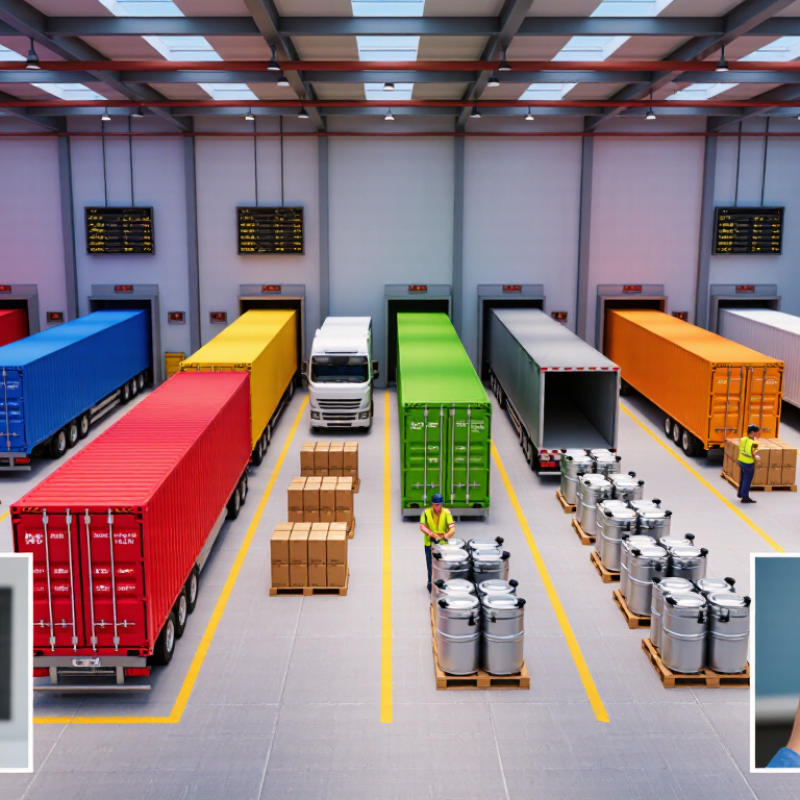
How the UN’s 9 Hazard Classes Define Dangerous Goods Logistics
The UN’s nine hazard classes give dangerous goods logistics a shared starting point. They identify a substance’s primary risk, but they do not replace shipment-specific checks. Class 1 covers explosives, Class 2 gases, and Class 3 flammable liquids. Classes 4 and 5 address flammable solids, oxidizing substances, and organic peroxides. Classes 6 through 9 cover toxic or infectious substances, radioactive material, corrosives, and miscellaneous dangerous goods.
Classification shapes practical decisions at each handoff. A leaking container of corrosive liquid calls for different safeguards than a cylinder of compressed gas. Staff check the shipping description, hazard labels, package condition, and required transport documents. Small details count. A smudged label or a mismatch between paperwork and package markings can delay a transfer or create confusion during an emergency. Class numbers alone are not enough; divisions, packing groups, and mode-specific rules may also apply.
Reliable providers build checks into routine work, from warehouse acceptance to vehicle loading and carrier handover. They train staff to recognize damaged packaging and keep incompatible goods appropriately separated under applicable requirements. Conditions can change between booking and dispatch, so a careful team verifies current documentation rather than relying on memory. Even experienced operators can miss a detail. That is why clear escalation procedures and qualified compliance review matter. The UN framework supports consistent communication, while the actual shipment still needs a careful, current assessment.
7 Best Dangerous Goods Logistics Providers Worldwide - How the UN’s 9 Hazard Classes Define Dangerous Goods Logistics
The profiles below describe provider capabilities, not named companies or a verified ranking. Actual acceptance depends on the carrier, route, equipment, applicable regulations, and the provider’s current authorizations. The UN classes are used across international dangerous-goods frameworks; detailed requirements vary by transport mode and jurisdiction.
| Provider capability profile | Typical transport strengths | Relevant UN classes | Key logistics controls | Best-fit shipment needs |
|---|---|---|---|---|
| Air dangerous-goods specialist | Air cargo coordination and time-sensitive international shipments, subject to airline acceptance. | Potentially Classes 2–9; Class 1 only where permitted and accepted. Acceptance is shipment- and route-specific. | Air-specific classification, packing, marking, labeling, documentation, and quantity limits under applicable rules, including ICAO Technical Instructions and carrier requirements. | Urgent, high-value, or smaller consignments requiring air transport and careful pre-booking checks. |
| Ocean freight dangerous-goods forwarder | Containerized and less-than-container-load sea freight, with coordination among shippers, terminals, and carriers. | Potentially Classes 1–9, subject to the IMDG Code, vessel, route, port, and carrier restrictions. | IMDG-compliant shipping documentation, package and container requirements, segregation, stowage, and dangerous-goods declarations. | International cargo with longer transit times, container-level planning, or ocean-specific segregation needs. |
| Road and cross-border hazmat carrier | Domestic and regional trucking, including controlled cross-border movements where authorized. | Potentially Classes 1–9, depending on national rules, permits, vehicle suitability, and the carrier’s scope. | Road-specific packaging, vehicle placarding, driver training, route or tunnel restrictions, and emergency information; ADR applies in its participating jurisdictions. | Regional distribution, controlled deliveries, and first- or last-mile transport of regulated goods. |
| Rail dangerous-goods operator or specialist | Rail-based domestic or international movements, including suitable bulk and intermodal traffic. | Potentially Classes 1–9, subject to applicable rail rules, infrastructure, equipment, and operator acceptance. | Rail-specific classification and documentation, compatible wagons or containers, routing constraints, and required handling procedures; RID applies in its participating jurisdictions. | Longer-distance inland freight where rail infrastructure and compatible handling facilities are available. |
| Chemical and bulk-liquid logistics provider | Tank-container, road-tanker, or other purpose-designed bulk movements, depending on the service network. | Often relevant to Classes 3, 5, 6, 8, and 9; other classes require cargo- and equipment-specific review. | Chemical compatibility, tank specification and inspection, temperature or pressure controls where required, cleaning records, and contamination prevention. | Industrial chemicals and other compatible liquids shipped in bulk rather than standard packages. |
| Specialist for explosives, gases, or radioactive materials | Restricted or specially controlled movements using appropriately qualified personnel and approved arrangements. | Class 1 explosives; Class 2 gases; or Class 7 radioactive material, within the specialist’s authorized scope. | Class-specific approvals, security or radiation-safety controls where applicable, qualified staff, approved packages, and advance carrier and authority coordination. | Cargo requiring specialist permissions, controlled access, or dedicated compliance expertise. |
| Dangerous-goods warehousing and fulfillment provider | Storage, inventory handling, order preparation, and dispatch coordination; transport may be arranged separately. | Class coverage depends on the facility’s permits, storage design, and operational procedures; no class should be assumed accepted. | Local fire and storage rules, compatible segregation, access controls, inventory visibility, spill or incident procedures, and compliant outbound preparation. | Businesses needing compliant storage and order handling before goods enter a regulated transport network. |
UN dangerous goods classes: quick reference
| UN class | Hazard category | Common subdivisions or notes |
|---|---|---|
| Class 1 | Explosives | Divisions 1.1–1.6 identify different explosive hazards. |
| Class 2 | Gases | Division 2.1 flammable; 2.2 non-flammable, non-toxic; 2.3 toxic. |
| Class 3 | Flammable liquids | Includes liquids meeting the applicable flammability criteria. |
| Class 4 | Flammable solids and related substances | Division 4.1 flammable solids; 4.2 substances liable to spontaneous combustion; 4.3 substances that emit flammable gas on contact with water. |
| Class 5 | Oxidizing substances and organic peroxides | Division 5.1 oxidizing substances; 5.2 organic peroxides. |
| Class 6 | Toxic and infectious substances | Division 6.1 toxic substances; 6.2 infectious substances. |
| Class 7 | Radioactive material | Package, activity, transport-index, and handling requirements depend on the material and shipment. |
| Class 8 | Corrosive substances | Substances that can cause damage to living tissue or other regulated materials. |
| Class 9 | Miscellaneous dangerous substances and articles | Includes various transport hazards not covered by Classes 1–8; lithium batteries may be regulated in this class. |
Important: This comparison is a general guide, not a determination that a particular shipment is regulated or accepted. Classification, packaging, documentation, and carrier acceptance must be checked against the current rules for the specific substance, transport mode, route, and jurisdiction.
FAQS
They group dangerous goods by their primary transport risk. The classes guide communication, but do not replace shipment-specific checks.
Check the shipping description, hazard labels, package condition, and transport documents. Details matter. A smudged label can slow a handover.
Packing Groups I, II, and III indicate high, medium, and lower danger for many goods. They help set packaging performance requirements.
No. Classes 1, 2, 5.2, 6.2, and 7 generally have no packing-group assignment. They may still need specific packaging, marks, documents, or handling.
It can help, but it should not replace a proper review. Check the applicable transport rules and the substance’s classification.
Match the proper shipping name, identification number, and classification. A label alone is not enough; a mismatch can hold up a prepared pallet.
Air can suit time-sensitive cargo, while ocean freight may allow longer planning windows. Road links often connect ports, airports, and inland facilities. Plans can shift.
Ask how it checks shipment details, tracks delays, keeps records, and handles exceptions. A wide network sounds reassuring, but communication during disruptions matters more. Not always intuitive.
Conclusion
This overview explains how Dangerous Goods Logistics organizes the safe, compliant movement of regulated materials. It introduces the United Nations’ nine hazard classes, which group shipments by the type of risk they present, and describes how four-digit UN numbers help identify materials and communicate handling requirements. It also outlines the role of packing groups in indicating degrees of danger, noting that some classes do not use this system.
The article then considers how seven global logistics providers support air, ocean, road, and multimodal transport, from documentation and packaging guidance to coordination across transport modes. It offers a practical framework for comparing providers’ capabilities under IATA, IMDG, and ADR requirements, including staff expertise, route coverage, shipment visibility, and consistency of compliance processes. The goal is to help readers assess lawful, safety-focused logistics support for their shipping needs.