China’s oversized freight transportation sector supports power projects, factory relocations, bridge construction, and large-scale infrastructure development. Choosing among China’s top companies requires more than comparing fleet size or advertised prices. The strongest providers combine engineering knowledge, experienced drivers, route survey teams, and reliable project coordination. They understand how a 120-ton transformer moves through narrow industrial roads, low bridges, crowded ports, and changing weather conditions.
Planning matters greatly. A qualified company should assess dimensions, axle loads, lifting points, road strength, permits, escorts, and emergency procedures before departure. Modern operators may use modular trailers, hydraulic axle lines, GPS tracking, and digital reporting. These tools improve control, but technology cannot replace field experience. A route may look suitable on a map and fail beside a market, railway crossing, or sharp hillside turn. Details decide success.
This guide examines China-based oversized freight transportation companies through practical and verifiable criteria. These include safety performance, equipment capability, project references, insurance coverage, communication quality, and delivery transparency. Public certifications and customer evidence also deserve careful review. Marketing claims are not enough. No ranking is permanent, because performance depends on cargo type, destination, season, and project complexity. Some comparisons remain difficult when companies disclose limited operational data. That limitation should be acknowledged, not hidden. Readers can use this overview to identify dependable partners for lawful, properly documented cargo movements and to ask better questions before signing a contract. Small checks prevent expensive surprises.
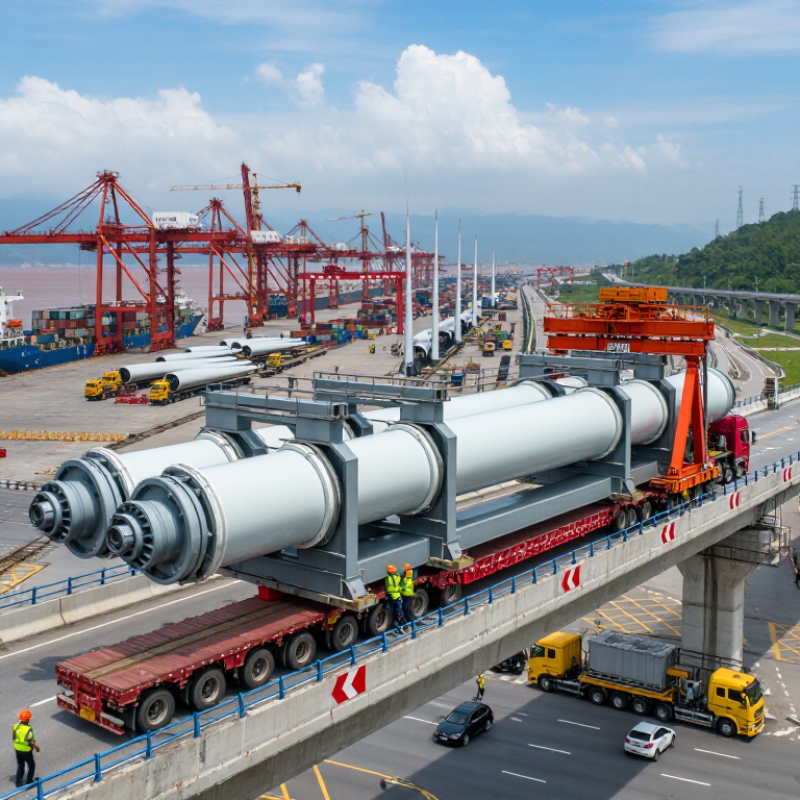
China’s oversized freight transportation sector covers cargo that exceeds standard road limits in length, width, height, or weight. Typical shipments include transformers, wind-turbine components, bridge sections, and industrial machinery. The service involves route surveys, vehicle selection, permit coordination, escort planning, lifting, temporary road reinforcement, and delivery-site positioning.
The scale is significant, although official statistics rarely separate oversized freight from ordinary cargo. China’s Ministry of Transport reported about 40.3 billion tonnes of road freight in 2023. The China Federation of Logistics and Purchasing reported total social logistics value of approximately RMB 352.4 trillion that year. These figures show the market environment, not the exact oversized segment. That distinction matters.
In practice, a shipment may require centimeter-level clearance checks near bridges, toll stations, and urban intersections. Weight distribution can matter more than total weight. Axle loads, turning radius, pavement strength, and overhead cables often determine feasibility. Experienced planners use digital mapping, site measurements, and pilot checks before dispatch. The boundary is not perfectly uniform across projects, because cargo dimensions, vehicle design, and local road controls can differ. Public data also remains incomplete. A more reliable industry benchmark should separate project cargo, heavy-haul movements, and ordinary abnormal-load services.
China’s leading oversized freight transportation companies handle cargo that standard trucks cannot safely move. Their services often begin with route surveys, bridge checks, clearance measurements, and road-load assessments. Engineers may inspect a transformer, turbine, or industrial vessel before preparing a transport plan. Small details matter. A few extra centimeters can change the entire route.
Permit coordination is another essential service. Experienced teams arrange approved road movements, traffic control, pilot vehicles, and local communication. They may use hydraulic modular trailers, self-propelled transporters, cranes, and temporary ramps. Multimodal planning can connect factories, ports, rail yards, and construction sites. Cargo tracking also helps clients monitor departure times, transfer points, and delivery progress.
Reliable providers document lifting methods, axle loads, weather limits, and emergency procedures. They should explain insurance coverage and provide trained supervisors at loading and unloading areas. In practice, delays still happen. A port queue, heavy rain, or an unexpected road repair can disrupt a careful schedule. Good communication reduces the damage, but no plan is perfect. Clients should review route drawings, permits, safety records, and actual project experience before choosing a transportation partner. Safety comes before speed.
China’s leading oversized freight transportation companies are distinguished by specialized capability, not fleet size alone. The strongest operators manage factory machinery, wind-turbine components, transformers, and bridge sections. They combine hydraulic modular trailers, self-propelled modular transporters, heavy-lift vessels, and roll-on/roll-off equipment. Route engineers check bridge limits, turning radii, pavement strength, and overhead clearance before movement.
The World Bank’s 2023 Logistics Performance Index assessed 139 economies through 4,090 logistics professionals. Its findings emphasize reliability, shipment tracking, and delivery predictability. These measures matter greatly for oversized cargo. A delayed permit can leave a 300-ton transformer parked beside a highway. Experienced operators therefore use digital tracking, police-coordinated escorts, lifting studies, and contingency routes. UNCTAD’s Review of Maritime Transport also highlights continuing pressure on port capacity and supply-chain resilience. That pressure makes port handling experience especially valuable. Still, no ranking is perfect. A company may excel at inland heavy haulage but lack safe coastal shipping capability.
Tips: Ask for recent case records, verified axle-load calculations, crane certificates, insurance evidence, and a written emergency plan. Check whether the quoted route includes surveys, permits, escorts, storage, and port fees. Cheap pricing can hide missing services. I would also request a trial movement for one smaller component before approving a full project. Mistakes become expensive quickly.
Oversized freight movements in China require route planning, technical documents, and approval from relevant transport authorities. Cargo dimensions, axle loads, total weight, and bridge limits must match the declared transport plan. A route survey should check tunnels, sharp turns, overhead cables, toll stations, and temporary road restrictions. Small details matter. A permit does not make a weak plan safe.
Professional operators commonly use hydraulic modular trailers, extendable low-bed trailers, and steerable axle lines. Equipment selection depends on cargo weight, length, center of gravity, and loading points. Engineers should calculate axle distribution before loading. Uneven pressure can damage pavement or destabilize the convoy. Securement systems need rated chains, binders, blocks, and protective materials. Warning boards, reflective markings, lighting, and communication devices should remain visible at night.
Safety controls extend beyond the trailer. Drivers and escort teams need clear signals, protective equipment, and emergency procedures. Brakes, tires, hydraulic lines, coupling points, and lights require documented inspections. Weather deserves attention, especially during heavy rain, strong winds, or icy conditions. In practice, schedules are often too ambitious. That sounds simple. Delays are safer than forcing a risky passage. Records, photographs, inspection forms, and route updates also support accountability when conditions change. Some procedures still rely on assumptions, and that is where better review is needed.
China Top Oversized Freight Transportation Companies?
Selecting an oversized freight company requires more than comparing rates. Check its experience with bridge clearances, axle-load planning, port handling, and night movements. The World Bank’s Logistics Performance Index 2023 gave China a score of 3.7, ranking it 19th globally. That result shows strong logistics capability, but performance still varies by corridor and city.
Request route-survey evidence, recent project references, cargo insurance details, and a written contingency plan. Ask who manages permits, lifting equipment, escorts, weather delays, and damaged-road risks. UNCTAD’s Review of Maritime Transport 2023 notes that over 80% of global merchandise trade moves by sea. Therefore, evaluate the sea leg and inland connection together. A low ocean rate may hide expensive crane transfers or storage charges. I have seen schedules look reliable until one narrow bridge changed the entire plan.
Tips: Compare at least three detailed quotations. Require itemized costs and delivery milestones. Verify equipment capacity, safety records, and subcontractor control. A professional provider should explain its assumptions clearly, not only promise speed.
Use measurable selection criteria. Score route expertise, communication, tracking quality, safety procedures, insurance, and response time. The World Bank report also measures timeliness and tracking, which deserve equal attention for oversized cargo. One weakness matters. A company may offer excellent trucks but weak port coordination. That mismatch can create costly waiting time. Review the plan with an independent engineer when dimensions, weight, or road conditions remain uncertain.
Independent evaluation framework and practical benchmark data for oversized and project freight transportation providers
| Evaluation Dimension | What to Verify | Practical Benchmark | Recommended Evidence | Weight | Score (1–5) |
|---|---|---|---|---|---|
| Oversized Cargo Capability | Maximum legal cargo dimensions, payload, axle load, and lifting requirements | The provider should demonstrate equipment and operating experience matching the cargo’s actual length, width, height, weight, and center of gravity. | Equipment list, cargo drawings, previous project records, and method statement | 15% | — |
| Fleet and Specialized Equipment | Availability of modular trailers, hydraulic axle lines, extendable trailers, self-propelled modular transporters, cranes, and escort vehicles | Equipment capacity should exceed the calculated requirement, with contingency units available for critical movements. | Current fleet register, equipment certificates, maintenance records, and availability confirmation | 12% | — |
| Route Survey and Engineering | Bridge ratings, turning radii, overhead clearances, road restrictions, gradients, toll points, and temporary works | A documented route survey should be completed before final pricing and should identify mitigation measures for every critical constraint. | Survey report, swept-path analysis, bridge-load calculations, route maps, and risk register | 12% | — |
| Permits and Regulatory Compliance | Oversize-load permits, police or traffic escorts, road authority approvals, customs documents, and local transport requirements | Responsibilities, lead times, fees, and permit validity periods should be clearly stated in the quotation and transport plan. | Sample permits, compliance checklist, authority correspondence, and permit responsibility matrix | 10% | — |
| Safety Management | Driver competence, lifting and securing procedures, journey management, incident reporting, and emergency response | A formal safety plan, toolbox-talk process, cargo-securing calculation, and emergency escalation procedure should be available. | Safety policy, training records, incident statistics, RAMS, and cargo-securing plan | 12% | — |
| Insurance and Liability | Carrier liability, cargo insurance, third-party liability, exclusions, deductibles, and claims handling | Coverage limits should be adequate for the cargo replacement value and the contractual liability exposure. | Insurance certificates, policy wording, exclusions, claims procedure, and liability terms | 8% | — |
| Geographic Coverage | Domestic road network, ports, rail interfaces, border crossings, inland terminals, and international forwarding capability | The provider should have proven control of the complete origin-to-destination route rather than only one transport leg. | Route references, partner agreements, terminal contacts, and multimodal operating plan | 8% | — |
| Project Management | Single point of contact, planning milestones, subcontractor control, communication frequency, and change management | A named project manager and a written responsibility matrix should be provided before award. | Organization chart, project schedule, communication plan, and escalation matrix | 8% | — |
| Tracking and Visibility | GPS tracking, milestone updates, geofencing, proof of delivery, photo records, and exception alerts | Critical project cargo should receive milestone reporting at loading, departure, border or port events, arrival, and delivery. | Tracking demonstration, reporting template, sample status report, and data-retention policy | 5% | — |
| Price Transparency | Transport charge, permits, escorts, loading, unloading, waiting time, tolls, fuel adjustment, taxes, and possible surcharges | A comparable quotation should separate fixed, variable, optional, and pass-through costs and state quotation validity. | Itemized quotation, assumptions, exclusions, payment terms, and variation mechanism | 5% | — |
| Schedule Reliability | Mobilization time, permit lead time, delivery window, weather contingency, and recovery plan | The schedule should include realistic buffers for approvals, traffic restrictions, inspections, and adverse weather. | Baseline schedule, critical-path analysis, contingency plan, and on-time performance records | 3% | — |
| References and Financial Stability | Comparable completed projects, customer references, operating history, and ability to support the contract financially | References should be relevant to the cargo type, route complexity, payload, and required transport mode. | Verifiable project references, trade registration, audited information where available, and customer contacts | 2% | — |
| Total Evaluation Weight | 100% | / 5 | |||
Prepare route plans, cargo measurements, axle-load calculations, and approval documents. Authorities may check weight, dimensions, bridge limits, and road restrictions.
Check tunnels, sharp turns, overhead cables, toll stations, bridges, and temporary closures. A narrow bridge can change the entire delivery plan.
Common choices include hydraulic modular trailers, extendable low-bed trailers, and steerable axle lines. Selection depends on weight, length, center of gravity, and loading points.
Engineers should calculate axle distribution before loading. Uneven pressure can damage pavement or make the convoy unstable. Small errors matter.
Use rated chains, binders, blocks, and protective materials. Warning boards, reflective markings, lights, and radios should remain visible at night.
Document checks on brakes, tires, hydraulic lines, coupling points, and lights. Keep photographs and inspection forms. Records reveal missed details later.
Heavy rain, strong winds, and icy roads may require delays. Forcing a risky passage is not professional. Delays are safer.
Compare at least three detailed quotations. Review route experience, insurance, equipment capacity, safety records, tracking, and subcontractor control.
Ask who manages permits, escorts, lifting equipment, storage, weather delays, and damaged-road risks. Some plans still rely on assumptions. Review them carefully.
A low sea rate may hide crane transfers, storage charges, or waiting time. One weak connection can disrupt the whole movement.
Oversized Freight Transportation in China covers the planning and movement of cargo that exceeds standard limits for weight, dimensions, or shape, including industrial machinery, construction equipment, energy facilities, and large structural components. Specialized companies typically provide route surveys, engineering assessments, loading and securing, escort coordination, lifting services, multimodal transport, temporary storage, and delivery-site installation support. Their capabilities may include heavy-haul trucking, modular trailers, self-propelled modular transporters, barges, and customized lifting equipment designed for complex projects.
Successful operations depend on compliance with transportation permits, road restrictions, bridge-load requirements, equipment inspections, driver qualifications, and detailed safety procedures. When selecting a suitable provider, customers should evaluate experience with comparable cargo, fleet capacity, route-planning expertise, safety records, insurance coverage, communication systems, scheduling reliability, and transparency in pricing. A qualified partner should also offer a detailed transport plan, contingency measures for weather or traffic disruptions, and clear responsibilities from pickup through final delivery.