Trade Show Logistics Management is the operational backbone of a successful exhibition. It connects planning, transportation, storage, installation, and on-site coordination. Without it, even an impressive booth can arrive late, damaged, or incomplete. A missing display panel can weaken a carefully prepared product launch.
Experienced exhibition teams know that logistics begins weeks before the event. They confirm delivery windows, review venue rules, label every crate, and assign responsibility for each shipment. They also prepare backup plans for traffic delays, damaged materials, and unexpected venue changes. Small details matter. A barcode on one case can save valuable setup time. Clear floor plans can prevent costly confusion between contractors and exhibitors.
However, logistics is not always perfectly predictable. A carrier may miss an agreed time slot. A shipment may require repacking after inspection. Teams can also overlook simple items, such as power adapters, printed instructions, or spare tools. These mistakes deserve honest review, not excuses. Careful managers record what happened and improve the process for the next show.
Effective Trade Show Logistics Management protects budgets, schedules, brand reputation, and visitor experience. It helps staff focus on demonstrations and meaningful conversations instead of searching for missing equipment. Reliable planning also supports safer handling and more responsible resource use. When every item reaches the right place at the right time, the exhibition feels effortless. That appearance is earned through disciplined work behind the scenes.
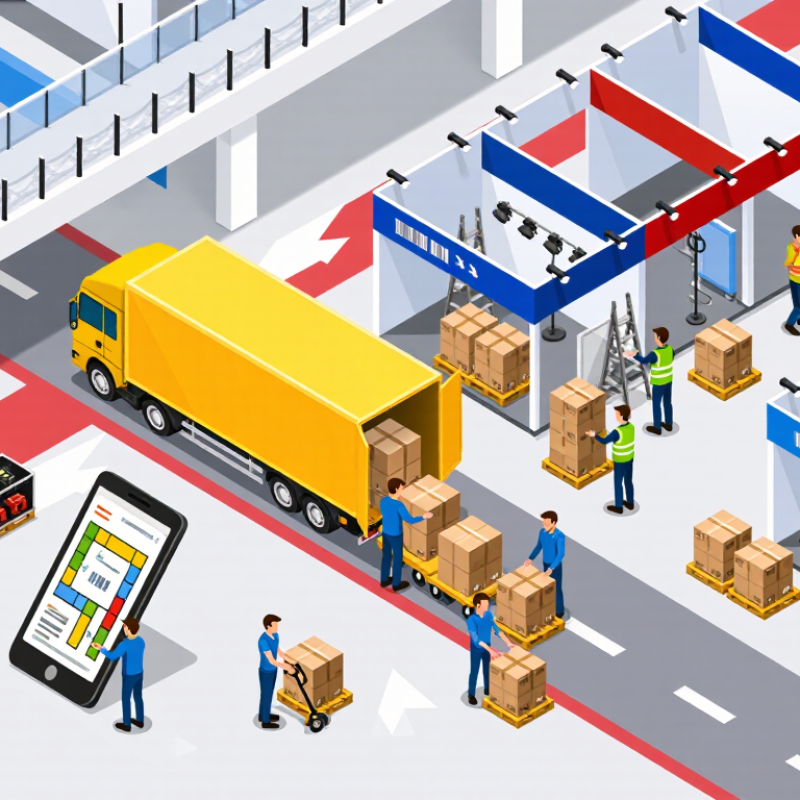
Trade show logistics management is the planning and control of every physical detail around an exhibition. It covers shipping, storage, booth materials, equipment, labor, setup, dismantling, and return transport. The work begins before the event. It may continue until the final crate reaches its destination.
A reliable logistics plan connects schedules, people, documents, and venue rules. For example, a team may track a display arriving Tuesday at 9:00 a.m., then reserve labor for unloading and assembly. Clear labels reduce confusion at crowded loading docks. Accurate measurements also prevent costly surprises with doors, elevators, or storage areas. Trade show logistics management matters because small delays can affect setup, visitor access, and staff readiness. One missed delivery window can create several problems.
Tips: Create a shipment checklist with item counts, dimensions, contacts, and deadlines. Confirm receiving hours with the venue, not only the event organizer. Photograph packed materials before collection. Keep essential tools and printed documents in a separate hand-carry case. Test the plan with someone unfamiliar with the project. If they cannot understand it quickly, the instructions need work. Even experienced teams make assumptions. A route may change, a crate may arrive late, or a measurement may be wrong. Building time for these imperfections makes the operation more dependable.
Trade show logistics management covers every movement before, during, and after an exhibition. Teams schedule freight pickups, prepare shipping documents, and confirm delivery windows. They also check venue rules, loading access, storage limits, and installation times. A small timing error can leave a booth unfinished when visitors arrive.
The work continues on the show floor. Staff coordinate booth installation, lighting, product placement, equipment testing, and daily replenishment. They track display materials and protect fragile items during handling. After the event, crews dismantle the booth, pack assets, and arrange return transport. Reliable logistics also includes staff schedules, emergency contacts, and backup plans for delayed freight. Not every plan survives real conditions. A missing label or crowded loading dock can expose weaknesses quickly.
Tips: Create a shared logistics checklist. Add photos, measurements, contact details, and delivery deadlines. Keep essential samples in separate hand-carried luggage when practical. Confirm every handoff in writing. Leave extra setup time. It feels inefficient, but rushed installation creates more expensive mistakes. Review the process after the event, including damaged items, idle labor, and unexpected fees. Honest notes improve the next plan.
Why Is Trade Show Logistics Management Important?
How It Coordinates the Trade Show Supply Chain
In trade show operations, logistics management connects every movement across the supply chain. A booth may look simple, but its materials require careful planning. Behind it, freight, storage, labor, and venue access must align. Timing matters. An experienced coordinator checks delivery windows, packing lists, handling rules, and installation schedules. Clear records also reduce confusion when several suppliers share one shipment.
Coordination begins before the materials leave the warehouse. The team confirms quantities, labels each package, and matches transport plans with the event schedule. Freight schedules change. On-site teams must react quickly. Storage areas should remain organized, with display walls, lighting equipment, printed materials, and tools placed where workers can find them. Small updates can prevent expensive delays and unsafe congestion.
Reliable logistics also depends on communication between the exhibitor, carriers, contractors, and venue staff. Still, no plan is perfect. I have seen experienced teams overlook one missing connector or misread a delivery time. That gap can delay installation and create unnecessary pressure. Teams should record these failures instead of hiding them. Reviewing what went wrong improves future checklists and handoff procedures. Good logistics is practical coordination, not just transportation.
| Supply Chain Stage | Primary Logistics Activity | Typical Planning Window | Key Data Dimension | Recommended Control Measure | Operational Impact | Risk Priority |
|---|---|---|---|---|---|---|
| Event Requirements | Confirm venue rules, move-in and move-out schedules, booth dimensions, shipping deadlines, and service-order requirements. | 8–16 weeks before the event | Deadline accuracy | Maintain one centralized logistics calendar with responsible owners and approval dates. | Prevents missed delivery windows, rejected shipments, and last-minute service fees. | Critical |
| Demand and Inventory Planning | Estimate quantities for exhibits, printed materials, demonstration equipment, samples, furniture, and promotional items. | 6–12 weeks before the event | Item quantity and weight | Use a packing list with stock-keeping references, dimensions, declared value, and return instructions. | Reduces over-ordering, stockouts, unnecessary freight volume, and handling effort. | High |
| Packaging and Preparation | Pack materials according to fragility, stacking, temperature, security, and handling requirements. | 2–6 weeks before the event | Damage exposure | Apply internal cushioning, external labels, package numbering, and photo-based packing records. | Improves shipment identification and lowers the probability of damage during repeated handling. | High |
| Freight Booking | Select transport mode, arrange pickup, prepare shipping documents, and verify delivery instructions. | 1–4 weeks before the event | Transit time and delivery reliability | Book earlier than the venue deadline and keep a contingency option for time-sensitive materials. | Creates schedule protection against carrier capacity limits, congestion, and weather disruption. | Critical |
| Origin Transportation | Move freight from the storage or production location to the event city or designated consolidation point. | 1–7 days, depending on distance and mode | On-time pickup rate | Track the shipment from pickup and confirm every handoff through documented status updates. | Provides early warning when delays could affect the venue receiving appointment. | High |
| Venue Receiving | Coordinate appointment times, dock access, material-handling procedures, storage limits, and delivery identification. | 1–3 days before move-in | Appointment compliance | Match every package number to the delivery manifest and obtain signed receiving records. | Reduces misplaced freight, waiting time, detention exposure, and installation delays. | Critical |
| Booth Installation | Move materials from the receiving area to the booth and complete assembly, electrical, audiovisual, and safety checks. | 4–24 hours before opening | Installation completion | Use a task sequence, site checklist, escalation contact, and time-stamped completion log. | Ensures the exhibit is operational and visitor-ready before the show opens. | Critical |
| On-Site Inventory Control | Monitor consumables, replacement items, demonstration units, literature, and daily replenishment needs. | Throughout the event | Daily usage and remaining stock | Perform opening and closing counts and keep reserve quantities for high-use items. | Maintains uninterrupted demonstrations and reduces emergency purchases during the event. | Medium |
| Reverse Logistics | Pack reusable assets, separate return freight from disposal or donation items, and confirm collection instructions. | During move-out and within 24 hours after closing | Return completeness | Reuse the original inventory list and record condition, package number, destination, and carrier handoff. | Protects reusable assets, reduces loss, and simplifies post-event reconciliation. | High |
| Post-Event Reconciliation | Compare planned and actual freight, handling, storage, labor, damage, and expedited-shipping costs. | Within 5–15 business days after the event | Cost variance | Review invoices against delivery records, purchase orders, and approved service orders. | Reveals process gaps and supports more accurate budgets for future trade shows. | Medium |
Why Is Trade Show Logistics Management Important?
Why Logistics Management Matters to Exhibitors
Trade show logistics management protects an exhibitor’s most visible investment: time on the show floor. A missed delivery window can leave an empty booth, even when the display was completed months earlier. Accurate packing lists, advance warehouse shipping, and labeled crates help crews find each item quickly. Small details matter. A missing power cable can delay product demonstrations and weaken staff confidence.
The Centre for Exhibition Industry Research reported that the U.S. business-to-business exhibition sector continued recovering in 2023, with attendance and exhibiting activity moving closer to pre-pandemic levels. More visitors create tighter loading schedules and greater pressure on material-handling teams. The UFI Global Exhibition Barometer also reported positive expectations for exhibition activity among most surveyed companies in its 2024 results. These figures show why exhibitors cannot treat freight planning as an administrative task. It directly affects access, visibility, and sales conversations.
Good logistics planning also controls avoidable costs. Consolidating shipments, selecting reusable packaging, and confirming return routes can reduce storage fees and unnecessary handling. A practical shipment timeline should include transit buffers, customs documentation, labor booking, and emergency contacts. Still, planning is not perfect. Venue rules change, carriers arrive late, and an overlooked measurement can force expensive adjustments. I have found that a simple pre-show checklist often reveals more risk than a complicated spreadsheet. Exhibitors should review it with the booth builder, freight provider, and on-site team before the first crate leaves.
Effective logistics planning helps exhibitors reduce delivery risk, meet venue deadlines, control storage costs, and ensure that booth materials are ready before the event opens.
Indicative planning benchmarks commonly used for trade show freight coordination. Actual lead times depend on destination, customs requirements, venue rules, shipment size, and service level.
Trade show logistics connects deadlines, freight, labor, storage, and visitor experience. A late crate can leave an attractive booth unfinished. CEIR research reports that 81% of trade show attendees influence buying decisions. Poor logistics can therefore affect valuable conversations, not only appearance. Experienced teams track every shipment by item, location, condition, and required delivery time.
Build a shipment schedule backward from the event opening. Confirm advance-warehouse deadlines, direct-to-site rules, handling fees, and return procedures. Use barcode scans at packing, loading, arrival, and dismantling. A shared dashboard should show exceptions immediately. Track useful measures, including on-time delivery rate, missing-item rate, damage rate, and installation hours. UFI’s Global Exhibition Barometer continues to show strong exhibition activity, increasing pressure on transport capacity and operational planning. More activity means less room for casual decisions.
Tips: Prepare a small recovery kit with labels, cable ties, tools, printed contacts, and spare graphics. Assign one person to approve urgent changes. Test the process with a mock shipment. We still sometimes overpack. That feels safe, but it raises handling costs and slows unloading. Review the last event honestly: Which delay was preventable? Which supplier update arrived too late? Document the answer before booking the next shipment.
It connects freight, storage, labor, venue access, and installation schedules. A late crate can leave a booth unfinished. That affects visitor conversations, not only appearance.
Planning should begin before materials leave the warehouse. Confirm quantities, package labels, delivery windows, and return procedures early. Last-minute changes create pressure.
Track every item by location, condition, and required delivery time. Use barcode scans during packing, loading, arrival, and dismantling. Clear records help when suppliers share one shipment.
Build it backward from the event opening. Include warehouse deadlines, direct-to-site rules, handling fees, and installation hours. Leave room for transport changes.
Keep display walls, lighting, printed materials, and tools in labeled areas. Workers should find each item quickly. Crowded storage slows unloading and creates avoidable congestion. Labels help.
Monitor on-time delivery, missing items, damage, and installation hours. A shared dashboard should show exceptions immediately. Numbers reveal patterns, though they do not explain everything.
Pack labels, cable ties, basic tools, printed contacts, and spare graphics. Assign one person to approve urgent changes. Simple preparation can rescue a small delay.
Review each event honestly. Record missing connectors, misread delivery times, and late supplier updates. We sometimes overpack, thinking it feels safer. It can raise handling costs and slow unloading. The checklist may still be incomplete.
Trade Show Logistics Management is the organized planning and control of every movement, resource, and deadline involved in a trade show. It covers exhibit transportation, packing and labeling, storage, installation, dismantling, material handling, scheduling, documentation, and communication among exhibitors, carriers, venues, contractors, and event teams. By coordinating these activities as one connected supply chain, it helps ensure that displays, products, promotional materials, and staff resources arrive at the right place and time.
Effective logistics management matters because delays, damaged materials, or unclear responsibilities can increase costs and weaken an exhibitor’s event performance. A well-managed process reduces uncertainty, improves visibility, supports safer handling, and allows teams to focus more on visitors and business goals. Companies can improve Trade Show Logistics Management by planning early, creating accurate inventories, confirming venue requirements, assigning responsibilities, preparing backup options, tracking shipments, and reviewing performance after each event.