CE Compliant Contract Freight & Forwarding Offerings
Precision-engineered sea, air, and multimodal transport services tailored for regulated export markets across North America, Europe, and Asia-Pacific.
Navigating CE Compliance in Global Contract Logistics & Export Manufacturing
In an increasingly complex regulatory landscape, contract manufacturing and international shipping are no longer independent operational silos. The modern global enterprise requires seamless integration between manufacturing quality standards (such as CE marking under EU directives) and international logistics execution. A CE Certified Contract Logistics Manufacturer serves as a strategic extension of a global brand's supply chain, guaranteeing that products are not only compliant with essential safety, health, and environmental protection standards at production, but also maintained under rigorous regulatory integrity throughout transit.
Contract logistics goes far beyond basic warehousing and transport. It encapsulates full end-to-end oversight: raw material procurement planning, bonded inventory management, export clearance compliance, tariff classification optimization, and precision final-mile delivery. When dealing with specialized machinery, electronics, medical equipment, or high-value consumer goods bound for European Union and North American destinations, ensuring CE compliance across the entire logistics chain is a foundational prerequisite for risk mitigation and market viability.
Regulatory Benchmark: Under current European Union Market Surveillance Regulations (EU 2019/1020), every CE-marked product entering the single market must be backed by traceable supply chain documentation, verified Declaration of Conformity (DoC) records, and an authorized economic operator footprint. Partnering with an FMC-licensed logistics manufacturer safeguards importers against costly border rejections and customs seizures.
The Role of NVOCC Licensing and FMC Tariff Adherence
Demonstrating technical expertise and operational authority requires strict adherence to international maritime law. As a Federal Maritime Commission (FMC) licensed Ocean Transportation Intermediary (OTI) operating as a Non-Vessel Operating Common Carrier (NVOCC), contract logistics providers must publish and adhere to standardized ocean tariffs. This regulatory backing provides international buyers with financial protection, legally binding bill of lading (B/L) terms, and transparent rate structures, setting premier logistics exporters apart from unvetted digital brokers.
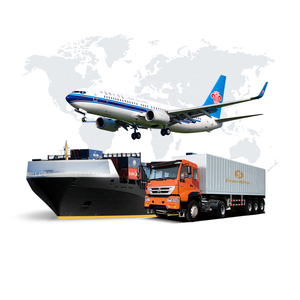
Multimodal transportation pathways—integrating expedited ocean FCL/LCL, direct air cargo charters, and intermodal rail freight—must be engineered around the physical and legal requirements of the cargo. Whether moving heavy industrial machinery under the EU Machinery Directive (2006/42/EC) or sensitive electronic assemblies requiring Electromagnetic Compatibility (EMC Directive 2014/30/EU), proper packaging, thermal control, vibration damping, and chain-of-custody documentation are non-negotiable standards.
Future Procurement Trends in Contract Logistics & Freight Forwarding
The global trade ecosystem is undergoing a structural paradigm shift driven by digital integration, sustainability mandates, and geopolitical realignments. Procurement directors, supply chain VPs, and overseas buyers must adjust their contract logistics sourcing strategies to maintain competitive advantages over the next decade.
1. Automated DDP Tax Pre-Clearance
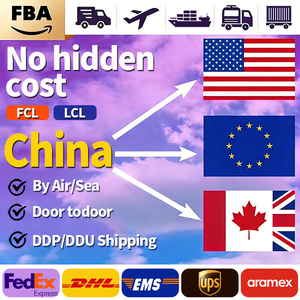
Traditional DDU (Delivered Duty Unpaid) models are rapidly being replaced by comprehensive DDP (Delivered Duty Paid) frameworks. Automated landed-cost calculation engines directly integrate customs tariff codes (HS Codes), anti-dumping checks, and localized VAT settlement prior to vessel departure, eliminating port detention delays.
2. Dual-Sourcing & Bonded Nearshoring
Global manufacturers are increasingly adopting "China+1" and localized bonded consolidation hubs. Contract logistics partners offering unified warehouse management across both origin export processing zones and destination free-trade zones (FTZs) allow importers to defer duties until final market distribution.
3. ESG & Decarbonized Multimodal Routes
Environmental, Social, and Governance (ESG) compliance requires scope 3 emissions reporting for international freight. Importers are migrating non-urgent long-haul routes from all-truck pathways to electrified rail intermodal and slow-steaming container vessels utilizing biofuel blends.
Freight Mode Optimization Matrix
Selecting the optimal transport mode requires balancing speed, financial outlay, cargo volume, and regulatory constraints:
| Transport Mode | Transit Window | Cost Profile per KG | Optimal Cargo Specification | CE & Compliance Risk Mitigation |
|---|---|---|---|---|
| Expedited Air Freight | 1 – 3 Days | Premium High | Time-critical components, high-value medical/electronic equipment | Zero humidity exposure, rapid customs clearance, intact chain-of-custody |
| Consolidated Air Charter | 4 – 7 Days | Moderate / High | Scheduled production line replenishment, seasonal launches | Pre-cleared airway bills, direct ramp handling |
| Ocean Freight FCL (Full Container) | 14 – 35 Days | Lowest per Unit | Bulk industrial machinery, standardized volume manufacturing exports | Sealed ISO containers, minimal handling, direct carrier B/L |
| Ocean Freight LCL (Groupage) | 18 – 40 Days | Highly Economical | Smaller palletized shipments, mid-volume supplier consolidations | Origin CFS audit checks, multi-buyer segregation compliance |
| Rail Intermodal Freight | 12 – 18 Days | Balanced Mid-Tier | Heavy overland transcontinental freight (Eurasian / North American corridors) | Stable temperature profiles, lower carbon footprint tracking |
Enterprise Advantages: Why Global Buyers Partner with Us
Unlike automated logistics aggregators or unaccredited freight brokers, our operational infrastructure is built around accountable human expertise, accredited maritime authority, and end-to-end quality assurance.
1. Named Logistics Specialists
Every account is assigned a dedicated logistics specialist who understands your product specifications, CE documentation requirements, and consignee preferences. No anonymous ticketing queues.
2. Comprehensive Multimodal Infrastructure
From factory pick-up and export packing to ocean container drayage, rail transloading, and final-mile liftgate delivery, all operations are managed under a single point of accountability.
3. Specialized & Government Logistics
Extensive experience managing complex trade show logistics with strict advance warehouse deadlines, oversized project cargo, and defense/government compliant transport protocols.
Frequently Asked Procurement & Logistics Questions
Direct responses to common queries faced by procurement directors, supply chain managers, and international importers.