CE Certified Freight & Door Delivery Services
Select your target trade route below to request custom DDP quotes, verified compliance handling, and end-to-end logistics support.
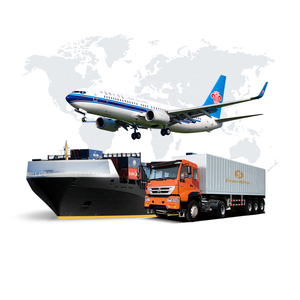
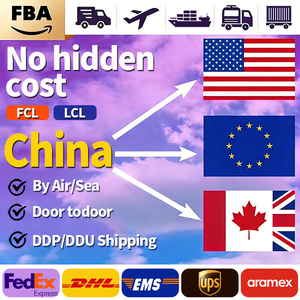

Navigating CE Certified Door Delivery Manufacturing and Global DDP Logistics
In modern industrial procurement, sourcing hardware, machinery, electrical enclosures, and architectural doors from global manufacturers requires strict compliance with international safety and quality standards. Obtaining products from CE Certified Door Delivery Manufacturers ensures that goods entering the European Economic Area (EEA), the United Kingdom, and North America conform to essential health, safety, and environmental protection directives. However, manufacturing excellence represents only half of the procurement equation. Navigating complex international customs protocols, tariff structures, and final-mile door delivery demands an equally sophisticated logistics framework.
Key Takeaway: Sourcing CE-marked industrial products under Delivered Duty Paid (DDP) terms transfers all transit, customs clearance, duty payment, and regulatory compliance risks from the buyer to an expert, licensed NVOCC freight forwarder.
Understanding the Interplay Between CE Certification and Cross-Border Logistics
The Conformité Européenne (CE) mark acts as an essential passport for industrial and commercial door assemblies, automatic access systems, and structural components. Under directives such as the Construction Products Regulation (EU) No 305/2011, Machinery Directive 2006/42/EC, and Low Voltage Directive 2014/35/EU, manufacturers must execute rigorous conformity assessments, maintain technical documentation, and issue a Declaration of Conformity (DoC).
When these certified products move from factory floors in Asia or Europe to job sites across the United States, Canada, the UK, or Germany, import authorities require precise alignment between the physical product labeling, HS code classification, and customs paperwork. A mismatch between the factory's CE documentation and the freight forwarder's bill of lading can result in customs holds, expensive demurrage fees, or total cargo rejection at port of entry.
Core Enterprise Advantages of Our Global Logistics Architecture
As an FMC-licensed ocean transportation intermediary and NVOCC (Non-Vessel Operating Common Carrier), our logistics infrastructure operates under regulated maritime standards and published tariffs. We bridge the gap between overseas manufacturers and commercial buyers by providing dedicated human management, multimodal execution, and total cost transparency.
FMC-Licensed Oversight
Operate under strict Federal Maritime Commission regulations with published ocean tariffs, providing legal protection, transparent freight rates, and dispute resolution guarantees.
Dedicated Specialist Support
Every shipment is assigned a named logistics manager, avoiding automated ticket queues. Real people handle your supply chain exceptions, re-routing, and customs queries.
End-to-End DDP Door Delivery
We manage factory pickup, origin port loading, ocean/air freight, customs brokerage, import tax prepayment, and final-mile liftgate delivery directly to job sites.
Carrier-Neutral Optimization
We analyze multiple ocean carriers (FCL/LCL), air cargo operators, and trucking lines to balance cost, transit duration, and equipment availability without carrier bias.
Customs & CE Audit Pre-Check
Our trade compliance experts review Commercial Invoices, Packing Lists, Certificates of Origin, and CE Declarations prior to departure to prevent customs delays.
Transparent Cost Structures
Eliminate hidden destination charges, unexpected demurrage, or secondary handling fees with clear, all-inclusive DDP pricing breakdown before booking.
Future Procurement Trends in Door Delivery & Industrial Manufacturing
As global supply chains shift toward resilience, sustainability, and automated tracking, procurement directors for CE-certified door manufacturers must adapt to structural changes transforming global freight forwarder operations.
1. Algorithmic DDP Route Selection and Carbon Reporting
With regulations like the European Union's Carbon Border Adjustment Mechanism (CBAM) and EU Emissions Trading System (EU ETS) extending to maritime transport, buyers increasingly demand visibility into total carbon output per shipment. Enterprise logistics platforms now integrate carbon audit models directly into freight quotes, helping buyers choose between expedited air freight, ocean FCL, and intermodal rail paths based on cost, lead time, and environmental impact.
2. Digital Compliance Passports and Automated Customs Clearance
Paper-based shipping procedures are rapidly giving way to digital compliance records. European import portals are expanding requirements for digital product passports (DPP). In door manufacturing, this requires linking every batch certification, CE mark audit, fire rating document, and material safety data sheet (MSDS) to an encrypted digital manifest. Logistics brokers who automate data exchange with customs authorities reduce port clearance times from days to hours.
3. Decentralized Micro-Hub Warehousing for Door Delivery
To insulate projects against ocean shipping bottlenecks, leading door delivery manufacturers are forming strategic alliances with regional logistics providers. Rather than shipping direct from factory floor to job site on single-order timelines, manufacturers maintain safety stock in bonded regional warehouses (Container Freight Stations - CFS). This hybrid model enables 48-hour local door delivery while preserving the cost benefits of high-volume ocean freight.
Key Development Trends in CE Certified Door Packaging & Multimodal Transport
The transit of high-specification architectural, industrial, and fire-rated doors presents structural challenges. Transporting heavy, oversized, or glass-reinforced door panels internationally requires specialized crating, moisture protection, and shock monitoring.
Advanced Protective Packaging Standards for Cross-Border Freight
Leading manufacturers now utilize custom ISPM-15 compliant heat-treated wooden crates with internal polyethylene padding and vapor-barrier foil wrapping. This protects sensitive electronic locking mechanisms, powder-coated finishes, and CE-compliant seal materials from saltwater corrosion and humidity fluctuations during multi-week ocean transit.
IoT Telemetry and Active Condition Monitoring
High-value industrial door shipments increasingly incorporate IoT smart sensor nodes within container loads. These devices transmit real-time telemetry regarding GPS coordinates, tilt angles, shock impacts, atmospheric humidity, and temperature anomalies. Procurement teams receive instant alerts if container handling exceeds structural tolerance thresholds during port transfers.
Multimodal Logistics Execution Matrix
Selecting the optimal shipping mode depends on item dimensions, emergency status, budget, and destination infrastructure. Use the decision matrix below to evaluate freight modes for your CE-certified imports:
| Logistics Mode | Typical Transit Lead Time | Cost Factor (per kg) | Ideal Procurement Scenario | Risk & Compliance Profile |
|---|---|---|---|---|
| Expedited Air Freight | 1 – 5 Days Door-to-Door | High | Replacement components, job-site downtime emergencies, sample approvals | Minimal transit risk, fast customs clearance, minimal moisture exposure |
| Ocean Freight (FCL DDP) | 18 – 35 Days Port-to-Door | Economical | Full project loads, commercial building door sets, scheduled inventory stock | Low cost per unit, stable transit times, requires ISPM-15 crating pre-checks |
| Ocean Freight (LCL DDP) | 22 – 40 Days Port-to-Door | Moderate | Partial orders, small batch CE-certified specialized doors, trial runs | Involves consolidation/de-consolidation at CFS; requires protective corner bracing |
| Intermodal Rail & Truck | 3 – 10 Days Regional | Balanced | Cross-border U.S./Canada/Mexico, inland European distribution from sea ports | Lower carbon footprint than long-haul truck; smooth final-mile jobsite unloading |
Frequently Asked Questions (FAQ) for Global Buyers & Importers
Get immediate clarity on the operational, regulatory, and financial mechanics of importing CE-certified products with door delivery shipping terms.
Streamline Your CE-Certified Door Supply Chain Today
Partner with an FMC-licensed freight forwarder offering real-time visibility, competitive DDP ocean/air rates, and end-to-end customs clearance guarantee.
Get a Quote