Enterprise Product Catalog
Verified China Export Clearance & Global Shipping Recommendations
Engineered for high-volume manufacturers, overseas importers, and Amazon FBA sellers requiring risk-managed maritime and aviation freight lanes.
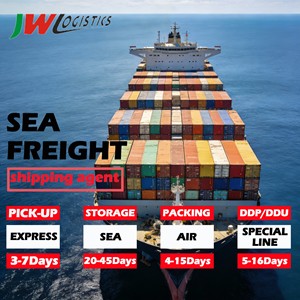
Cheapest Shipping Agent Sea Freight Forwarder DDP DDU LCL Express Sea Shipping Agent Dropshipping DHL Shipping to UK/USA/FR/CA
Top Sea Freight Forwarder Agent Shipping DDP Door To Door Transport Maritime International China To Canada Usa Italy Germany UK
Fast Delivery Logistics Forwarder 24-Hour Track Ocean Sea Freight Forwarder Transitaire Shipping Agent From China to USA by Sea
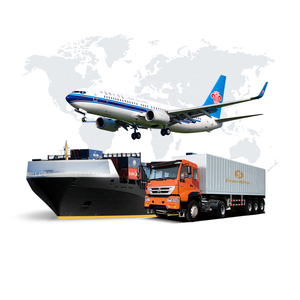
China Sea Freight Forwarder To USA Canada Amazon FBA Door To Door FCL LCL Express Shipping Agent
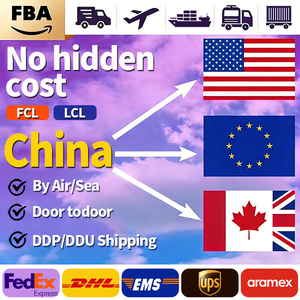
Air Sea DDP LCL International Logistics Service Top 10 China to USA UK Canada Express Freight Forwarder Shipping Agent
Top 10 Air Freight Forwarder China To Usa Germany Spain Ddp Shipping Agent Services Logistique Spedition China Nach Deutschland
Professional Logistics Shipping Agent Sea/air/Express Freight Forwarder From China to USA EU UK CANADA Worldwide
1. Future Procurement Trends in China Export Customs Clearance & Supply Chain Architecture
The global international trade framework is undergoing a profound structural evolution. For industrial procurement officers, supply chain directors, and cross-border e-commerce brand owners, securing a reliable China Best Export Clearance Manufacturer & Exporter partner has shifted from a mere transactional purchase of freight space to a mission-critical strategic imperative. As global regulatory bodies heighten compliance enforcement—ranging from the United States Customs and Border Protection (CBP) Enforce and Protect Act (EAPA) to the European Union’s Import Control System 2 (ICS2)—the friction within international trade corridors has concentrated primarily at origin export manifest clearance and destination import entry.
Modern procurement strategies must adapt to three core macro logistics trends driving global cross-border trade:
A. Digital Single-Window & AI HS Classification
National customs authorities in China and destination ports are fully automating manifest audits. Algorithmic harmonized code verification requires pinpoint accuracy in commercial documentation, declaration of sub-assemblies, and exact valuation of raw materials to mitigate detention risk.
B. Frictionless DDP End-to-End Orchestration
Enterprise buyers increasingly reject traditional FOB terms that expose them to localized transit bottlenecks and unpredicted demurrage. The global market is rapidly transitioning to Delivered Duty Paid (DDP) and Delivered at Place (DAP) models where the export manufacturer/forwarder bears complete regulatory accountability.
C. Sustainable & CORSIA/IMO-Compliant Routing
Decarbonization mandates across ocean liners (IMO 2030 standards) and air freight carriers (CORSIA mandates) require shippers to optimize container payload factors, leverage intermodal rail transport, and select freight partners offering transparent carbon telemetry auditing.
To navigate this complex landscape, enterprise supply chains are establishing integrated logistics partnerships with FMC-licensed Ocean Transportation Intermediaries (OTIs) capable of deploying real-time cargo monitoring, automated customs paperwork generation, and direct carrier-neutral freight capacity contracts across major transpacific and Asia-Europe trade lanes.
2. Evolutionary Trends in Ocean, Air & Multimodal Freight Forwarding
The technological baseline for international shipping agents from China has shifted dramatically over the past decade. Legacy forwarding models—characterized by manual email quote threads, opaque spot-market surcharges, and fragmented carrier handoffs—are being superseded by intelligent digital supply chain infrastructure. When assessing a China export clearance manufacturer and shipping master, supply chain leaders must evaluate modern execution capabilities:
1. Container Freight Station (CFS) Optimization
Less-than-Container Load (LCL) consolidation has transformed into a high-density science. Advanced warehouse management systems (WMS) pre-calculate cargo volume using 3D volumetric scanners, ensuring maximum container space utilization while safeguarding fragile e-commerce, automotive, or industrial equipment shipments from cargo shift damage.
2. Automated Regulatory Clearance Pre-Filing
Top-tier export freight forwarders initiate Automated Broker Interface (ABI) filings and ISF (Importer Security Filing 10+2) transmissions up to 5 days prior to vessel departure at origin ports such as Shanghai, Ningbo, Shenzhen, and Qingdao, eliminating destination port hold penalties.
Furthermore, the convergence of express air freight charters with ocean freight expedited lanes (such as Matson CLX and EXX fast ocean services) provides importers with flexible transit time bands ranging from 3-5 days (Next-Flight-Out Air) down to 11-14 days (Premium Ocean Express), optimizing working capital and inventory carry costs.
Multimodal Transport Mode Decision Matrix for Importers & Buyers
Compare operational characteristics across core shipping modes managed by our FMC-licensed forwarding network:
| Transport Mode | Avg. Transit Time | Cost Benchmark | Regulatory Risk Profile | Optimal Cargo Applications |
|---|---|---|---|---|
| Expedited Air Freight | 1 - 4 Days | High ($/kg basis) | Minimal (Fast-track entry) | High-value electronics, medical devices, emergency factory spare parts. |
| Air Consolidations (DDP) | 5 - 8 Days | Moderate-High | Low (Pre-cleared entry) | E-commerce restocking, seasonal samples, retail apparel launches. |
| Ocean Freight FCL (Full Container) | 12 - 26 Days | Lowest per CBM | Standard Port Inspection | Heavy industrial machinery, bulk raw materials, high-volume consumer goods. |
| Ocean Freight LCL (Consolidation) | 15 - 30 Days | Highly Economical | Medium (Requires clean co-loaders) | Mid-sized enterprise shipments (3 to 15 CBM), trial product rollouts. |
| Rail & Intermodal Cargo | 14 - 22 Days | Balanced Ground Rate | Border Crossing Audits | Cross-border Eurasian corridors, inland long-distance bulk transit. |
3. Enterprise Core Competencies & Regulatory E-E-A-T Guarantee
As an FMC-licensed Ocean Transportation Intermediary (OTI) operating regulated tariffs under Federal Maritime Commission rules, our organization brings structural integrity and verified expertise to global trade. Overseas buyers and US/EU importers leverage our foundational operational strengths:
Accountable "Real People" Logistics
We eliminate frustrating ticket-queue systems. Every client is assigned a dedicated senior logistics engineer who proactively manages customs entries, routing changes, and port operations.
FMC Licensing & Published Tariffs
Our ocean freight service adheres to U.S. Federal Maritime Commission regulatory standards, offering transparent tariff rates, secure bill of lading issuance, and bonded financial protection.
Carrier-Neutral Strategic Routing
Unlike asset-bound shipping lines, we audit pricing across 20+ ocean alliances (2M, OCEAN Alliance, THE Alliance) and air carriers to deliver optimal balance between speed and budget.
Expert Compliance Knowledgebase
Frequently Asked Questions on China Export Clearance & Global Freight
Direct technical answers from our licensed customs brokerage team to resolve complex international trade queries.
What is the primary difference between DDP and DDU/DAP Incoterms when exporting from China?
Under DDP (Delivered Duty Paid), the China exporter/forwarder assumes total financial and operational responsibility, including payment of origin export clearance, international freight, destination customs duties, taxes (VAT/GST), and final door delivery. Under DDU/DAP (Delivered at Place), the buyer is responsible for destination import customs clearance, import tax payment, and local regulatory permits upon arrival at the destination terminal.
Why is working with an FMC-Licensed Ocean Transportation Intermediary critical for North American trade?
An FMC (Federal Maritime Commission) license ensures that the freight forwarder is legally recognized by the U.S. government as a licensed NVOCC or Ocean Freight Forwarder. FMC licensing mandates financial bonding, published tariff transparency, and adherence to legal liability standards—protecting buyers against illegal rate spikes, cargo hostage situations, and un-bonded freight loss.
What core commercial documents are required for seamless China export clearance?
Essential export declaration documentation includes: 1) Commercial Invoice (detailing HS codes, unit values, currency, and buyer/seller identities), 2) Packing List (specifying gross/net weights, dimensions, and box numbers), 3) Bill of Lading (B/L) or Air Waybill (AWB), 4) Certificate of Origin (where preferential tariff treatment applies), and 5) Export Licenses or Safety Data Sheets (SDS) for hazardous or regulated commodities.
How does LCL consolidation work for smaller freight volumes (3-15 CBM)?
Less-than-Container Load (LCL) consolidates cargo from multiple shippers into a single shared 20ft or 40ft ocean container. Cargo is delivered to an origin Container Freight Station (CFS) in China, measured via 3D volumetric scanning, cleared through export customs, and shipped. Upon arrival at destination port, the container is unpacked at a bonded CFS for individual clearance and final delivery.
How are Section 301 tariffs and special import duties handled under DDP shipping from China?
Under a DDP arrangement, the logistics service provider or designated Importer of Record (IOR) calculates all applicable duty classifications—including Section 301 retaliatory tariffs, anti-dumping duties, and harbor maintenance fees—prior to shipment dispatch. All duty obligations are included within your unified freight quotation, preventing unexpected tariff bills upon delivery.
How early should trade show exhibit freight be booked for international events?
For international exhibition logistics involving overseas trade fairs, shippers should initiate logistics planning 6 to 8 weeks in advance. This timeline permits ocean/air transit, ATA Carnet temporary import customs processing, advance warehouse marshaling yard check-in, and precise booth delivery positioning before hall setup deadlines.
Optimize Your China Export Logistics Architecture Today
Connect directly with our licensed FMC specialists to audit your trade lane tariffs, streamline customs clearance, and secure verified ocean & air freight capacity.