Engineered Freight & Logistics Solutions
Select a tailored freight service below to initiate direct door-to-door carrier routing and instant quote generation.
Air & Sea DDP LCL International Express Logistics Forwarder (China to USA/UK/CA)
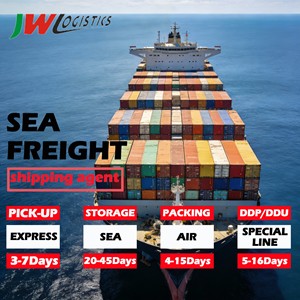
DDP/DDU Ocean Freight & Dropshipping Express Service to UK, USA, France & Canada
Maritime Door-to-Door DDP Transport Solutions (China to EU, UK, USA & Canada)
Expedited Ocean Freight Forwarding with 24/7 Live Telematics Tracking to North America
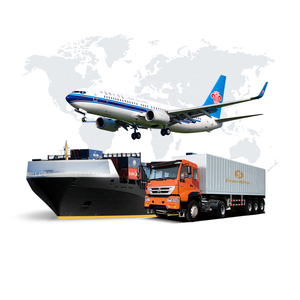
Amazon FBA Door-to-Door FCL/LCL Freight forwarding & Custom Clearance Services
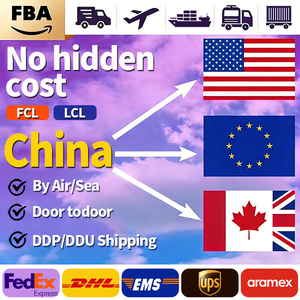
Premium Multimodal Air & Ocean DDP Freight Forwarding Agent Network
Direct Express Air Freight Logistics & Customs Brokerage (China to Germany/Spain/USA)
End-to-End Enterprise Logistics: Sea, Air & Cross-Border Trucking Worldwide
Why Industry Leaders Choose Our Ground & Multimodal Freight Infrastructure
Combining regulated maritime status with human-driven logistics execution to eliminate multi-party friction.
FMC-Licensed Regulatory Authority
Operating as a fully licensed Ocean Transportation Intermediary (OTI) and NVOCC with published tariff compliance, ensuring legal security and contractual transparency for international trade.
Accountable Human Logistics Specialists
Bypassing automated ticket queues. Every client is assigned a dedicated logistics coordinator who manages exceptions proactively and directly answers critical routing adjustments.
Seamless Multimodal Integration
Eliminating handoff gaps by unifying drayage, cross-border trucking, rail intermodal, ocean FCL/LCL, and air freight under one end-to-end bill of lading.
Asset-Neutral Routing Optimization
Unbiased carrier selection across top-tier shipping lines and motor carriers. We negotiate capacity based purely on transit speed, cost-efficiency, and lane performance indicators.
Specialized & Oversized Cargo Handling
Technical expertise in project cargo, flatbeds, step-decks, temperature-controlled reefer units, and dangerous goods (DG) compliance with stringent safety protocols.
Real-Time Telematics & POD Visibility
Full digital transparency featuring automated checkpoint notifications, GPS-enabled container monitoring, electronic proof of delivery, and audit-ready documentation.
Technical Deep-Dive: Sourcing & Procurement from China Ground Freight Manufacturers
In global supply chain management, China top ground freight manufacturers & logistics operators represent the foundational spine connecting industrial manufacturing hubs with global exit ports. As international trade transitions toward localized fulfillment, direct-to-destination delivery, and multi-tier supplier networks, procurement leaders must move beyond viewing ground freight as simple drayage. Ground freight serves as the critical node determining total landside velocity, customs clearing turnaround, and overall landed cost performance.
1. The Structural Dynamics of China's Industrial Ground Freight Network
Ground transportation within China encompasses an extensive network of specialized motor carriers, heavy-haul equipment fabrics, high-speed rail intermodal links, and inland container depots (ICDs). Manufacturing ecosystems in the Yangtze River Delta (Ningbo-Shanghai), Pearl River Delta (Shenzhen-Guangzhou), and the Bohai Rim (Tianjin-Qingdao) rely heavily on tailored trucking solutions to feed container freight stations (CFS) and direct vessel loaders.
Leading Chinese ground freight providers offer specialized fleet assets tailored to industrial machinery, precision electronics, and bulk commodities:
- Full Truckload (FTL) Heavy Drayage: Tri-axle chassis and heavy-haul tractors configured for dense manufacturing machinery, industrial valves, and high-cube ISO containers.
- Less-than-Truckload (LTL) Consolidation: Regional hub-and-spoke networks gathering smaller supplier runs into centralized warehouses for combined DDP/DDU ocean or air export.
- Cross-Border Road Freight (TIR System): Expedited overland trucking under the Transports Internationaux Routiers protocol, connecting mainland Chinese production plants directly to Central Asia, Europe, and Southeast Asia without cargo unloading at borders.
2. Mode Selection Matrix: Evaluating Cost vs. Velocity
Procurement directors must continuously evaluate transport modes to balance transit lead time against freight rate volatility. Below is an operational breakdown for selecting optimal freight corridors:
| Transport Mode | Avg. Transit Window | Relative Cost Index | Primary Industrial Use Case | Incoterms Compatibility |
|---|---|---|---|---|
| Air Freight (Direct / Express) | 1 – 4 Days | High ($$$$) | High-value electronics, sample runs, critical line-down spare parts | FCA, CPT, DDP |
| Cross-Border Trucking (TIR) | 10 – 16 Days | Medium-High ($$$) | Mid-to-high value goods connecting China to EU/Central Asia overland | DDP, DAP |
| Rail Freight (China-Europe Express) | 15 – 22 Days | Medium ($$) | Automotive sub-assemblies, heavy machinery, consumer goods | FOR, DAP, DDP |
| Ocean Freight (FCL Container) | 20 – 35 Days | Low ($) | High-volume finished goods, bulk industrial equipment, raw materials | FOB, CFR, CIF, DDP |
| Ocean Freight (LCL Consolidated) | 25 – 40 Days | Lowest per CBM ($) | Mid-volume replenishments, multi-supplier consolidated orders | FOB, EXW, DDP |
3. Future Procurement & Sourcing Trends in Ground Logistics
As corporate sustainability directives and digital supply chain mandates take effect, procurement strategies for China ground freight are undergoing major technological shifts:
A. Fleet Electrification and Alternative Fuel Adoption: Heavy-duty electric trucks (EV trucks) and hydrogen-cell haulers are increasingly deployed for short-haul port drayage between manufacturing zones and harbor terminals in Shenzhen, Ningbo, and Shanghai, substantially reducing Scope 3 carbon emissions for global importers.
B. IoT-Enabled Predictive Logistics: Fleet operations are adopting real-time telematics devices monitor container temperature, internal humidity, tilt angle, and GPS coordinates continuously. This predictive insight allows logisticians to resolve customs clearance holds or port congestion bottlenecks before cargo delivery deadlines are breached.
C. Automated Customs & Smart Port Integration: The integration of paperless customs filing platforms with inland trucking dispatchers allows automated pre-clearance while trucks are en route to the port, shrinking port dwell times from days to hours.
Frequently Asked Questions: Global Freight Sourcing
Expert clarifications on international logistics, licensing, modal selection, and customs documentation.
Should I ship by air freight or ocean freight?
Choose air freight when speed, high cargo value, or urgent assembly schedules outweigh shipping costs; typical airport-to-airport transit takes 1 to 5 days. Choose ocean freight for heavier, bulky, or scheduled replenishment cargo; it offers significantly lower costs per kilogram, though port-to-port transit spans 2 to 5 weeks depending on trade routes.
What is the difference between FCL and LCL ocean freight?
FCL (Full Container Load) reserves an entire 20ft or 40ft container for your cargo, proving cost-effective above 13–15 CBM while minimizing cargo handling. LCL (Less than Container Load) consolidates your freight with other shippers' goods in a shared container, allowing you to pay only for the volume used, though extra handling occurs at Container Freight Stations (CFS).
What information is required to receive an accurate freight quote?
To obtain an all-inclusive rate quote, provide precise pickup/delivery addresses, commodity descriptions, total package count, dimensions, gross weight, ready date, and target Incoterms (e.g., FOB, EXW, DDP). Providing HS codes and declared value also ensures precise estimation of duties, tariffs, and cargo insurance.
What core documentation is mandatory for international cross-border shipping?
Standard export/import compliance requires a Commercial Invoice, Packing List, and a primary transport document such as an Ocean Bill of Lading (B/L) or Air Waybill (AWB). Depending on destination customs mandates, specialized certificates of origin, export declarations, safety data sheets (SDS) for hazardous materials, or import licenses may also be required.
Why is working with an FMC-licensed Ocean Transportation Intermediary critical?
An FMC (Federal Maritime Commission) license confirms that an ocean freight forwarder or NVOCC adheres to strict financial bonding standards, regulatory compliance, and published tariff rules mandated by U.S. maritime authorities, safeguarding shippers against unauthorized rate surges or legal exposure.
How far in advance should trade show or event freight be scheduled?
For domestic trade shows, initiate logistics planning 3 to 4 weeks prior to advance warehouse cutoff dates. For international exhibitions, begin 6 to 10 weeks in advance to accommodate ocean/air transit windows, ATA Carnet temporary import customs documentation, and marshaling yard delivery appointments.
Optimize Your Global Supply Chain & Ground Logistics
Partner with an FMC-licensed logistics provider. Request a customized, all-inclusive multimodal freight quote for your upcoming shipments today.
Get a Quote