Factory-Direct Cargo Handling Equipment Showcase
Verified export-grade material handling machinery manufactured under ISO9001:2015 and CE compliance for global logistics parks, warehouses, and construction sites.
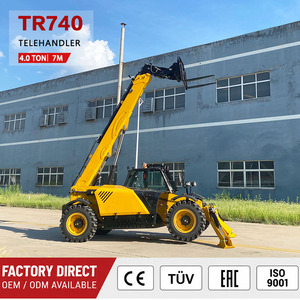
All Terrain Forklift Telehandler Compact Telehandler for Heavy Pallet Handling
Engineered for rugged outdoor logistics parks and rough-terrain freight transfers. Features extended reach hydraulic boom and multi-attachment capabilities.
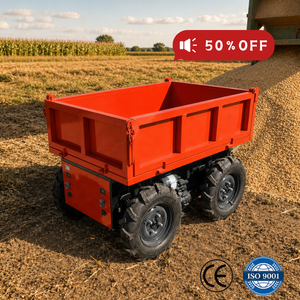
Free Shipping 500 Kg Remote Control Electric Wheeled Transport Mini Dumper
Precision remote-controlled zero-emission hydraulic dumper designed for tight indoor warehouses, site excavations, and automated bulk handling.
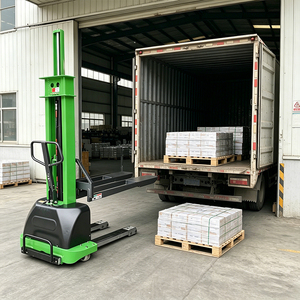
Electric Self Loading Stacker for Van Pickup Truck Cargo Loading
Innovative portable hydraulic forklift that lifts itself into vans or delivery trucks alongside cargo, eliminating the need for tail lifts or loading docks.
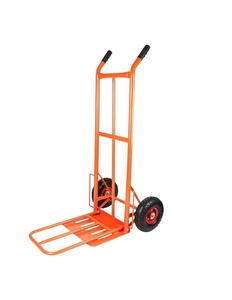
Heavy Duty Two Wheels Construction Carrying Storage Hand Trolley HT1827
High-tensile tubular steel frame hand truck equipped with heavy-duty pneumatic tires for seamless manual material transit across construction zones.
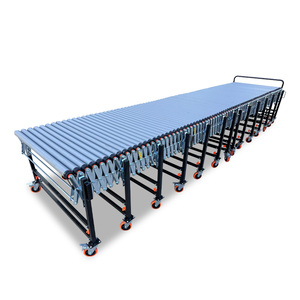
Telescopic Roller Conveyor Stretchable Conveyor With Lockable Casters
Expandable flexible gravity roller conveyor optimized for rapid container truck loading/unloading operations with heavy parcel flow management.
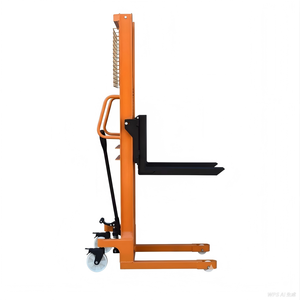
Heavy Duty 2Ton Manual Pallet Stacker Hand Hydraulic Forklift
Reinforced hydraulic pump stacker with double-chain elevation mechanism designed for safe, ergonomic pallet stacking in high-density rack storage.
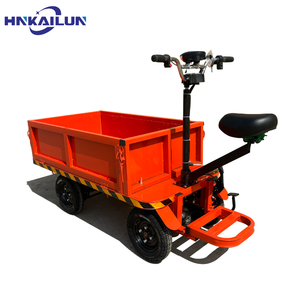
Economic Practical Easy Operate Electric Flatbed Truck Transportation Cart
Heavy-load battery-powered flatbed platform cart built for efficient horizontal cargo distribution across manufacturing workshops and fulfillment hubs.
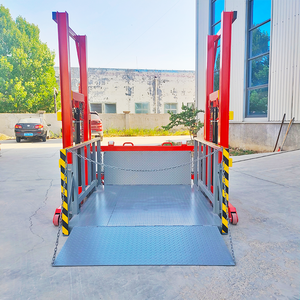
Mobile Loading And Unloading Platform Container Cargo Lift Dock Ramp
Hydraulically adjusted mobile loading dock platform allowing forklifts to seamlessly enter standard sea containers directly from ground level.
Executive Summary: Navigating China Wholesale Cargo Handling Procurement
The global material handling equipment (MHE) sector is undergoing a profound structural shift driven by supply chain automation, strict workplace safety regulations, and rapid transition toward zero-emission electrification. Overseas enterprise buyers, logistics contractors, and equipment distributors seeking high-ROI machinery must evaluate China wholesale cargo handling factories & exporters through a rigorous total cost of ownership (TCO) lens.
Modern Chinese manufacturing clusters—specifically across Shandong, Zhejiang, and Jiangsu provinces—have evolved beyond basic mechanical assembly into advanced OEM/ODM hubs. These factories utilize robotized welding, automated powder-coating lines, and strict stress-endurance testing protocols. This technical whitepaper analyzes the engineering capabilities, supply chain dynamics, future technology trajectories, and quality verification standards critical for international buyers procuring cargo handling machinery directly from Chinese exporters.
Why Global Logistics Leaders Partner With China's Top Exporters
Leading Chinese cargo machinery exporters offer unprecedented manufacturing agility and end-to-end supply chain integration. By combining heavy industrial manufacturing capabilities with regulated export compliance, top-tier factories mitigate common international sourcing friction points.
Stringent Quality & CE Certification
Verified manufacturing processes incorporating Q345B structural steel, high-pressure hydraulic sealing systems, and comprehensive overload testing aligned with ANSI/ITSDF B56 and EN 1726 standards.
Custom OEM/ODM Modular Engineering
Direct access to R&D engineering teams capable of modifying fork dimensions, hydraulic flow rates, chassis clearance, battery voltages (LiFePO4 options), and remote telemetry integration.
Seamless Multimodal Logistics Integration
End-to-end export support leveraging FMC-regulated ocean freight forwarders, container loading optimization, pre-cleared customs documentation, and door-to-door global fulfillment options.
Technical Evolution & Industry Trends in Cargo Handling Equipment
The material handling sector is experiencing a rapid technological convergence across three primary pillars: lithium-driven electrification, ergonomic automation, and telematics-connected safety.
1. Lithium Iron Phosphate (LiFePO4) Dominance Over Lead-Acid
Industrial fleets are rapidly retiring traditional lead-acid batteries in favor of integrated 48V and 80V LiFePO4 battery modules. Chinese manufacturers lead global production of high-density lithium cells, enabling equipment such as Electric Flatbed Trucks and Self-Loading Electric Stackers to achieve 8-hour continuous operational cycles with 1-hour fast-charging capabilities. This transition lowers energy consumption by up to 30% while eliminating battery watering maintenance.
2. Remote Telemetry & Wireless Robotics
Safety considerations in high-risk material handling environments—such as mining sites, demolition zones, and chemical storage—have accelerated demand for wirelessly controlled machinery. Modern mini site dumpers and specialized cargo lifters now feature 2.4GHz remote control systems with operational ranges exceeding 150 meters, emergency stop fail-safes, and precise proportional hydraulic joystick control.
3. Multi-Functional Compact Telehandlers for Urban Logistics
Urban logistics parks face severe spatial constraints. As a result, compact all-terrain telehandlers are superseding traditional fixed-mast forklifts. Incorporating telescopic boom arms capable of 360-degree attachment rotation (pallet forks, bucket attachments, crane hooks, and timber grapples), these machines allow operators to unload container trucks from one side only, significantly reducing yard congestion.
Strategic Procurement & Supply Chain Trends (2025–2030 Horizon)
Global buyers procuring cargo handling machinery from Chinese exporters must adjust their supply chain management models to accommodate shifting geopolitical tariffs, ESG compliance mandates, and digitized factory audits.
Digital Factory Audits & Live Testing
Enterprise procurement now mandates real-time digital factory inspections. Leading Chinese exporters provide third-party video audits (SGS/TÜV), live hydraulic stress tests, and automated assembly tracking prior to final container loading.
Standardized Spare Parts Modularization
To avoid supply chain downtime, exporters are standardizing wear-and-tear components. Hydraulic pumps (Bucher/HKS), electronic controllers (Curtis/Zapi), and drive motors are built using universally accessible modular parts.
Incoterms & DDP Total-Cost Transparency
Importers are shifting from traditional FOB terms to comprehensive DDP (Delivered Duty Paid) or CIF arrangements managed by regulated logistics partners to eliminate destination port demurrage and unexpected terminal charges.
Below is a comparative breakdown of key operational equipment specs essential for evaluating inventory selection based on workflow demands:
| Equipment Classification | Primary Application | Load Capacity Range | Power Source | Key Operational Advantage |
|---|---|---|---|---|
| Compact All-Terrain Telehandler | Rough terrain, outdoor logistics, yard stacking | 2,500 kg – 4,500 kg | Diesel / Heavy Battery Lithium | High reach, tele-boom outreach over obstacles |
| Remote Control Electric Dumper | Confined spaces, indoor site transport | 500 kg – 1,500 kg | 48V Electric (LiFePO4) | Zero emissions, remote driver safety |
| Van Self-Loading Electric Stacker | Last-mile delivery, fleet truck loading | 500 kg – 1,000 kg | 12V / 24V Electro-Hydraulic | Lifts itself inside delivery vans with cargo |
| Manual Hydraulic Pallet Stacker | Warehouse pallet racking, short distance | 1,000 kg – 2,000 kg | Manual Hydraulic Foot/Hand Pump | Low capital expenditure, maintenance-free |
| Telescopic Roller Conveyor | Container loading/unloading parcel dispatch | 50 kg/m – 150 kg/m | Gravity / Motorized Flexible | Expands and retracts into container space |
| Mobile Hydraulic Loading Lift Platform | Container dock-to-ground forklift bridge | 6,000 kg – 12,000 kg | Manual / Electric Hydraulic Ramp | Allows forklift container access anywhere |
Step-by-Step Quality Assurance Framework for Sourcing from China
To guarantee long-term operational safety and machinery longevity, buyers should enforce the following four-stage quality verification protocol when negotiating wholesale contracts with Chinese machinery exporters:
- Phase 1: Raw Material & Structural Integrity Verification: Ensure chassis frames utilize laser-cut Q345B grade carbon structural steel rather than inferior Q235 steel. Structural welds must undergo ultrasonic flaw detection to handle dynamic load vibrations.
- Phase 2: Hydraulic Circuit Pressure Testing: Request certified pressure drop reports. Hydraulic cylinders should undergo 24-hour pressure holding tests at 125% rated load capacity to verify seal integrity against leaks.
- Phase 3: Electrical & Battery Management System (BMS) Audit: Verify IP65 water-ingress protection ratings on all wiring harnesses and control boards, particularly for electric flatbed carts and telehandlers exposed to weather.
- Phase 4: Packaging & Export Rust Inhibition: Heavy machinery shipped via sea container must receive multi-layer anti-corrosion shrink wrapping, VCI rust-inhibitor spray on unpainted alloy shafts, and heavy-duty steel wire wheel-chock tie-downs.
Frequently Asked Questions (FAQ)
Technical and procurement insights for international importers, fleet managers, and wholesale distributors sourcing cargo handling machinery from China.
How do I choose between a manual hydraulic stacker and an electric stacker?
Base your decision on daily pallet cycle volume and lift height. Manual hydraulic stackers are ideal for low-frequency operations (under 15–20 pallet movements daily) and lower lift thresholds (up to 1.6 meters). For high-density warehousing, multi-tier racking, or operations exceeding 20 pallet lifts per shift, electric stackers drastically reduce operator fatigue and accelerate throughput speed by up to 300%.
What international safety certifications should I require from Chinese factories?
Insist on CE certification compliance under the Machinery Directive 2006/42/EC, ISO9001 quality management standards, and ISO 3691-1 safety requirements for industrial trucks. For machinery exported to North America, check for ANSI/ITSDF B56 compliance and UL/ETL certified battery charging components.
Can Chinese exporters customize cargo handling machinery for unique workplace requirements?
Yes. Top-tier Chinese OEM factories routinely customize fork dimensions, extended mast heights, explosion-proof electrical fittings for hazardous chemical warehouses, custom paint branding, and specialized hydraulic attachments (rotators, bale clamps, drum handlers).
How are heavy machines packaged to prevent damage during sea freight transit?
Factories utilize custom iron frame crates or heavy wooden skids. Critical electrical parts are sealed in moisture-proof vacuum bags with silica desiccant packs, while raw metal components are coated with protective anti-corrosion grease to prevent salt-water oxidation during long ocean voyages.
What is the typical factory lead time for wholesale cargo machinery orders?
Standard production lead times range from 15 to 25 calendar days for standard equipment models. Custom OEM builds involving special hydraulic power packs or specialized chassis modifications typically require 30 to 45 days, depending on factory order volume and component availability.
How do exporters handle spare parts and warranty support internationally?
Reputable exporters provide a standard 12-to-24 month warranty on major structural and hydraulic components. Fast-wearing spare parts (seals, contactors, wheels) are routinely bundled with initial container shipments, and emergency replacement parts are dispatched globally via express courier (DHL/FedEx).
Optimize Your Cargo Handling Fleet Sourcing Today
Connect directly with senior technical engineering specialists to request factory-direct wholesale pricing, custom OEM quotes, or detailed equipment specifications tailored to your logistics operations.
Inquire Now