Recommended Freight & Cargo Solutions
End-to-End Multimodal Transport Capabilities for China Heavy Machinery and Out-of-Gauge (OOG) Manufacturers
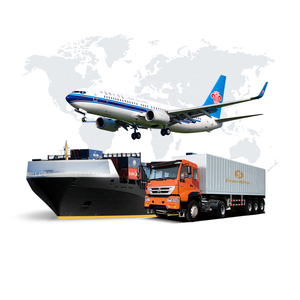
Executive Summary: Navigating China Wholesale Oversized Cargo Manufacturing & Heavy Logistics
The global industrial procurement ecosystem is undergoing a structural transformation. Buyers sourcing heavy machinery, modular infrastructure assemblies, renewable energy turbines, processing vessels, and industrial stamping presses directly from China wholesale oversized cargo manufacturers and factories require far more than basic manufacturing throughput. They demand rigorous engineering execution at the intersection of production floor dispatch and global maritime transportation.
Out-of-Gauge (OOG) and heavy-lift freight cannot be treated like standardized containerized commodity goods. Dimensions exceeding standard ISO container specifications (over 40ft in length, 8ft in width, or 8.5ft in height) or single unit weights exceeding 26,000 kilograms require specialized equipment selection—including Flat Rack (FR), Open Top (OT), Roll-on/Roll-off (Ro-Ro), or Breakbulk ocean chartering. Resolving these challenges requires seamless integration between factory fabrication schedules, port marshaling logistics, specialized rigging engineering, and regulatory compliance under international maritime frameworks.
Strategic Insight: Oversized cargo failure modes rarely originate mid-ocean. Over 88% of transport damages, delays, or demurrage penalties stem from mismatches between factory packaging specs, incorrect axle load distribution during origin drayage, and flawed lashing calculations before vessel loading.
Key Enterprise Engineering & Operations Capabilities
Why Tier-1 Global EPC Contractors and Heavy Machinery Buyers Partner with Accountable Freight Intermediaries
FMC-Licensed Governance
Operating under strict U.S. Federal Maritime Commission regulations and published tariffs, providing legally bound carrier contracts, bill of lading security, and complete protection against unauthorized line-item fees.
Multimodal Carrier Neutrality
We analyze breakbulk, Ro-Ro, containerized OOG, and heavy air charter channels dynamically. We select routes based on total cost of transport, structural protection, and transit reliability rather than fixed asset bias.
Dedicated Human Account Management
Bypass automated ticket queues. Every project is overseen by an experienced logistics officer who coordinates directly with China factory managers, port stevedores, marine surveyors, and destination customs agents.
Technical Equipment Selection Matrix for China Oversized Cargo
Selecting the optimal containerization or breakbulk methodology is vital to protect cargo integrity while eliminating unnecessary freight surcharges. Below is the engineering framework utilized by our project cargo team when evaluating factory outputs from major Chinese industrial zones (e.g., Jiangsu, Shandong, Zhejiang, and Guangdong).
| Shipping Mode | Dimensional Specs | Weight Threshold | Best Applications | Primary Logistics Risk |
|---|---|---|---|---|
| Flat Rack (Collapsible/Fixed) | Width > 2.35m or Height > 2.39m (Up to 11.8m L) | Up to 45,000 kg | Stamping machines, heavy excavators, broad structural steel frameworks. | Inadequate lashing point tension and improper weather protective wrapping. |
| Open Top Container (OT) | Height > 2.39m (Standard length/width) | Up to 28,000 kg | Overheight machinery required to be loaded via overhead factory crane. | Tarp rupture leading to saltwater corrosion during oceanic transit. |
| Breakbulk (BB / Multi-Purpose) | Extremely large modules exceeding container ship cell guides | 50,000 kg to 500,000+ kg | Boilers, refinery towers, power transformers, complete assembly units. | High stevedoring charges, port hook-on risks, and berth availability delays. |
| Roll-on / Roll-off (Ro-Ro) | Self-propelled or towable wheeled/tracked heavy cargo | Up to 120,000 kg (Mafi Trailer) | Mining trucks, mobile cranes, oversized agricultural equipment. | Limited vessel scheduling flexibility and tight port receiving windows. |
E-E-A-T Operational Protocol: Before any heavy machinery leaves a Chinese manufacturing facility, our cargo engineers issue a 3D Loading & Lashing Simulation plan. This document establishes exact center-of-gravity placement, dunnage requirements, and certified chain/strap strength ratings (ISO 1496-3 compliance).
The 5-Step Accountable Heavy-Cargo Shipping Workflow
To eliminate expensive handoff errors between factory production teams, inland transport drivers, port handling facilities, and ocean lines, we operate under a rigorous 5-step operational workflow:
- Step 1: Origin Engineering & Incoterms Consultation: Auditing commercial invoices, packing list dimensions, center of gravity points, and verifying whether FOB, CIF, DDU, or DDP Incoterms best protect the buyer’s risk profile.
- Step 2: Pre-Voyage Route & Port Survey: Mapping inland bridge height clearances, road weight capacities, and port crane lifting limitations from the inland China factory to coastal export terminals (Shanghai, Ningbo, Qingdao, Shenzhen, Tianjin).
- Step 3: Booking & Multi-Party Documentation Preparation: Securing vessel space allocation, issuing compliant Bills of Lading, managing SOLAS Verified Gross Mass (VGM) filings, and organizing dangerous goods (DG) permits when applicable.
- Step 4: Live Telemetry & In-Transit Monitoring: Deploying real-time shock, tilt, and GPS tracking nodes on sensitive industrial payloads, backed by active exception handling if delays arise.
- Step 5: Destination Port Handling, Customs Clearance & Final Delivery: Managing heavy-lift discharge, customs duty/tax settlement under local import regulations, and executing hydraulic low-boy truck delivery directly to the installation site.
Future Procurement Trends in China Oversized Cargo (2025–2030)
Strategic Industry Shifts Reshaping Heavy Equipment Manufacturing and International Transport
1. Rise of Factory-Integrated Port Hubs
Chinese manufacturers are increasingly migrating heavy machinery assembly plants directly to coastal deep-water port zones (such as Taicang, Zhoushan, and Ningbo). This eliminates inland road transport restrictions, enabling factories to export fully assembled mega-modules (up to 1,000 metric tons) via direct barge-to-vessel loading.
2. Digital Twin Lashing & Environmental Telemetry
Procurement contracts now routinely mandate digital twin simulation prior to transit. Wireless sensor arrays monitor vibration, humidity, tilt angle, and atmospheric salt levels throughout the maritime voyage, giving buyers verified audit trails for insurance and warranty compliance.
3. Decarbonization & IMO 2030 Compliance Impact
International Maritime Organization (IMO) carbon intensity indicators (CII) are driving heavy lift carriers to modernize their fleets with dual-fuel (LNG/Methanol) multi-purpose vessels. Importers aligned with corporate Scope 3 emission targets can now leverage carbon-indexed oversized cargo transport routes.
4. Accelerated Shift Toward Turnkey DDP Solutions
Global buyers are shifting away from traditional FOB procurement models toward door-to-door Delivered Duty Paid (DDP) contracts. This places full logistical accountability on specialized forwarders to execute customs clearance, duty management, and off-loading at the final job site.
Industry Development & Global Supply Chain Dynamics
The manufacturing ecosystem in China for heavy industrial products—ranging from renewable energy components (wind tower sections, solar array manufacturing line equipment) to chemical processing skids—continues to dominate global capital expenditure (CapEx) pipelines. However, managing the supply chain demands sophisticated risk mitigation strategies.
Geopolitical shifts, fluctuating ocean freight indices, changing port congestion patterns, and evolving tariff structures (such as Section 301 duties in the U.S. or CBAM mechanisms in Europe) require buyers to work with licensed freight forwarders equipped with regulatory intelligence. By integrating factory lead times directly with vessel charter laydays, procurement managers can prevent daily demurrage costs that often exceed thousands of dollars per day for specialized equipment.
Frequently Asked Procurement & Logistics Questions
Expert Guidance on Navigating China Wholesale Oversized Cargo Transport
To calculate an accurate, all-inclusive freight quote for out-of-gauge or heavy lift cargo, you must supply: exact overall dimensions (Length x Width x Height including crating/skids), net and gross weights, center of gravity drawings, pickup factory address in China, destination delivery address, target ready-for-shipment date, photos or CAD diagrams of lifting/lashing points, and agreed Incoterms (e.g., FOB port of origin vs. DDP job site).
Under SOLAS international maritime regulations, every container or flat rack loaded onto a vessel must have a certified Verified Gross Mass (VGM). For oversized cargo packed on Flat Racks or Open Tops, Method 1 (weighing the packed equipment and container on a calibrated scale) is strictly required. Our team manages certified weighbridge documentation at China origin ports to ensure compliance prior to terminal gate-in.
Flat Racks are optimal when the cargo dimensions fit within container ship cell guides or slot overhang rules, and total piece weight remains under ~45,000 kg. When unit weight exceeds container crane capacities, or when length/width exceeds container vessel slot tolerances (e.g., machinery wider than 4.5 meters or heavier than 50 metric tons), Breakbulk multi-purpose or Ro-Ro vessel chartering becomes necessary.
Under DDP (Delivered Duty Paid), duties and import taxes are calculated based on the Harmonized System (HS) code classification of the machinery, its declared transaction value, and country of origin. For shipments from China to the U.S. or EU, specific trade remedies (such as Section 301 tariffs) may apply. An FMC-licensed forwarder handles entry filing, customs bond coverage, duty payment, and final delivery release seamlessly.
Inland transportation of oversized cargo requires specialized state/provincial oversized and overweight haulage permits, route survey approvals (to verify bridge clearances and utility wire heights), escort vehicle services (pilot cars), and restricted travel time windows. Our logistics team handles all route engineering and permitting prior to cargo arrival at destination discharge ports.
Ready to Optimize Your Oversized Cargo Procurement & Logistics?
Connect with our FMC-licensed project cargo specialists to review your engineering drawings, request an all-inclusive freight quote, or schedule a pre-shipment route survey for your China factory orders.