OEM Cold Chain Equipment & End-to-End Freight Solutions
Precision-engineered thermal insulation hardware integrated with FMC-licensed NVOCC air, ocean, and multimodal logistics services for uninterrupted temperature stability.

Active Ultra-Low Temperature Reefer Container & Air DDP
Custom OEM active refrigeration containers designed for biologics (-80°C to -20°C). Fully integrated with express Air Freight DDP forwarding from China to US/UK/CA.
- Compressor & Liquid N2 Hybrid Cooling
- Real-time IoT Telemetry & GPS
- Airport-to-Door DDP Clearance
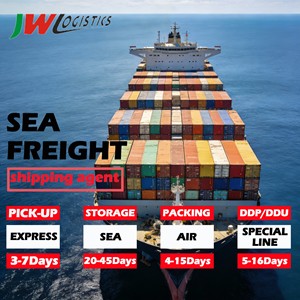
Phase Change Material (PCM) VIP Shippers & Sea LCL
High-density Vacuum Insulation Panel (VIP) shippers engineered for 120+ hours of temperature retention (+2°C to +8°C). Paired with cost-effective LCL ocean freight.
- Thermal Conductivity ≤ 0.004 W/m·K
- Zero-Power Passive Cooling Tech
- Consolidated Dropshipping Logistics
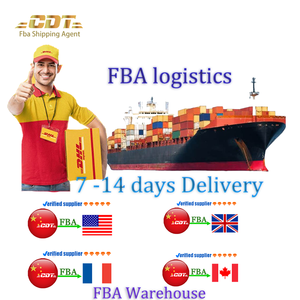
Smart IoT-Enabled Pharma Cold Boxes & Door-to-Door Transport
Customized OEM medical transport boxes equipped with cloud-connected Bluetooth/Cellular loggers. Complete door-to-door transit to Germany, UK, USA, and Italy.
- 21 CFR Part 11 Compliant Logging
- Shock, Humidity & Temp Sensors
- End-to-End Maritime Clearance
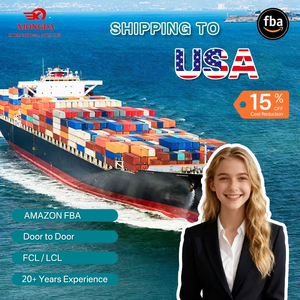
Modular OEM Cold Storage Reefers & 24-Hour Track Freight
Industrial cold storage reefers built to custom dimension requirements. Backed by 24/7 tracked sea freight forwarding from major ports to North America.
- Multi-Temperature Zone Division
- Corrosion-Resistant Alloy Shell
- FMC-Licensed Ocean NVOCC Routing
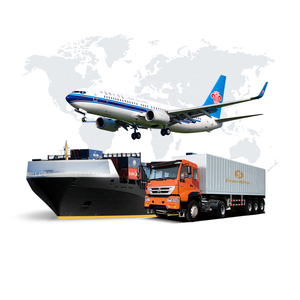
Vaccine Transport Packaging & Amazon FBA Cold Logistics
WHO-PQS qualified specimen shippers for clinical trial materials and specialized pharmaceuticals. Optimized for expedited FCL/LCL ocean transit and FBA intake.
- Payload Volume: 5L to 150L Options
- Tested under ISTA 7D Profiles
- Direct FBA Door Delivery Service
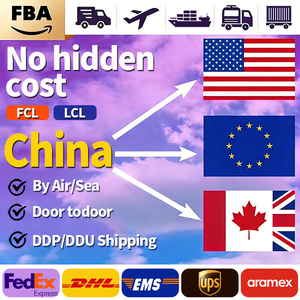
Custom Multi-Temp Pallet Shippers & Top Air/Sea Freight
Heavy-duty bulk insulated pallet shippers designed for perishables and bulk chemical shipments. Supported by top-ranked air and ocean logistics networks.
- Fits Standard Euro & US Pallets
- Polyurethane / VIP Composite Core
- Simplified Customs Duty Management

Cold Chain Monitoring Systems & DDP Spedition Services
Custom OEM hardware integration featuring active thermal monitoring and automated alarm triggers during long-haul EU/US freight transport.
- NIST-Traceable Sensor Calibration
- Automated Customs Compliance
- DDP Freight Agent Coverage
Perishable Thermal Blankets & Worldwide Freight Forwarding
Reflective thermal pallet covers and container liners engineered to safeguard food, wine, and floral cargo from solar radiation during multimodal transfer.
- 97% Radiant Heat Reflection
- Lightweight & Water-Resistant
- Global Air/Sea/Express Freight
Whitepaper: Engineering Thermal Dynamics & Global Cold Chain Security
In global cold chain management, maintaining temperature stability across international supply chains requires a harmonized approach combining custom OEM manufacturing precision with rigorous multimodal logistics execution. As global regulatory bodies—including the U.S. FDA, European Medicines Agency (EMA), and World Health Organization (WHO)—tighten Good Distribution Practice (GDP) standards, enterprise buyers must move beyond off-the-shelf packaging toward custom-engineered thermal solutions validated against ambient temperature extremes.
1. Advanced Thermal Materials Science: VIP & PCM Synergies
Custom OEM manufacturing allows enterprise clients to specify exact thermal containment thresholds based on cargo sensitivity profiles. Our engineering process integrates state-of-the-art thermal barrier technologies:
- Vacuum Insulation Panels (VIP): Engineered with fumed silica cores evacuated to near-perfect vacuum levels, achieving thermal conductivity rating as low as λ ≤ 0.004 W/m·K. This enables ultrathin wall profiles while delivering superior thermal resistance during extended ocean container voyages.
- Organic & Inorganic Phase Change Materials (PCMs): Formulated to freeze and melt at precise target temperatures (-50°C, -21°C, +4°C, +22°C). By tailoring the latent heat capacity of PCMs, packaging retains precise thermal equilibrium even when subjected to ambient spikes during tarmac handling or customs holds.
- Aerogel & Polyurethane Composite Enclosures: Custom molded for rugged industrial applications, offering structural integrity capable of enduring stack loads in excess of 1,200 kg during FCL/LCL ocean freight transport.
2. ISTA 7D & 7E Thermal Validation Protocols
Every OEM cold chain container engineered at our facility undergoes rigorous simulation testing within environmental chambers. Our chamber profiles replicate real-world multi-axis temperature fluctuations, including extreme summer heatwaves (+45°C ambient) and sub-zero winter transits (-20°C ambient). Certified validation reports provide procurement teams with verified temperature curves, establishing compliance prior to commercial deployment.
Why Enterprise Shippers Partner With Our OEM Cold Chain Infrastructure
As a specialized manufacturer and FMC-licensed international freight forwarder, we bridge the gap between thermal packaging hardware production and global supply chain execution. Shippers no longer need to manage separate vendor relationships for packaging procurement and freight forwarding.
Custom OEM Engineering
From CAD prototyping to mass production, we customize box dimensions, PCM phase temperatures, payload volumes, and branding to meet exact product requirements.
FMC-Licensed Freight Control
Our status as an FMC-licensed ocean transportation intermediary and direct air charter partner ensures primary space allocation, published tariff transparency, and seamless customs brokerage.
Real-Time IoT Trackability
Integrated cellular data loggers feed continuous temperature, location, door-open, and tilt metrics to a centralized dashboard for proactive risk mitigation.
Multimodal Transport & Thermal Performance Matrix
Selecting the optimal combination of freight mode and thermal packaging protection is critical for balancing cost per unit against transit time constraints. The comparative dataset below outlines key operational profiles across standard commercial shipping modes.
| Logistics Mode | Typical Transit Time | Recommended OEM Packaging | Thermal Duration | Cost Efficiency Rank |
|---|---|---|---|---|
| Expedited Air Freight (Direct) | 1 – 3 Days | Single-Use VIP PCM Shipper | 72 – 96 Hours | Premium High-Value |
| Consolidated Air Freight (DDP) | 4 – 7 Days | Multi-Use Active Battery Box / VIP | 120+ Hours | Balanced Speed & Cost |
| Ocean Freight FCL (Reefer Container) | 14 – 35 Days | Pallet Thermal Liners + Active Reefer | Continuous Electric | Highest Volumetric Economy |
| Ocean Freight LCL (Cold Chain) | 18 – 40 Days | Heavy-Duty PCM Bulk Shipper | 144+ Hours (Refreshed) | Optimal for Mid-Volume |
| Cross-Border Intermodal Rail / Truck | 5 – 12 Days | Hybrid Polyurethane VIP Enclosure | 96 – 120 Hours | Low Carbon Footprint |
Future Procurement & Technological Trends in Cold Chain Logistics
The global cold chain industry is experiencing structural transformations driven by biopharmaceutical expansion, stringent carbon neutral mandates, and advancements in autonomous sensor networks. Procurement leaders evaluating long-term supplier partnerships must consider three key macro trends shaping thermal packaging and logistics through 2030:
1. Circular Economy & Reusable Packaging Fleet Networks
Single-use EPS packaging is rapidly being phased out due to ESG mandates and landfill taxes across North America and the EU. Future procurement models emphasize Reverse Logistics Packaging-as-a-Service (PaaS). OEM manufacturers are designing modular, ultra-durable VIP boxes built for 50+ reverse-logistics cycles. Integrated RFID and BLE beacons streamline container recovery at destination seaports and airports, lowering lifetime packaging costs by up to 40%.
2. AI-Driven Predictive Drift Analytics
Static temperature tracking is giving way to predictive AI models. Next-generation IoT loggers transmit real-time telemetry to machine learning engines that combine external satellite weather data, port congestion alerts, and historical thermal dissipation rates. If an ocean container experiences a extended delay on the tarmac in Dubai or Miami, the platform automatically calculates remaining thermal hold hours and alerts ground handling agents to re-ice or plug in active reefers before breach occurs.
3. Eco-Friendly Bio-Based Phase Change Materials
Decarbonization initiatives are driving the development of non-toxic, bio-based organic PCMs harvested from plant waxes and agricultural byproducts. These renewable PCMs match the latent heat capacity of traditional paraffin waxes while offering non-hazardous disposal, zero toxicity risk for food/pharma contact, and a 65% reduction in embedded manufacturing carbon footprint.
Frequently Asked Questions (FAQ) for OEM Procurement & Logistics
Direct technical answers to common questions raised by supply chain directors, quality assurance managers, and global procurement officers.
What customization options are available for OEM cold chain packaging?
We provide full structural and material customization including exterior dimensions, internal payload geometry, shell composition (corrugated, HDPE, aluminum alloys), core insulation (VIP, PU, EPS), specific PCM melting points (-50°C to +25°C), custom outer branding, and integrated IoT sensor housings.
How do you validate temperature retention times for international transport?
Thermal qualification is executed in environmental chambers compliant with ISTA 7D, ISTA 7E, and WHO PQS testing protocols. Thermal mapping data loggers record interior temperatures at multiple payload zones under summer and winter ambient temperature profiles to generate formal validation dossiers.
What is the difference between active and passive cold chain systems?
Active systems utilize powered mechanical refrigeration (compressors, liquid N2, or battery power) to dynamically maintain temperature. Passive systems rely on engineered insulation barriers (VIP/PU) and phase change thermal mass (PCM/gel ice) without external electrical power. Passive containers offer high reliability for 72–144 hour transits without power point dependence.
Are your shipping services licensed by the Federal Maritime Commission (FMC)?
Yes. BGI Worldwide Logistics operates as an FMC-licensed Ocean Transportation Intermediary (OTI) and NVOCC. We maintain published ocean freight tariffs in compliance with U.S. maritime regulations, providing legal protection, transparent contract rate options, and direct bill of lading issuance.
How are customs clearance and DDP duties managed for cold chain shipments?
Under Delivered Duty Paid (DDP) terms, our global customs brokerage handles export documentation, import filings, tariff classification (HS Code alignment), duty payments, and agricultural/pharma regulatory clearances (FDA, USDA, CE) at destination ports before dispatching final-mile reefer transport.
Can you accommodate mixed temperature payloads in a single container?
Yes. Custom OEM pallet shippers and multi-zone reefer containers can be engineered with internal thermal bulkheads. This allows a single shipping unit to carry frozen cargo (-20°C) in one section and refrigerated cargo (+2°C to +8°C) in an adjacent insulated compartment.
What IoT sensors and monitoring options are integrated into your equipment?
We integrate NIST-traceable single-use or multi-use cellular/GPS loggers that stream real-time internal/external temperature, relative humidity, light exposure (door openings), tilt, shock, and precise location coordinate data directly to cloud management platforms.
What minimum order quantities (MOQ) apply for OEM packaging manufacturing?
Because we operate flexible OEM production lines, standard molded box profiles have low MOQs starting at 50 units. Fully custom CAD-molded or metal-alloy engineered reefer units are evaluated based on tooling specifications and project volume requirements.
How does your ocean freight LCL cold chain service operate without thermal compromise?
Our LCL cold chain service utilizes dedicated passive VIP pallet shippers or pre-conditioned reefer consolidation boxes. Cargo is loaded into temperature-controlled Container Freight Stations (CFS) at origin, maintaining an unbroken cold chain throughout consolidation, ocean transit, and deconsolidation.
What documents are required to initiate an international OEM cold chain shipment?
Key required documents include the Commercial Invoice, Detailed Packing List, Bill of Lading (B/L) or Air Waybill (AWB), Safety Data Sheet (SDS for PCMs or battery loggers), Certificate of Origin, and product-specific regulatory approvals (e.g., FDA import entry or CE declarations).
Request a Custom OEM Engineering & Logistics Quote
Speak directly with our thermal packaging engineers and FMC-licensed logistics directors to specify your thermal retention parameters, evaluate trade routes, and receive an all-inclusive freight quote.
Inquire Now