Featured OEM/ODM Overland Transport & DDP Services
High-capacity cross-border trucking, bonded warehouse transfers, and specialized DDP customs clearance tailored for global industrial supply chains and e-commerce fulfillment hubs.
Double Clearance Tax Included Ocean Shipping to USA Canada Australia DDP Freight Agent 13 Years Experience Free Consolidation
Send an Inquiry
China to Europe Door to Door Truck DDP Service Cross Border Road Freight Logistics to EU Amazon FBA Warehouses Shipping Agent
Send an Inquiry
DDP Door-to-door Delivery Express Sea Freight Forwarder Transport Cargo China To Worldwide Shipping Agent Logistics Services
Send an Inquiry
DDP Trucking for Warehouse Transfer | Road Freight to UK EU Overseas Warehouse | 15-22 Days | Safe Loading & Tax Included
Send an Inquiry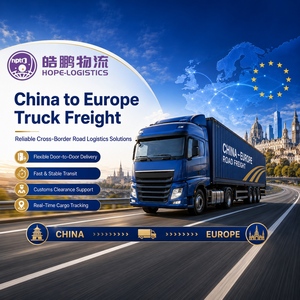
China To Europe Road Transport Cross Border Trucking Service Overland Freight Logistics Delivery Solution
Send an Inquiry
Top Fast Road Freight Forwarder From China to UK Birmingham Manchester London Door to Door DDP Customs Clearance
Send an Inquiry
China To Saudi Arabia UAE DDP Sea Freight | Reliable FCL Shipping Agent | Door-to-Door Logistics Service
Send an Inquiry
Trucking Service Shipping Agent FBA France Marseille Road Logistics Customs Clearance Door to Freight Cargo
Send an Inquiry1. Executive Architecture: Strategic Dynamics of OEM/ODM Road Freight Factories
The contemporary global manufacturing landscape demands hyper-agile, flexible, and resilient supply chain logistics. Original Equipment Manufacturers (OEMs) and Original Design Manufacturers (ODMs) operating across Asia, Europe, and the Americas face mounting pressure to bridge the gap between high-volume plant production lines and regional distribution hubs. While maritime transport offers economy of scale for mass inventory and air freight resolves emergency stockouts, OEM/ODM Road Freight Factories and specialized cross-border trucking networks have emerged as the indispensable fourth mode of international commerce.
Overland road freight solutions—specifically Eurasian transcontinental trucking (China-EU Silk Road Express), intra-ASEAN highway corridors, and US-Mexico cross-border bonded haulage—provide an unprecedented combination of speed, cost efficiency, and door-to-door control. Operating under international customs frameworks such as the TIR Carnet (Transports Internationaux Routiers) and the CMR Convention, modern road freight enables uninterrupted transit without port congestion, blank sailings, or complex container freight station (CFS) handoffs.
For enterprise procurement officers and supply chain directors, partnering with direct-from-factory road freight operators ensures predictable lead times, reduced buffer inventory requirements, and complete visibility over high-value components, automotive sub-assemblies, industrial machinery, and consumer electronics destined for global Amazon FBA hubs or overseas regional assembly facilities.
2. Enterprise Core Competencies: FMC-Licensed Regulatory Compliance & DDP Precision
Building upon decades of multimodal transport leadership, our global enterprise logistics infrastructure delivers dedicated, accountable road freight solutions that prioritize operational integrity over automated ticket queues. As a licensed Federal Maritime Commission (FMC) Ocean Transportation Intermediary and accredited TIR cross-border road carrier, we operate with complete regulatory oversight, maintaining fully published tariffs and compliant customs brokerage practices across global trade lanes.
End-to-End DDP Double Clearance
We absorb customs complexity by providing complete Duty Delivered Paid (DDP) structures. We handle import tariffs, VAT/GST filings, bond coverage, and product compliance (CE, FCC, FDA, RoHS) at destination entry ports.
Dedicated Fleet & Dual-Driver Relay
To achieve transit speeds competitive with air freight (15–22 days China-to-EU door-to-door), we deploy high-spec air-suspension tractor-trailers equipped with dual-driver non-stop relay operational protocols.
Bonded Warehouse Transfer
Direct factory-to-warehouse transfers without unpacking. Seamless cross-docking services into UK, European, and North American fulfillment facilities, including full Amazon FBA prep and palette labeling.
3. Strategic Sourcing Analysis: Future Procurement Trends in Road Logistics
Procurement paradigms for enterprise OEMs and ODMs are undergoing a structural shift driven by nearshoring, regional manufacturing clusters, and real-time inventory velocity metrics (On-Time In-Full - OTIF). Supply chain executives are increasingly moving away from single-mode ocean freight reliance to hedge against geopolitical bottlenecks, sea canal delays, and port labor disruptions. Key trends shaping procurement strategies include:
A. The Rise of "China+1" and Intra-Regional Road Freight Corridors: As manufacturing expands into Southeast Asia (Vietnam, Thailand, Malaysia) and Eastern Europe (Poland, Hungary, Czechia), cross-border trucking serves as the primary tissue connecting raw material suppliers to sub-assembly factories and final packaging plants. Road transit allows same-day or multi-day scheduled departures, eliminating container queueing at maritime terminals.
B. Dynamic Carbon Accounting and Scope 3 Compliance: Multinational corporations subject to ESG reporting standards (such as the EU CSRD directive) now evaluate road freight partners based on fleet emission standards. The integration of Euro 6 diesel trucks, LNG-powered heavy vehicles, and real-time GPS route optimization reduces per-ton-kilometer carbon footprints by up to 28% compared to inefficient, multi-stop regional distribution routes.
C. Integrated Bonded Road-Rail-Sea Multimodal Triangulation: Procurement leads are implementing hybrid routing models. For example, utilizing road freight for fast origin pickup and TIR border customs transit, transferring to long-haul rail or short-sea routes, and executing final-mile road delivery under a unified DDP Bill of Lading.
4. Operational Performance Matrix: Modal Efficiency & Cost Evaluation
Selecting the appropriate transport mode requires evaluating trade-offs between speed, cost per kilogram, risk profile, and customs predictability. Below is an engineering comparison matrix designed to assist supply chain managers in optimizing OEM/ODM freight allocation.
| Transport Mode | Average Lead Time | Cost Index (vs Sea) | Customs Model | Optimal OEM/ODM Cargo Profile |
|---|---|---|---|---|
| Cross-Border Road Freight (TIR) | 15 – 22 Days | Moderate (3x Sea) | TIR Carnet / DDP Direct | High-value components, automotive parts, fast-fashion OEM, urgent e-com stock |
| Air Freight (Direct / Express) | 3 – 7 Days | High (8x-12x Sea) | Airport Customs Clear | Line-down emergency spares, microchips, high-value prototypes |
| Ocean Freight (FCL Container) | 35 – 50 Days | Baseline (1x) | Port Clearance / Bonded | Heavy industrial machinery, raw bulk materials, non-urgent seasonal replenishment |
| Rail Freight (Intermodal Silk Road) | 22 – 30 Days | Balanced (2x Sea) | Border Railway Customs | Medium-weight consumer goods, industrial equipment, standardized pallet loads |
5. Technological Standards & Cargo Security Engineering
Overland haulage of OEM/ODM products requires stringent security measures and environmental controls. Factory goods often include sensitive micro-electronics, lithium-battery powered devices, or precision machinery susceptible to vibration, temperature fluctuations, and transit theft.
Cold-Chain & Climate Control Telematics: Advanced reefer road freight units utilize multi-zone temperature logging and real-time humidity tracking. Continuous IoT data streaming alerts dispatch personnel to temperature excursions, ensuring high-tech coatings, chemical raw materials, and precision electronics remain within factory specifications throughout thousands of kilometers of highway transit.
Anti-Theft Smart Locking & Geofenced Security: Cross-border tractor-trailers operate under TAPA (Transported Asset Protection Association) TSR guidelines. Electronic smart locks, remote engine immobilizers, dual GPS tracking, and mandatory driver rest stops at secured, monitored truck stops safeguard high-value OEM cargo against pilferage during transcontinental transit.
6. Operational Workflow: Managing Factory-Direct Road Freight Execution
To guarantee zero-defect execution, our logistics framework follows a strict five-stage operational procedure tailored for OEM/ODM factory dispatches:
Origin Factory Pickup & Load Audit
On-site container loading inspection, weight verification, pallet strapping audit, and pre-departure digital sealing at the OEM factory dock.
Customs Filing & Export Clearance
Validation of commercial invoices, packing lists, HS code classification, and automated export customs manifest registration.
TIR Border Transit & Relay Haulage
Express border green-channel crossing via TIR Carnet. Seamless driver rotation at designated relay hubs for continuous 24/7 movement.
Destination Import DDP Settlement
In-bond customs clearance, import tax/VAT payment processing, and regulatory inspection release at the destination border entry point.
Final-Mile Warehouse Delivery & POD
Scheduled tail-lift or dock unload at overseas fulfillment centers, Amazon FBA facilities, or buyer plants with electronic Proof of Delivery (POD).
Post-Transit Analytics & Audit
Detailed reporting on transit timestamps, speed performance, environmental stability logs, and consolidated financial billing.
Frequently Asked Questions: OEM/ODM Road Freight & Logistics
Detailed technical answers to common questions asked by enterprise supply chain executives, global buyers, and factory managers.
What makes road freight faster than sea freight for OEM/ODM factory shipments to Europe/UK?
+How does the DDP (Delivered Duty Paid) model work for factory-direct trucking?
+What is the weight and volume capacity for cross-border full truckload (FTL) and LTL road freight?
+Can hazardous materials or lithium battery products be transported via cross-border road freight?
+What documentation is required to initiate an international road freight shipment from an OEM factory?
+How are overseas warehouse transfers and Amazon FBA deliveries handled?
+How does cargo insurance protect high-value OEM/ODM industrial freight in transit?
+Optimize Your Factory-Direct Freight Pipeline Today
Connect with our senior logistics architects to configure custom cross-border road transport routes, calculate DDP land costs, or reserve dedicated truckload capacity for your upcoming OEM production runs.
Send an Inquiry