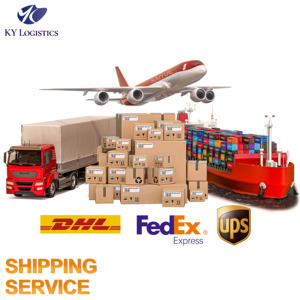
Cheapest Air Sea DDP LCL International Logistics Service Top 10 China to USA UK Canada Express Freight Forwarder Shipping Agent
Integrated multi-modal air and ocean DDP solutions designed for small-to-medium automotive spare parts and component shipments requiring tight delivery schedules.
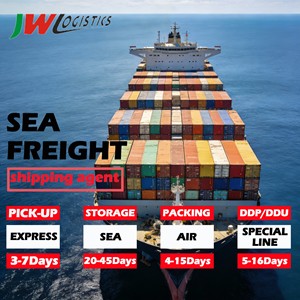
Cheapest Shipping Agent Sea Freight Forwarder DDP DDU LCL Express Sea Shipping Agent Dropshipping DHL Shipping to UK/USA/FR/CA
Flexible DDP/DDU ocean freight and express consolidation serving auto accessory factories, dropshippers, and tier-2 replacement part vendors.
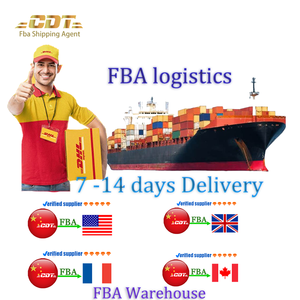
Top Sea Freight Forwarder Agent Shipping DDP Door To Door Transport Maritime International China To Canada Usa Italy Germany UK
Full container load (FCL) maritime transport engineered for heavy automotive stampings, engines, chassis modules, and OEM assembly tooling.

Fast Delivery Logistics Forwarder 24-Hour Track Ocean Sea Freight Forwarder Transitaire Shipping Agent From China to USA by Sea
24/7 tracked fast ocean transit tailored for emergency factory replenishment, preventing line-down events across transatlantic and transpacific plants.
China Sea Freight Forwarder To USA Canada Amazon FBA Door To Door FCL LCL Express Shipping Agent
Streamlined FCL/LCL ocean forwarding with integrated warehouse staging, palletization, and direct-to-factory or distribution center delivery.
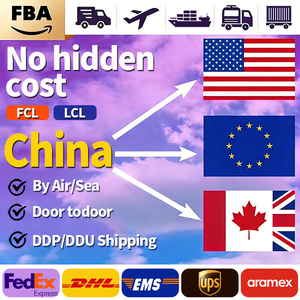
Air Sea DDP LCL International Logistics Service Top 10 China to USA UK Canada Express Freight Forwarder Shipping Agent
End-to-end multimodal DDP solutions combining dedicated air charters and ocean routes for high-precision EV electronics and harness assemblies.
Top 10 Air Freight Forwarder China To Usa Germany Spain Ddp Shipping Agent Services Logistique Spedition China Nach Deutschland
Expedited air freight spedition services customized for high-value automotive microchips, ECU units, and time-critical prototype testing parts.
Professional Logistics Shipping Agent Sea/air/Express Freight Forwarder From China to USA EU UK CANADA Worldwide
Customized global freight management offering complete customs clearance brokerage, duty deferral support, and multi-tier supplier consolidation.
Executive Analysis: The Structural Architecture of Automotive Logistics Factories
Automotive supply chain management represents the pinnacle of complex logistics engineering. Unlike standard retail freight, automotive logistics operates under the rigorous demands of Just-in-Time (JIT) and Just-in-Sequence (JIS) production methodologies. A single missing component—whether an ECU microcontroller, a stamped body panel, or a high-voltage wiring harness—can halt an Original Equipment Manufacturer (OEM) assembly line, costing upwards of $20,000 to $50,000 per minute in unrecoverable downtime.
Modern automotive factories rely on an ecosystem of specialized logistics hubs, container freight stations (CFS), and FMC-licensed non-vessel operating common carriers (NVOCC) to maintain uninterrupted flows of Completely Knocked Down (CKD) kits, Semi-Knocked Down (SKD) assemblies, and aftermarket replacement components. As the global automotive industry transitions rapidly toward Electric Vehicles (EVs), logistics providers must simultaneously handle traditional mechanical hardware alongside highly regulated Lithium-ion battery packs requiring stringent HAZMAT protocols and thermal monitoring.
Comprehensive Review: Top 10 Global Automotive Logistics Factories & Hubs
An in-depth evaluation of the world's most critical automotive logistics ecosystems, detailing their infrastructure, manufacturing synergy, and freight forwarding throughput.
1. Yangtze River Delta Automotive Mega-Hub (China)
Primary Infrastructure: Shanghai Ocean Port, Ningbo-Zhoushan Port, and surrounding tier-1 supplier parks in Suzhou and Wuxi.
Specialization: EV battery manufacturing, lithium-cell logistics, motor stator assembly, and CKD export programs. Home to major Gigafactories and mega-tier suppliers.
Logistics Capability: Direct bonded ocean freight, specialized reefer packaging for battery modules, and high-frequency DDP shipping corridors to North America and Europe.
2. Detroit-Windsor Cross-Border Corridor (USA & Canada)
Primary Infrastructure: Ambassador Bridge, Michigan Central Rail Hub, and Ontario Automotive Manufacturing Belt.
Specialization: Engine manufacturing, powertrain assembly, and seamless cross-border USMCA component shuttles.
Logistics Capability: In-bond bonded trucking, 24-hour expedited surface freight, and dedicated intermodal rail corridors for heavy automotive castings.
3. Stuttgart-Bavaria OEM Industrial Cluster (Germany)
Primary Infrastructure: Frankfurt Air Cargo Hub, Rhine River barge logistics, and DB Cargo rail terminals.
Specialization: High-precision luxury automotive engineering, transmission assembly, and advanced ADAS sensor integration.
Logistics Capability: Temperature-controlled air freight spedition, EU-wide just-in-sequence truck lines, and customs deferral logistics.
4. Bajío Automotive Manufacturing Belt (Mexico)
Primary Infrastructure: Guanajuato inland ports, Laredo border gateway, and Manzanillo maritime entry.
Specialization: Stamped metal parts, wiring harnesses, automotive seats, and light vehicle final assembly.
Logistics Capability: USMCA-compliant cross-border trucking, C-TPAT certified lanes, and intermodal container transfers.
5. Aichi-Chubu Logistics Logistics Center (Japan)
Primary Infrastructure: Port of Nagoya, Chubu Centrair International Airport.
Specialization: Lean manufacturing logistics, hybrid drivetrain production, and robotic assembly sub-components.
Logistics Capability: Ultra-precise Ro-Ro (Roll-on/Roll-off) vessel scheduling, air cargo charters, and automated container consolidations.
6. Gwangju-Ulsan Maritime Industrial Zone (South Korea)
Primary Infrastructure: Port of Ulsan, Busan New Port intermodal terminals.
Specialization: Battery cell chemical packaging, integrated electric drive modules, and finished vehicle shipping.
Logistics Capability: Dedicated hazardous cargo ocean freight, high-capacity breakbulk forwarding, and global OEM parts distribution.
7. West Midlands Automotive Tech Hub (United Kingdom)
Primary Infrastructure: Birmingham Airport cargo terminal, Port of Southampton feeder access.
Specialization: Performance luxury powertrains, aluminum chassis construction, and automotive R&D prototyping.
Logistics Capability: Expedited air freight forwarding, ATA Carnet temporary import management for prototype vehicles, and UK-EU Customs clearing.
8. Silesia-Moravia Automotive Corridor (Czechia & Poland)
Primary Infrastructure: Ostrava and Katowice logistics parks, trans-European railway links.
Specialization: Steering systems, brake assemblies, interior electronics, and lighting systems.
Logistics Capability: Cross-docking facilities, bonded truck transportation, and LCL consolidation into western European assembly sites.
9. Eastern Seaboard Automotive Hub (Thailand)
Primary Infrastructure: Laem Chabang Port, Suvarnabhumi Airport Cargo Complex.
Specialization: Commercial pickup truck manufacturing, engine block casting, and Southeast Asian tier-1 component export.
Logistics Capability: Regional feeder shipping, FCL/LCL ocean freight forwarding, and tropicalized cargo protection packaging.
10. Southern India Automotive Corridor (Chennai Hub)
Primary Infrastructure: Chennai Port, Kattupalli Port, and Oragadam Industrial Corridor.
Specialization: Small vehicle manufacturing, castings, forgings, and software ECU development.
Logistics Capability: Direct maritime shipping channels to Europe and North America, combined sea-air routing, and custom clearance brokerage.
Comparative Analysis Matrix: Global Automotive Logistics Hubs
Benchmarking operational metrics across primary manufacturing hubs to assist procurement directors in carrier and modal selection.
| Logistics Hub / Corridor | Primary Cargo Focus | Predominant Transport Mode | Avg. Lead Time to US/EU | HAZMAT / EV Battery Capability |
|---|---|---|---|---|
| Yangtze River Delta (China) | EV Battery Packs, Electric Motors, Microcontrollers | Ocean Freight (FCL/LCL) & Expedited Air | 14 – 22 Days (Ocean) / 2 – 4 Days (Air) | Fully Certified (UN 38.3) |
| Detroit-Windsor (US/CA) | Powertrains, Heavy Stampings, Frame Modules | Direct Truckload (FTL/LTL) & Intermodal Rail | 1 – 3 Days (Surface) | Standard Industrial Compliance |
| Stuttgart-Bavaria (Germany) | Transmissions, Sensor Arrays, Prototype Engines | Air Freight & EU Express Trucking | 2 – 5 Days (Transatlantic Air) | Advanced R&D HAZMAT Protocols |
| Bajío Belt (Mexico) | Harnesses, Seats, Molded Components | Cross-Border Bonded Trucking & Rail | 2 – 5 Days (Cross-Border Surface) | Moderate / Expanding EV Capability |
| Aichi-Chubu (Japan) | Robotic Arms, Hybrids, Transaxles | Ro-Ro Ocean Vessel & Air Charter | 12 – 18 Days (Ocean) | High Precision Battery Logistics |
| Silesia-Moravia (EU) | Sub-assemblies, Interior Trims, Brake Discs | Intra-EU Road Freight & Rail Intermodal | 1 – 4 Days (Within EU) | EU ADR Certified Surface Transport |
Enterprise Competitive Advantages: Why Global Automotive Shippers Partner With Us
Combining regulatory licensing, multimodal carrier-neutral routing, and human-driven shipment control to protect automotive supply chains.
FMC-Licensed NVOCC & Regulatory Protection
Operating as a fully licensed Federal Maritime Commission (FMC) ocean transportation intermediary with a transparent published tariff. We insulate automotive importers from arbitrary surcharges while maintaining rigorous compliance with U.S. and international maritime laws.
Accountable Management: Real People, Not Queues
Automotive disruptions require immediate human intervention, not automated ticketing bot responses. Every client is assigned a dedicated logistics specialist who understands your specific part numbers, dock delivery windows, and emergency rerouting protocols.
Complete Multimodal Integration
From next-flight-out expedited air cargo for emergency line-stoppage prevention to cost-optimized FCL ocean freight and intermodal rail transportation, we seamlessly orchestrate end-to-end movements under a single Bill of Lading.
DDP & DDU Customs Brokerage Expertise
Navigating complex automotive tariffs, Section 301 duties, USMCA rules of origin, and temporary import bonds (ATA Carnet). Our customs specialists ensure parts clear entry ports prior to vessel discharge, eliminating demurrage charges.
Real-Time IoT & Telemetry Visibility
Advanced tracking dashboards monitoring cargo location, shock, tilt, and temperature. Essential for sensitive EV battery shipments, delicate glass assemblies, and high-value engine control modules.
Carrier-Neutral Capacity Sourcing
We leverage extensive global contracts across steamship lines, cargo airlines, and motor carriers. Rather than forcing volume into fixed assets, we match your shipment urgency with the optimal cost-to-speed carrier option.
Future Procurement Trends in Automotive Supply Chain Logistics
Strategic shifts transforming how automotive procurement managers source freight capacity, mitigate geopolitical risks, and optimize landside costs.
1. Transition from Just-in-Time (JIT) to Hybrid Just-in-Case (JIC) Buffering
While JIT remains vital for high-cost components, global supply chain shocks have driven automotive OEMs to implement regional safety stock buffering. Procurement directors are increasingly acquiring near-factory warehouse space to store 2 to 4 weeks of critical sub-assemblies. Logistics partners must now offer integrated supplier park warehousing, vendor-managed inventory (VMI), and rapid shuttle transport to support this hybrid model.
2. Aggressive Nearshoring & Regional Cluster Sourcing (USMCA & CEE Expansion)
To reduce transpacific maritime reliance and tariff exposures, major automakers are shifting production to regional hubs such as Mexico's Bajío region and Central/Eastern Europe (Poland, Czechia, Hungary). Procurement strategies now favor freight forwarders with established cross-border trucking networks, bonded border transfer stations, and dual-customs clearance expertise (e.g., Laredo/Nuevo Laredo corridors).
3. Direct OEM Procurement of Dangerous Goods (EV Battery) Freight
As electric vehicle production scales, procurement managers are unbundling battery logistics from general component freight. EV battery packs require dedicated dangerous goods (HAZMAT) packaging, UN 38.3 certification compliance, specialized reefer containers to maintain safe thermal ranges during ocean transit, and real-time off-gas detection telemetry.
4. Index-Linked Contracting & Dynamic Freight Allocation
Rigid annual freight contracts are being replaced by hybrid pricing models. Automotive procurement teams are securing 60-70% of baseline volume under long-term FMC-filed ocean tariffs while allocating 30-40% to dynamic spot-market options to take advantage of freight rate fluctuations on major trade lanes between Asia, North America, and Europe.
Automotive Logistics Industry Development & Technological Trends
Key innovations redefining global automotive distribution networks over the next decade.
Scope 3 Decarbonization & Green Freight
Automotive OEMs are setting aggressive Net-Zero targets. Logistics providers are implementing biofuel-powered maritime transport, rail-intermodal conversions for long-haul routes, and electric yard tractors to minimize carbon footprints across the supply chain.
Digital Twins & Predictive Milestone Tracking
Integrating artificial intelligence and IoT sensors into shipping containers allows logistics platforms to create "Digital Twins" of active automotive shipments, predicting port congestion delays 5 to 7 days before vessel arrival.
Automated Micro-Hubs & JIS Sequencing
Logistics facilities situated near OEM plants are adopting automated storage and retrieval systems (ASRS) to sequence components in exact assembly order before loading onto factory-bound shuttles.
Automotive Procurement & Logistics FAQ
Operational answers to critical questions faced by automotive supply chain buyers, OEM logistics managers, and tier-1 component importers.
The choice between air freight and ocean freight depends on cargo value, volume, and assembly line urgency. Air freight is recommended for emergency line-down prevention, high-value microcontrollers, prototype tooling, and time-critical samples, providing airport-to-door delivery within 1 to 4 days. Ocean freight (FCL/LCL) is significantly more economical for heavy castings, engine blocks, body panels, and planned CKD/SKD inventory replenishment, typically taking 2 to 5 weeks depending on trade lanes.
FCL (Full Container Load) reserves an entire 20ft, 40ft, or 40ft High Cube container for your factory cargo. It is optimal for shipments exceeding 13–15 cubic meters, offers dedicated seal security, minimizes component handling, and accelerates port discharge. LCL (Less than Container Load) consolidates smaller automotive part shipments from multiple suppliers into a single container. You pay only for the volume utilized, making it ideal for low-volume tier-2 component orders, though it requires extra processing at container freight stations (CFS).
International automotive shipments require a comprehensive documentation package to navigate customs without delay:
- Commercial Invoice & Packing List: Detailing exact HS code classifications, part numbers, unit values, and weights.
- Bill of Lading (B/L) or Air Waybill (AWB): The official legal carriage document.
- Certificate of Origin (COO): Essential for claiming preferential tariff treatment under agreements like USMCA, EUR.1, or RCEP.
- Dangerous Goods Declaration (DGD): Mandatory for shipments containing Lithium-ion batteries (UN 3480/UN 3481), airbags, or seatbelt pretensioners.
- Importer Security Filing (ISF): Required for U.S.-bound ocean freight 24 hours prior to vessel loading at origin.
Lithium-ion EV batteries are classified as Class 9 Dangerous Goods. Transporting them legally requires UN 38.3 testing certification, specialized shock-resistant and fire-retardant outer packaging, state-of-charge (SoC) management (typically capped at 30% for air transport), and climate-controlled reefer containers for sea passage. Furthermore, freight forwarders must hold specialized HAZMAT accreditations and provide end-to-end telemetry monitoring.
The Federal Maritime Commission (FMC) regulates ocean transportation intermediaries operating in the United States. Working with an FMC-licensed NVOCC ensures that your logistics provider operates under published tariffs, maintains financial responsibility bonds, complies with federal maritime laws, and can issue legally recognized House Bills of Lading (HBL). This protects automotive importers from unlawful cargo detention and unauthorized rate surcharges.
For international automotive expos (such as IAA Mobility, SEMA, or the Detroit Auto Show), freight planning should begin 6 to 8 weeks prior to show opening. This timeframe allows for ocean/air transit, customs clearance, ATA Carnet temporary import documentation (ensuring duty-free re-export of concept vehicles), and advance warehouse marshaling yard scheduling.
Optimize Your Automotive Supply Chain Today
Connect with our senior logistics specialists to design a resilient, cost-effective multimodal freight plan for your OEM factory, tier-1 component network, or EV battery assembly line.