Featured Breakbulk & Multimodal Freight Solutions
Precision-engineered ocean freight, heavy-lift chartering, and DDP door-to-door logistics services
Air Sea DDP LCL International Logistics Service (China to USA/UK/Canada)
Integrated DDP consolidation and breakbulk feeder service for machinery, oversized industrial parts, and bulk trade flows from main China ports.
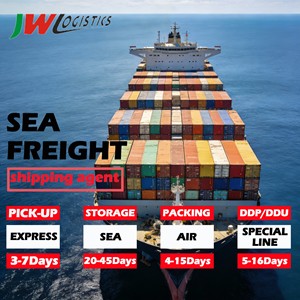
Professional Sea Freight Forwarder DDP/DDU Express (EU, UK, USA, CA)
Full door-to-door forwarding under strict DDP terms, handling oversized pallets, heavy crates, and commercial equipment with zero surprise tariffs.
Transatlantic & Transpacific Maritime Door-to-Door Heavy Cargo Solution
Dedicated ocean transport for out-of-gauge (OOG) machinery, heavy structures, and project cargo across European and North American major ports.
Fast-Transit Ocean Breakbulk & Vessel Chartering with 24-Hour Telematics
Direct vessel scheduling, heavy lift gear management, and real-time voyage tracking for industrial EPC contract shipments.
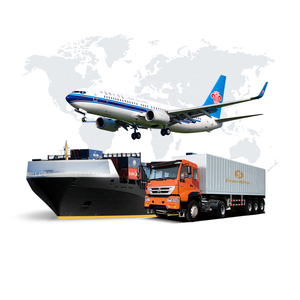
Customs-Cleared Ocean Cargo & Specialized Heavy Machinery Shipping
Comprehensive export/import customs handling, flat rack/open top containerization, and breakbulk vessel booking from China to global hubs.
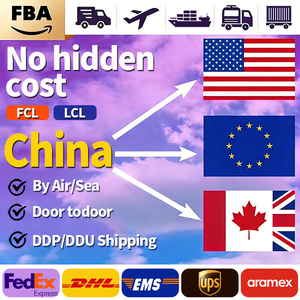
Multimodal Breakbulk & Consolidated International Forwarding Service
Optimal pairing of ocean breakbulk and inland heavy haulage for complex industrial equipment requiring custom lashing and securing.

Expedited Air & Ocean Heavy Charter Logistics (China to EU / Americas)
Rapid deployment options for critical plant components, oversized machinery spares, and time-sensitive EPC project deliveries.
End-to-End Worldwide Project Cargo & Breakbulk Shipping Management
Turnkey supply chain coordination incorporating origin marine surveys, crane operations, port marshaling, and final-destination delivery.
Why Global Importers & Buyers Partner With Us
Unmatched regulatory compliance, carrier-neutral chartering, and hands-on operational ownership
FMC Licensed OTI Credibility
As a fully licensed ocean transportation intermediary operating under published tariffs, we offer verified contract security and strict adherence to international maritime law.
Real People, Zero Ticket Queues
Every account is assigned a senior breakbulk logistics specialist who directly oversees your cargo lifecycle—ensuring clear accountability when real-time decisions matter.
Complete Multimodal Integration
From factory floor crane loading in China to heavy-haul lowboy trucking at destination, we manage ocean, air, rail, and road transportation under a unified bill of lading.
Carrier-Neutral Vessel Chartering
We do not lock you into rigid carrier assets. We evaluate global multipurpose fleets (MPPs), heavy-lift carriers, and RORO operators to optimize transit time and total cost.
Rigorous Engineering & Lashings
Our naval architects evaluate stowage plans, deck load capacity (t/m²), center of gravity, and lashing point integrity according to IMO Code of Safe Practice for Cargo Stowage.
Transparent Operational Metrics
No obscure line-item markups. We provide comprehensive quotes outlining port handling, berth dunnage, surveyor fees, and ocean freight with full documentation clarity.
Industry Whitepaper: Navigating China Breakbulk & Heavy Lift Shipping
As global infrastructure, renewable energy, and industrial manufacturing sectors demand larger, more complex machinery, traditional containerized shipping (FCL) reaches its structural limits. Engineering Procurement and Construction (EPC) firms, machinery exporters, and global buyers are increasingly turning to Breakbulk Ocean Shipping and Multipurpose Heavy Lift (MPP) Vessels. China remains the world's primary epicenter for heavy machinery export, making the selection of a qualified China breakbulk shipping supplier critical to operational continuity and risk mitigation.
Strategic Definition: Breakbulk cargo refers to non-containerized goods that are individually packaged (in crates, skids, or drums) or handled directly as unit loads (large turbines, locomotives, transformers, structural steel) and loaded into vessel holds or onto weather decks using specialized cranes.
1. Operational Engineering Requirements for Breakbulk Shipments
Unlike standard FCL container shipping where cargo fits uniform dimensional boxes, breakbulk logistics requires custom nautical and mechanical engineering before booking acceptance:
- Lifting Lug & Rigging Points: Heavy machinery must feature structural lifting lugs tested and certified to withstand dynamic force vectors during crane operations at port.
- Deck Strength & Weight Distribution: Heavy loads exceeding 20 Metric Tons per meter must be evaluated against the vessel's tanktop or hatch cover allowable load limits (t/m²). Dunnage (hardwood beams or steel girders) is strategically positioned to spread concentrated loads.
- Center of Gravity (CoG) & Tandem Lift Calculations: For cargo exceeding 100 MT, dual ship cranes working in tandem are often required. Precise CoG calculation prevents imbalance and gear failure.
- Marine Warranty Inspections (MWS): Independent marine surveyors inspect cargo integrity, lashing gear, line tension, and sea-fastening welds prior to issuing a Certificate of Approval for ocean transit.
2. Technical Comparison: Breakbulk vs. Out-of-Gauge (OOG) vs. RORO
Choosing the correct transport mode dramatically impacts freight expenditure, cargo safety, and port handling efficiency. Below is an engineering comparison matrix for supply chain planners:
| Transport Mode | Suitable Cargo Profile | Max Weight / Dim Limits | Port Handling Gear | Cost Structure Factor |
|---|---|---|---|---|
| Breakbulk (MPP Vessel) | Mining equipment, turbines, oversized tanks, structural steel, transformers. | Virtually unlimited (Up to 1,000+ MT with heavy-lift derrick cranes). | Vessel's heavy-lift cranes or shore-based mobile harbor cranes. | Freight calculated per Revenue Ton (w/m). High efficiency for dense cargo. |
| Out-of-Gauge (OOG Container) | Machinery slightly exceeding standard 20'/40' container dimensions (Flat Rack / Open Top). | Limited by container vessel slot capacity and crane spreader tolerances (~45 MT). | Standard container gantry cranes with specialized lifting frames. | Slot loss surcharges apply. High cost if width/height consumes adjacent slots. |
| Roll-on/Roll-off (RORO) | Wheeled heavy equipment, trucks, excavators, trailer-mounted machinery. | Constrained by vessel ramp capacity (typically up to 150–400 MT) and door clearance height. | Self-propelled drive-on or towed via specialized MAFI roll-trailers. | Low risk of handling damage; premium tariff per cubic meter. |
Future Procurement Trends in Global Breakbulk & Heavy Lift Shipping
As the international logistics landscape adjusts to geopolitical shifts, decarbonization mandates, and digital supply chain integration, global buyers must anticipate several structural transformations in breakbulk procurement over the coming decade:
1. Strategic Green Corridor Compliance & Decarbonization
The International Maritime Organization (IMO) carbon intensity regulations (CII and EEXI) are directly impacting multipurpose vessel fleets. Charterers and global importers are prioritising suppliers who deploy modern dual-fuel (LNG/Methanol) heavy-lift vessels. Procurement contracts increasingly require carbon footprint transparency reporting for breakbulk ocean legs.
2. Digital Twin Stowage & AI Lashing Simulation
Traditional manual stowage planning is being superseded by 3D Digital Twin simulation tools. Leading Chinese breakbulk suppliers utilize advanced finite element analysis (FEA) software to model vessel stress, hydrodynamic pitching, and roll forces during North Atlantic or Pacific transits. This reduces dunnage waste and accelerates port loading approvals.
3. Modular Factory & Offshore Wind Logistics Expansion
Procurement is shifting from individual machinery units to fully assembled, modular plant units. The rapid expansion of global offshore wind power components (nacelles, monopiles, 100m+ turbine blades) requires specialized long-deck MPP ships with DP2 dynamic positioning. Securing long-term charter agreements with vetted forwarders is becoming a key competitive advantage for EPC conglomerates.
Breakbulk & Project Logistics Technology Trends
To support high-value industrial projects, specialized freight forwarders are upgrading operational methodologies across the supply chain ecosystem:
IoT Tension & Humidity Sensors
Real-time telematics devices attached to heavy-lift lashing chains monitor tension loss and sea-spray salinity continuously during ocean voyages, instantly alerting the ship's bosun to re-tighten turnbuckles.
Smart Port Marshaling Yards
Key Chinese breakbulk hubs (Shanghai, Tianjin, Ningbo, Guangzhou) are implementing RFID cargo tracking in staging yards, drastically reducing vessel laytime and preventing staging bottlenecks.
Hybrid Multimodal Routing
Combining sea breakbulk from China with inland rail heavy-haul corridors across Europe and Central Asia provides a resilient alternative during peak ocean port congestion cycles.
Frequently Asked Questions: Breakbulk Sourcing & Operations
Direct answers from our logistics specialists to common international procurement challenges
Q: How is breakbulk freight priced compared to standard containerized freight?
A: Breakbulk freight is primarily calculated based on Revenue Tons (w/m - weight or measurement), where 1 Metric Ton = 1 Cubic Meter (or 1,000 kg depending on carrier tariff). Freight rates account for cargo volume, deck weight density, port gangway fees, and specialized lashing/dunnage material costs.
Q: What primary details are required to obtain an accurate breakbulk charter or freight quote?
A: You must supply a detailed packing list specifying overall dimensions (L x W x H), gross weight per piece, center of gravity (CoG) location, technical lifting drawings, stacking limits, ready date, pickup/delivery addresses, and preferred Incoterm (e.g., FOB, CFR, CIF, DDP).
Q: What is the difference between Breakbulk shipping and RORO shipping?
A: RORO (Roll-on/Roll-off) is designed for self-propelled or towable wheeled cargo (trucks, trailers, excavators) driven onto the vessel via a stern ramp. Breakbulk involves crane-lifted non-wheeled cargo stowed inside holds or on weather decks.
Q: Why is an FMC-licensed forwarder essential for ocean breakbulk to North America?
A: Federal Maritime Commission (FMC) licensing ensures the logistics intermediary complies with U.S. shipping regulations, maintains financial bonding protection, operates under legal tariffs, and protects cargo owners against carrier disputes or unlawful lien claims.
Q: How are oversized heavy lift items secured against severe ocean weather?
A: Securing relies on custom-engineered steel stoppers welded directly to the ship's deck, heavy-duty lashing chains (grade 80/100) equipped with load tensioners, and hardwood dunnage designed to maximize friction and absorb structural movement during heavy rolling seas.
Q: Can breakbulk cargo be shipped under DDP (Delivered Duty Paid) terms?
A: Yes. However, DDP for breakbulk requires specialized destination customs brokerage, heavy-haul route surveying (checking bridge clearances and axle weight laws), and coordination of mobile cranes for final site offloading.
Optimize Your Global Project Cargo & Breakbulk Logistics
Speak directly with our FMC-licensed breakbulk chartering engineering team. Receive custom stowage assessments, route surveys, and competitive all-in freight rates within 24 hours.