Featured China Freight Brokerage & Logistics Solutions
Engineered for seamless cross-border transport, compliant door-to-door (DDP/DDU) delivery, and verified carrier capacity allocation across key international trade lanes.
Air & Sea DDP/LCL Logistics China to USA, UK & Canada
End-to-end consolidated logistics with guaranteed customs clearance, automated duty payments, and last-mile express dispatch.
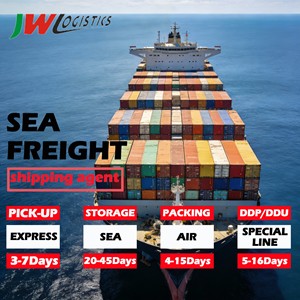
Multimodal Ocean Freight & Express Dropshipping to EU/USA
Flexible ocean consolidation for mid-to-high volume sellers, integrating DHL/UPS final delivery for seamless fulfillment.

Door-to-Door Maritime Sea Freight Brokerage (DE, UK, USA, IT)
Full Container Load (FCL) and Less Container Load (LCL) maritime transport supported by dedicated port-side drayage networks.
Expedited Ocean Freight Brokerage with 24-Hour Telemetry
Matson & Mason expedited ocean service featuring priority berthing, off-dock container retrieval, and continuous tracking visibility.
Amazon FBA Ocean Shipping Freight (FCL/LCL) USA & Canada
Direct FBA warehouse distribution with automated appointment scheduling, FBA prep compliance, and duty paid delivery.
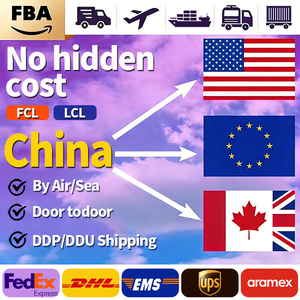
International Air & Sea Freight Consolidation (China-Wide)
Premier freight brokerage orchestrating multimodal supply chains, warehouse consolidation in Yiwu/Shenzhen, and global routing.
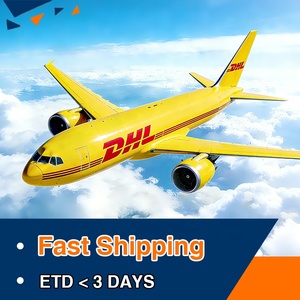
High-Priority Air Cargo Shipping (China to Germany, Spain, USA)
Charter and scheduled air freight solutions for high-value cargo, automotive parts, electronics, and time-critical manufacturing inputs.
Global Multimodal Freight Forwarding (Sea, Air, Rail, Express)
End-to-end commercial freight brokerage backed by FMC licensing, customs brokerage compliance, and single-point accountability.
Architecting Global Logistics Superiority
Why Fortune 500 procurement leaders and high-volume cross-border importers partner with our FMC-licensed freight brokerage infrastructure.
FMC Licensed OTI Regulatory Trust
Operating as a fully compliant Federal Maritime Commission (FMC) licensed Ocean Transportation Intermediary. We maintain published ocean tariffs, bonded security, and strict legal accountability over your international contracts.
Dedicated Human Specialist Network
Bypass automated ticket queues. Every procurement agreement is assigned a named logistics Specialist who monitors your cargo, executes exception management, and resolves port anomalies in real time.
Multimodal Carrier Neutral Routing
Unbiased capacity allocation across major ocean alliances (2M, OCEAN Alliance, THE Alliance) and tier-1 air carriers. We route based on cost efficiency, transit velocity, and schedule integrity rather than single-asset push.
Macro Industry Trends Shaping China Freight Brokerage & Global Export Logistics
The global freight forwarding landscape is undergoing a systemic structural transformation. As supply chain volatility, tariff complexities, and geopolitical realignment persist, international buyers sourcing from China require far more than conventional port-to-port freight booking. Today’s top China freight brokerage suppliers act as sophisticated supply chain architects, integrating digital telemetry, compliance governance, and multimodal elasticity.
Key structural shifts defining modern cross-border logistics include:
- Algorithmic Capacity Allocation & Freight Rate Indexing: Digital brokerages utilize predictive AI modeling to benchmark spot rates against long-term contract indices, ensuring importers secure optimal ocean container (FCL) space even during peak shipping seasons or general rate increases (GRI).
- End-to-End DDP Integration: The rapid growth of global e-commerce and omnichannel retail has elevated Delivered Duty Paid (DDP) from a niche request to a primary procurement standard. China-based freight exporters must handle export customs clearance, international transport, destination import duties (HTS classification), and last-mile carrier injection under unified legal framework.
- Customs Compliance & Regulatory Scrubbing: Escalating enforcement around trade compliance (such as Uyghur Forced Labor Prevention Act compliance, C-TPAT security requirements, and Section 301 tariffs) demands rigorous documentation pre-audit before cargo departs major ports like Shanghai, Ningbo, Yantian, or Qingdao.
- Sustainability & ESG Decarbonization Mandates: Leading freight forwarders are implementing carbon offset tracking and prioritizing green-corridor ocean vessels and intermodal rail programs to support corporate scope 3 emission reductions.
Multimodal Transport Comparison Matrix
Technical performance metrics evaluated by logistics procurement managers when selecting China-to-Global shipping vectors.
| Logistics Mode | Average Transit Time | Cost Vector | Primary Commodity Suitability | Risk & Volatility Index |
|---|---|---|---|---|
| Express Air Freight | 3 - 5 Business Days | High ($$$$) | High-value electronics, medical samples, rapid prototypes | Low (Highly predictable schedules) |
| Consolidated Air Cargo | 5 - 8 Business Days | Moderate-High ($$$) | Automotive spares, seasonal apparel, urgent restocking | Low-Moderate (Airport congestion dependent) |
| Expedited Ocean (Matson/Mason) | 11 - 15 Calendar Days | Moderate ($$) | E-commerce fast inventory, Amazon FBA replenishment | Moderate (Fast-track port offloading) |
| Standard Ocean FCL (Full Container) | 22 - 35 Calendar Days | Optimal Efficiency ($) | Bulk manufactured goods, machinery, furniture, raw materials | Moderate-High (Port congestion & blank sailings) |
| Ocean LCL (Consolidation) | 25 - 40 Calendar Days | Ultra-Economical ($) | Small-to-medium palletized shipments (>2 CBM) | High (CFS handling & deconsolidation delays) |
Future Strategic Procurement Trends in China-to-Global Freight Sourcing
As corporate procurement officers redesign their 2025–2030 sourcing models, the dynamic between importers and China freight forwarders is evolving from transactional rate shopping toward strategic infrastructure integration. Successful global brands are establishing high-yield procurement playbooks grounded in the following core principles:
1. Hybrid "China + 1" Logistics Orchestration: While manufacturing diversification expands into Southeast Asia (Vietnam, Malaysia, Indonesia), China remains the central raw material and sub-assembly engine. Freight brokerages are building dual-hub routing models that seamlessly aggregate components from Chinese supplier clusters and merge them with secondary assembly nodes before final ocean dispatch.
2. Dynamic Contract Indexation over Fixed-Annual Bids: Annual fixed freight contracts often break down during supply disruptions or sharp market dips. Future-ready procurement strategies incorporate hybrid rate agreements combining index-linked baseline ocean tariffs with guaranteed peak-season surcharge (PSS) caps and guaranteed space allocation clauses.
3. Advanced Duty Optimization & De Minimis Compliance Strategy: Tariff management has become central to logistics ROI. Top China freight brokers provide integrated trade advisory, helping buyers leverage tariff engineering, bonded warehousing, First Sale Rule valuations, and duty drawback mechanisms to minimize landing costs legally.
Frequently Asked Questions: China Freight Procurement
Authoritative technical guidance compiled by FMC-licensed logistics directors and customs compliance specialists.
What is the critical distinction between DDP and DDU/DAP Incoterms when importing from China?
Under DDP (Delivered Duty Paid), the China freight forwarder/seller assumes total financial and operational responsibility, including export clearance, ocean/air transport, import customs clearance, and payment of all destination taxes, tariffs, and customs duties. Under DDU/DAP (Delivered Duty Unpaid / Delivered at Place), the buyer/importer is legally obligated to clear import customs, provide an Importer Security Filing (ISF), and settle all duties upon cargo arrival at the destination port.
Why is FMC Licensing essential when contracting an ocean freight broker for U.S. bound shipments?
The Federal Maritime Commission (FMC) regulates Ocean Transportation Intermediaries (OTIs) in the United States. An FMC-licensed NVOCC (Non-Vessel Operating Common Carrier) or Freight Forwarder is legally authorized to issue executable Bills of Lading, maintain financial security bonds to protect cargo owners against fraud, and publish public tariff rates. Working with an unlicensed broker exposes importers to container seizure, unmitigated demurrage liabilities, and severe legal non-compliance penalties.
How is Volumetric Weight (Chargeable Weight) calculated for Air Cargo vs. Express Shipping?
Air freight carriers charge based on whichever value is higher: Actual Gross Weight (kg) or Volumetric Weight (kg). The international volumetric divisor for standard air freight is 6000 ($L \times W \times H \text{ in cm} \div 6000$), whereas for courier express (DHL/UPS/FedEx) it is 5000 ($L \times W \times H \text{ in cm} \div 5000$). Accurate packaging optimization can yield up to 30% reduction in air freight transport costs.
What measures prevent Demurrage and Detention charges at destination ports?
Demurrage (charges for containers stored inside the port terminal past free days) and Detention (charges for equipment retained outside the terminal past free days) are mitigated by: 1) Pre-clearing customs 48-72 hours prior to vessel berth via Automated Broker Interface (ABI); 2) Securing extended free-time agreements (7-14 days) during contract negotiation; and 3) Utilizing dedicated local drayage fleets with off-dock container yard staging capacity.
What mandatory documentation is required for seamless customs clearance of China exports?
Standard commercial export documentation includes: 1) Commercial Invoice (listing precise HTS codes, unit values, currency, and Incoterm); 2) Detailed Packing List (gross/net weight, dimensions, packaging types); 3) Bill of Lading (B/L) or Air Waybill (AWB); 4) Certificate of Origin (if claiming preferential tariff treatment); and 5) Safety Data Sheets (SDS) or Dangerous Goods (DG) certificates if cargo contains lithium batteries, chemicals, or magnetic materials.
How does an experienced freight broker manage Amazon FBA delivery requirements?
Specialized FBA freight forwarders ensure 100% adherence to Amazon fulfillment center guidelines: applying FNSKU labeling, adhering to strict palletization specs (ISPM-15 heat-treated wood pallets, max 72 inches height, stretch-wrapped), scheduling appointments through Amazon's Carrier Central portal, and utilizing bonded drayage to avoid rejected appointments or warehouse placement delays.
Ready to Optimize Your China Sourcing & Global Freight Infrastructure?
Partner with an FMC-licensed logistics team offering custom multimodal routing, transparent tariff structures, and dedicated door-to-door execution.