FMC-Licensed Logistics & Compliance Solutions
Enterprise-grade air, sea, and multimodal freight routing optimized for tariff compliance, regulatory security, and seamless end-to-end execution.
Air & Sea DDP LCL Freight Forwarding | China to USA, UK, Canada
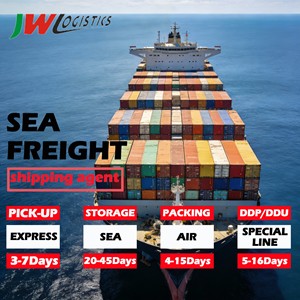
Multimodal DDP/DDU Sea Freight & Dropshipping | China to EU/NA
Premium Ocean Freight DDP Door-to-Door | China to Global Destinations
24/7 Monitored Ocean Freight Forwarding | China to US Port Delivery
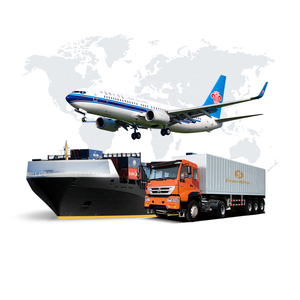
Amazon FBA Dedicated Sea Freight (FCL/LCL) | China to USA & Canada
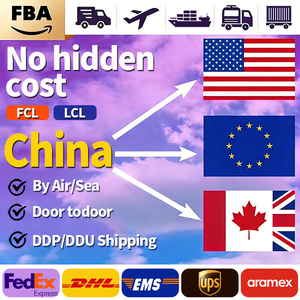
Consolidated Air & Ocean Cargo Solutions | China to UK, USA, CA
Expedited Air Cargo DDP Express | China to Germany, Spain & USA
End-to-End Enterprise Multimodal Freight | China to EU, UK, Worldwide
Navigating International Trade Compliance: The Strategic Role of Top China Exporters & NVOCC Logistics
In an increasingly complex global macro-environment defined by shifting tariff regimes, heightened regulatory scrutinies, and geopolitical realignments, the role of a China Trade Compliance Factory and Exporter has evolved from basic manufacturing and shipping execution to strategic supply chain architecture. Sourcing from China requires an advanced understanding of trade rules, tariff classifications, export clearance controls, and multimodal routing optimization.
Modern global brands and B2B buyers must partner with licensed entities that bridge China’s production infrastructure with global destination customs standards (such as U.S. CBP, EU Taxation and Customs Union, and Canada Border Services Agency). Operating as a Federal Maritime Commission (FMC) licensed ocean transportation intermediary (NVOCC), our organization bridges the gap between high-volume manufacturing output and precise cross-border compliance enforcement.
Future Procurement Trends in China-Global Supply Chains
Key structural shifts transforming cross-border sourcing, freight logistics, and regulatory compliance.
Automated HS Code Precision
The global push toward AI-driven tariff classification mandates exact Harmonized System (HS) code assignment at the point of origin. Misclassifications now carry severe financial penalties and cargo seizure risks under updated customs enforcement frameworks.
End-to-End DDP Standardized Risk Transfer
Procurement departments are overwhelmingly transitioning from traditional FOB/CIF terms to Delivered Duty Paid (DDP). This shifts customs clearance, duty liability, and final-mile delivery risks entirely to expert logistical intermediaries who maintain local regulatory entities.
Digital Chain-of-Custody Tracking
Real-time IoT telemetry and blockchain-verified paperwork are rapidly replacing manual bill of lading handling. Buyers now demand instant milestone visibility across air, ocean, rail, and trucking nodes with zero documentation latency.
Why Enterprise Shippers Partner with Our Compliance Network
Combining deep Chinese factory-floor integration with rigorous North American and European logistics regulatory frameworks, we provide a unified trade portal for seamless global commerce.
1. Licensed Intermediary Authority
Unlike unregistered digital freight brokers, we operate as a fully regulated Federal Maritime Commission (FMC) licensed Ocean Transportation Intermediary. We maintain published tariffs and direct carrier contracts, ensuring legal accountability and rate stability.
2. Human-Centric Exception Management
While tech platforms rely on automated chatbots when disruptions occur at port terminals, our operations are driven by dedicated, named logistics experts who intervene immediately to resolve customs delays, rollings, and inspect holds.
3. Multimodal Carrier Neutrality
We do not push single-asset capacity. Instead, we dynamically evaluate daily air cargo capacity, ocean FCL/LCL sailings, intermodal rail networks, and cross-border trucking rates to engineer the optimal cost-to-speed ratio for your cargo profile.
4. Specialized Cargo & Trade Show Expertise
From temperature-sensitive industrial goods to strict trade show booth deadlines, our white-glove logistics execution encompasses pre-planning, temporary import Carnets, and time-critical marshaling yard deliveries.
Frequently Asked Questions (FAQ)
Critical compliance, trade mode, and logistics insights for international buyers and supply chain managers.
How do I determine whether to use Air Freight or Ocean Freight for my China shipments?
Selection depends primarily on product density, total payload value, and required time-to-market. Air freight is recommended when transit time (typically 1 to 7 days door-to-door), cargo value per kilogram, or production deadlines outweigh freight expenditure. Ocean freight (FCL or LCL) is optimal for high-volume, bulkier cargo where minimizing per-unit freight cost is paramount. Ocean transit generally ranges from 2 to 6 weeks port-to-port depending on the trade lane and destination hub.
What is the operational difference between FCL and LCL ocean shipping?
FCL (Full Container Load) reserves an entire 20ft, 40ft, or 40ft High Cube container exclusively for your consignment. It provides superior security, eliminates intermediate co-loading handling, and becomes cost-effective once shipment volume exceeds 13 to 15 cubic meters (CBM). LCL (Less than Container Load) consolidates smaller shipments from multiple buyers into a single container. You pay strictly for the volumetric space consumed, making it ideal for smaller shipments, though it requires additional handling at origin and destination Container Freight Stations (CFS).
What documentation is mandatory for seamless customs clearance when exporting from China?
At a minimum, standard commercial exportations require an accurate Commercial Invoice, a detailed Packing List, and a primary transport document (Master/House Bill of Lading for ocean shipments or Air Waybill for air cargo). Depending on the commodity classification (HS Code) and target market, secondary documentation may include Certificates of Origin (Form E/Form A), Export Licenses, MSDS (Material Safety Data Sheets) for hazardous goods, UN 38.3 testing reports for lithium batteries, or EPA/FDA declarations.
Why is working with an FMC-licensed Ocean Transportation Intermediary critical?
Federal Maritime Commission (FMC) licensing ensures that an ocean freight forwarder or NVOCC operates under strict U.S. regulatory oversight, maintains required financial bonds, and publishes transparent tariff rates. Partnering with an FMC-licensed entity safeguards importers against fraudulent billing practices, unauthorized cargo holds, and structural non-compliance during cross-border maritime transport.
How does DDP (Delivered Duty Paid) protect overseas buyers from unexpected costs?
Under DDP Incoterms, the seller/logistics intermediary assumes total responsibility for cargo transport, export customs, international freight fees, marine insurance, destination customs brokerage, duty/tax payments, and final door delivery. This structure eliminates unexpected demurrage, storage fee spikes, or customs misclassification fines for the buyer, delivering total cost predictability.
What key parameters are required to receive an immediate and precise freight quotation?
To compute an accurate, all-in freight quotation, our team requires: (1) Pickup origin address and delivery destination ZIP/postal code, (2) Commodity description and 6-digit HS Code, (3) Total gross weight and outer packaging dimensions (L x W x H), (4) Ready date for cargo dispatch, (5) Incoterms agreed with the supplier (e.g., EXW, FOB, DDP), and (6) Any specialized handling requirements such as liftgate delivery, temperature control, or hazardous classification.
Optimize Your China Trade Compliance & Logistics Network
Connect directly with our senior trade specialists for detailed rate benchmarking, tariff classification reviews, and custom multimodal routing plans.