Executive Whitepaper: Strategic Fulfillment Infrastructure & Cross-Border Freight Management
In an era defined by macro-economic volatility, geopolitical realignments, and fluctuating consumer behavior, enterprise procurement officers and supply chain directors must transition from reactive shipping arrangements to predictive, resilient fulfillment architectures. As a premier fulfillment services manufacturer and international logistics exporter, our operational philosophy centers on eliminating systemic handoff vulnerabilities across global trade corridors.
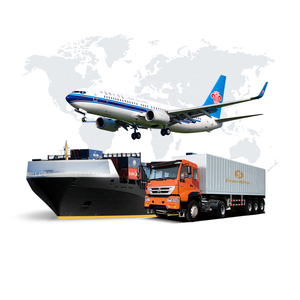
Modern cross-border fulfillment demands far more than basic freight moving from point A to point B. It requires an integrated orchestration of origin consolidation, regulatory compliance verification, ocean and air multimodal routing, customized customs brokerage clearance, and final-mile distribution. By leveraging Federal Maritime Commission (FMC) licensing as a Non-Vessel Operating Common Carrier (NVOCC) alongside robust carrier-neutral networks, enterprise brands can maximize landed cost efficiency while retaining total operational agility.
Information Gain Key Takeaway: Freight failure rarely originates mid-transit on ocean or air vessels; it stems from origin documentation mismatches, improper Incoterms execution, and handoff friction at port terminals. Mitigating these vectors requires an end-to-end management model backed by licensed authority.
Multimodal Modal Efficiency: Air vs. Ocean vs. Intermodal Matrix
Selecting the optimal transportation mode is not merely a compromise between transit speed and monetary cost. It is a strategic balance dictated by stock-keeping unit (SKU) velocity, inventory carrying charges, product shelf life, and volumetric density. Below is a analytical framework deployed by our logistics engineers to audit client cargo flows:
| Transport Mode |
Typical Transit Window |
Landed Cost Profile |
Optimal SKU Category |
Regulatory Requirement |
| Expedited Air Freight |
1 - 5 Days Door-to-Door |
High ($/kg basis) |
High-value electronics, seasonal samples, line-down industrial parts |
IATA / TSA Dangerous Goods Clearance |
| FCL Ocean Freight |
18 - 35 Days Port-to-Port |
Lowest per volumetric unit |
High-volume standardized goods, heavy industrial equipment |
FMC Tariff & Bill of Lading Filing |
| LCL Ocean Consolidation |
22 - 40 Days Door-to-Door |
Optimized for 1-15 CBM |
Mid-tier inventory replenishment, fragmented supplier orders |
CFS De-consolidation Documentation |
| Domestic Truck & Intermodal |
2 - 8 Days Transcontinental |
Moderate / Eco-Efficient |
Cross-border North America distribution (USA-CA-MX) |
DOT / FMCSA Carrier Vetting |
Understanding these modal parameters enables global sourcing managers to structure hybrid logistics strategies. For instance, splitting shipment volume—moving 20% of critical inventory via expedited Air DDP to capture immediate market demand while routing the remaining 80% via FCL/LCL ocean freight—reduces stockout risk without degrading net operating margins.
Why Global Enterprise Brands Partner With Our Infrastructure
As a leading fulfillment manufacturer and exporter, our capabilities extend past brokerage into total control over international supply chain mechanics. We integrate enterprise-grade logistics operational standards with dedicated human oversight.
FMC Licensed Authority
Operates as a fully regulated ocean transportation intermediary. Fully compliant under U.S. maritime regulations with published tariff structures, protecting your contract integrity.
Carrier-Neutral Routing
We leverage relationships across top-tier steamship lines and air cargo alliances, selecting routes based strictly on speed, reliability, and cost parameters rather than asset bias.
Human-Centric Desk
Bypass automated call queues. Every enterprise client is assigned a dedicated logistics specialist who understands cargo specs, deadlines, and consignee parameters.
Document Discipline
Rigorous pre-audit of Commercial Invoices, Packing Lists, Certificates of Origin, and HTS Code classifications to ensure seamless customs entry pre-clearance.
Specialized Cargo Control
Customized handling protocols for oversized, heavy machinery, temperature-controlled perishables, and regulated dangerous goods (DG) transport.
Milestone Visibility
End-to-end digital shipment status updates combined with proactive exception handling ensures procurement teams maintain absolute supply chain awareness.
Future Procurement Trends in Global Sourcing & Fulfillment
As global supply chains continue to evolve, procurement officers must adapt to three structural shifts reshaping international freight logistics over the next decade:
1. Nearshoring and Multi-Node Hub Redundancy
To reduce dependency on single-origin manufacturing corridors, multinational enterprises are shifting toward a "China Plus One" sourcing framework paired with nearshoring initiatives across Southeast Asia, Mexico, and Eastern Europe. Fulfillment partners must therefore offer flexible multimodal infrastructure capable of managing multi-origin consolidation hubs into unified target consumer markets.
2. Digital Compliance Auditing & HTS Precision
Global customs authorities are deploying automated risk assessment engines that flag discrepancies in HTS classifications, valuation declarations, and rules of origin certificates instantly. Future-proof procurement strategies demand pre-clearance documentary checks engineered directly into origin warehouse workflows, drastically minimizing terminal demurrage and detention charges.
3. ESG Alignment & Low-Carbon Freight Corridor Selection
Corporate sustainability directives now directly impact freight procurement. Shippers are increasingly mandating carbon-intensity reporting for ocean vessel deployments and requiring intermodal rail legs to replace long-haul diesel trucking. Modern fulfillment exporters must incorporate environmental performance indices directly into freight quotes alongside cost and transit metrics.