Enterprise Logistics & Freight Solutions
Direct door-to-door, DDP, FCL/LCL ocean freight, and express air solutions tailored for global importers and B2B buyers.
Cheapest Air Sea DDP LCL International Logistics Service Top 10 China to USA UK Canada Express Freight Forwarder Shipping Agent
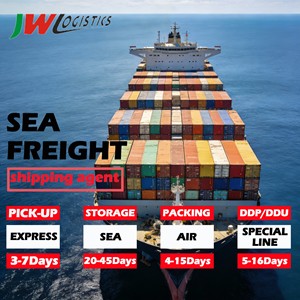
Cheapest Shipping Agent Sea Freight Forwarder DDP DDU LCL Express Sea Shipping Agent Dropshipping DHL Shipping to UK/USA/FR/CA
Top Sea Freight Forwarder Agent Shipping DDP Door To Door Transport Maritime International China To Canada Usa Italy Germany UK
Fast Delivery Logistics Forwarder 24-Hour Track Ocean Sea Freight Forwarder Transitaire Shipping Agent From China to USA by Sea
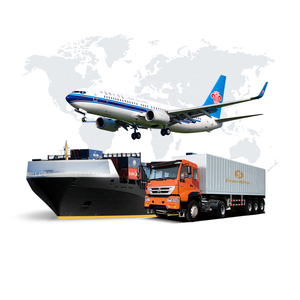
China Sea Freight Forwarder To USA Canada Amazon FBA Door To Door FCL LCL Express Shipping Agent
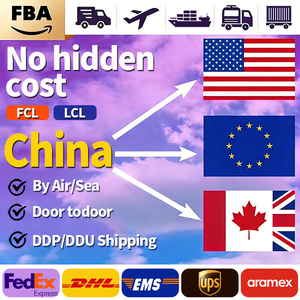
Air Sea DDP LCL International Logistics Service Top 10 China to USA UK Canada Express Freight Forwarder Shipping Agent
Top 10 Air Freight Forwarder China To Usa Germany Spain Ddp Shipping Agent Services Logistique Spedition China Nach Deutschland
Professional Logistics Shipping Agent Sea/air/Express Freight Forwarder From China to USA EU UK CANADA Worldwide
Why Enterprise Shippers Partner With Us
Eliminating handoff friction through single-point accountability, regulated compliance, and mode-agnostic routing.
FMC-Licensed Regulatory Power
As a Federal Maritime Commission (FMC) licensed Ocean Transportation Intermediary (OTI), we operate under strict U.S. federal compliance, publishing lawful tariffs to protect your contracts and mitigate risk.
Human Accountable Management
No automated ticket queues or disjointed handoffs. Every client is assigned a dedicated logistics specialist who understands your consignees, ready dates, and compliance mandates.
Complete Multimodal Integration
Seamlessly bridging ocean (FCL/LCL), air cargo, full truckload (FTL), less-than-truckload (LTL), and rail intermodal under a unified operational umbrella.
Carrier-Neutral Optimizations
We leverage top-tier alliances across air and ocean lines rather than pushing fixed assets. This ensures optimal balance between transit velocity, cost efficiency, and space guarantees.
Specialized Cargo Expertise
From temperature-controlled perishables and hazardous materials to out-of-gauge industrial machinery and trade show logistics, we engineer specialized transit protocols.
End-to-End Visibility & DDP
Full control over origin pickup, customs brokerage, export declarations, and final-mile delivery with automated milestone tracking and consolidated invoicing.
Strategic Insights: Managing Port Logistics Infrastructure & Supplier Relationships
In an era defined by global supply chain volatility, sourcing from trusted port logistics factories and suppliers requires moving beyond simple freight brokering. Procurement teams must deploy data-driven supply chain engineering that integrates ocean port throughput, inland drayage efficiency, customs pre-clearance, and multimodal transport options.
1. The Mechanics of Modern Port Logistics & Factory Integration
Port logistics factories act as critical consolidation nodes near strategic ocean terminals (such as Shenzhen, Ningbo-Zhoushan, Shanghai, Los Angeles, and Rotterdam). These specialized logistics facilities bridge manufacturing production lines with global maritime carriers.
- Container Freight Station (CFS) Optimization: Modern port suppliers operate advanced CFS hubs that enable seamless Less-than-Container Load (LCL) consolidation, allowing SME buyers to aggregate cargo from multiple manufacturing origins into a single efficient ocean booking.
- Automated Drayage & Yard Management: Utilizing telemetry and real-time gate automation, leading port logistics facilities minimize port dwell time and container demurrage charges during peak congestion periods.
- Pre-Clearance Protocol Implementation: By initiating ISF (Import Security Filing) and customs documentation prior to vessel departure, trusted suppliers streamline clearance upon port arrival.
2. Selecting Ocean Modes: FCL vs. LCL Strategic Breakdown
A central challenge for international procurement managers is determining the tipping point between Full Container Load (FCL) and Less than Container Load (LCL). The table below outlines key operational variables:
| Logistics Metric | Full Container Load (FCL) | Less Than Container Load (LCL) | Air Freight Express |
|---|---|---|---|
| Economic Threshold | > 13–15 Cubic Meters (CBM) | 1 – 13 Cubic Meters (CBM) | High Value / < 300 kg |
| Transit Velocity | Direct Port-to-Port (Fast Ocean) | +3 to 5 Days (CFS De-consolidation) | 1 – 5 Days Door-to-Door |
| Handling Risk | Minimal (Sealed at Factory) | Moderate (Multiple Touchpoints) | Low (Strict Carrier Protocols) |
| Customs Risk | Individual Importer Clearance | Master B/L Dependency | Expedited Clearance Hubs |
Future Procurement Trends in International Port Logistics
As global commerce adapts to geopolitical shifts, sustainability directives, and advanced automation, buyers must align with port logistics suppliers that adopt modern strategies:
Digital Twin Port Tracking
Logistics providers are integrating IoT sensors and AI predictive modelling to provide end-to-end visibility. Importers can monitor container temperature, humidity, and location in real time.
Green Maritime Corridors
Decarbonization mandates are prompting top port suppliers to offer low-emission ocean routing utilizing LNG, bio-fuels, and electrified port drayage fleets to comply with corporate ESG goals.
Agile DDP & Regional Hubbing
Delivered Duty Paid (DDP) arrangements are replacing traditional FOB contracts, placing end-to-end tax, tariff, and delivery accountability onto integrated freight forwarders.
Frequently Asked Questions for Global Buyers
Expert answers addressing customs compliance, shipping modes, documentation, and licensing.
Should I ship by air freight or ocean freight?
Choose air freight when speed, high cargo value, or tight production schedules take precedence over freight cost; typical airport-to-airport transit requires only a few days. Choose ocean freight for heavier, bulkier, or planned replenishment inventory; it offers significantly lower per-kilogram costs despite longer transit times.
What is the difference between FCL and LCL ocean freight?
FCL (Full Container Load) reserves an entire 20ft or 40ft ocean container for your cargo, proving most cost-effective above 13–15 CBM while minimizing handling. LCL (Less than Container Load) consolidates your shipment with other freight in a shared container, allowing you to pay exclusively for used space.
What information is necessary for an accurate freight quotation?
Provide origin pickup and destination delivery addresses, detailed commodity descriptions, total package count, dimensions, weight per piece, cargo readiness dates, hazardous/temperature requirements, and agreed Incoterms (e.g., FOB, EXW, DDP). Including HS codes ensures precise duty calculations.
What documentation is mandatory for international ocean transit?
Standard export/import compliance requires a Commercial Invoice, Detailed Packing List, and Transport Document (Bill of Lading or Air Waybill). Specific commodities may require Certificates of Origin, Export Licenses, or Safety Data Sheets (SDS) for restricted goods.
What are the regulatory benefits of an FMC-licensed forwarder?
An FMC-licensed Ocean Transportation Intermediary (OTI) operates under U.S. Federal Maritime Commission oversight. This license guarantees financial responsibility through mandatory bonding, regulatory compliance, and access to legally published tariffs, safeguarding importers from fraudulent practices.
How early should trade show and exhibition freight be booked?
For domestic exhibitions, schedule shipments 2 to 3 weeks ahead to meet advance warehouse cutoffs. For international trade shows, initiate logistics planning 4 to 8 weeks prior to allow for ocean transit, ATA Carnet temporary import customs processing, and exhibit floor marshaling schedules.
Optimize Your Global Logistics Pipeline Today
Connect with our FMC-licensed freight engineering team to analyze your supply chain, compare air/ocean routes, and request a tailored freight quote.
Get Catalog