Top Trusted Warehousing Services Factories & Suppliers
A Comprehensive Industry Benchmark on Smart Fulfillment, FMC-Licensed Multimodal Integration, Cross-Border Consolidation, and Supply Chain Risk Mitigation for Global Procurement Officers.
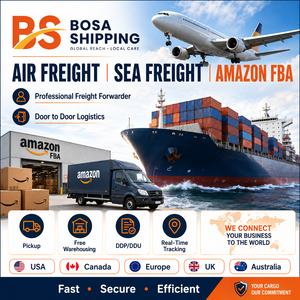
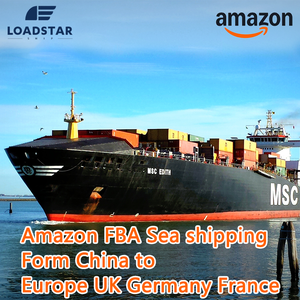
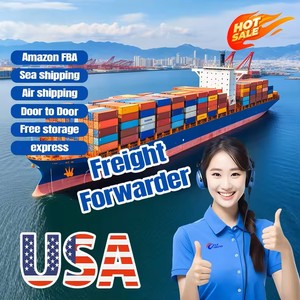
Sea Shipping Express International China EU UK Amazon FBA Freight Forwarder Warehouses DDP
Full FBA Compliance Labeling
Cargo Value Risk Insurance Included
30-45 Day Scheduled Vessel Routing
Storage & 3PL
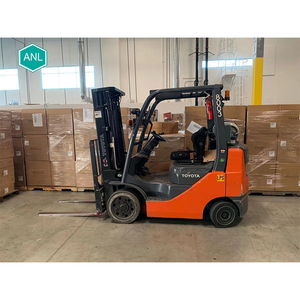
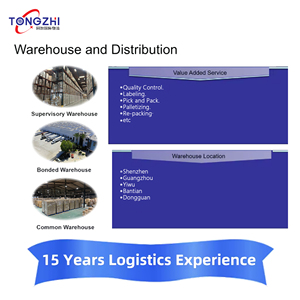
Warehouse Storage Services Consolidation Services Shipping Agent From China to USA Europe
WMS Cloud Real-Time Inventory
High-Security Bonded Facilities
Cross-Docking & Re-palletization
FBA First Leg
Fast FBA First Leg LCL+Express Sea Service China USA Australia Canada Labeling/Pre-Customs Warehousing
Pre-Customs Appointment Booking
Automated Barcode Relabeling
Priority Pier Clearance Delivery
Drop Shipping Hub
Drop Shipping and Free Warehousing Services to Deliver Nationwide Supply Chain Management
API ERP System Integration
Same-Day Order Processing SLA
Nationwide Direct-to-Consumer
FMC-OTI
Federal Maritime Licensed
99.8%
On-Time Delivery SLA
150+
Global Warehousing Nodes
100%
Human Account Accountability
Why Logistics Leaders Partner With Us
Enterprise Architectural Advantages in Global Warehousing
Eliminating handoff friction, ensuring strict regulatory compliance, and delivering single-point accountability across international supply chain networks.
FMC-Licensed Regulatory Trust
Operating as a Federal Maritime Commission (FMC) licensed ocean freight intermediary with a fully compliant published tariff. We safeguard your contracts, cargo liability, and customs integrity under standard U.S. and international maritime frameworks.
Dedicated Senior Logistics Specialists
We reject anonymous ticketing systems. Every account is assigned a named logistics specialist who understands your specific SKUs, trade corridors, and SLAs. You gain instant access to experts who resolve exceptions before they trigger delays.
Carrier-Neutral Route Optimization
Free from asset-heavy bias, we continuously benchmark ocean carriers, airlines, and trucking fleets. Our algorithms and logistics desk balance cost, transit time, and historical port congestion data to deliver optimal routing per shipment.
Precision Consolidation & WMS Integration
Our origin warehouses aggregate multi-supplier goods into single FCL or LCL containers. Cloud WMS connectivity allows enterprise clients to monitor real-time bin-level inventory, order pick status, and dispatch schedules across global nodes.
Integrated Multimodal Network
Seamlessly bridging Air Freight, Ocean (FCL/LCL), Cross-Border Trucking (FTL/LTL), and Intermodal Rail. Our end-to-end operational framework manages drayage, customs entries, and final-mile white-glove logistics under one umbrella.
Transparent All-In Pricing Models
We eliminate unexpected destination surcharges, demurrage traps, and hidden processing fees. Our detailed quotes break down ocean/air rates, local warehousing handling, customs documentation, and fuel surcharges with total clarity.
Strategic Procurement Whitepaper
The Evolution of Modern Warehousing & Cross-Border Supply Chains
In an era defined by geopolitical recalibration, nearshoring shifts, and rapid e-commerce acceleration, international warehousing is no longer merely a static storage buffer. It has evolved into a dynamic operational nexus that determines competitive advantage, working capital efficiency, and customer satisfaction levels. Enterprise buyers must navigate complex trade agreements, fluctuating ocean freight rates, and stringent customs compliance requirements while maintaining lean inventory standards.
Key Executive Takeaway: The Shift to "Just-in-Case" Hybrid Resilience
Global logistics managers are transitioning away from ultra-lean "Just-in-Time" single-source models toward regionalized "Just-in-Case" buffer networks. Utilizing bonded consolidation hubs at major Asian manufacturing origins allows buyers to hold safety stock near factories and dispatch rapidly via ocean, air, or rail based on real-time market demand.
As multinational corporations diversify manufacturing footprints across East Asia, Southeast Asia, and Eastern Europe, the administrative and financial burden of managing fragmented shipments has scaled exponentially. Consolidation warehousing has emerged as the primary mechanism for controlling logistics expenditures.
By establishing centralized warehouse staging facilities in origin hubs (such as Shenzhen, Ningbo, and Shanghai), procurement teams can aggregate less-than-container-load (LCL) shipments from dozens of sub-tier suppliers. These goods undergo rigorous quality control inspections, automated barcoding, and standardized palletization prior to ocean container loading. The financial dividend is immediate: converting fragmented LCL air/express shipments into consolidated Full Container Loads (FCL) yields freight cost reductions ranging from 28% to 45% per unit cubic meter (CBM).
Origin Consolidation Benefits
Drastically reduces destination port handling fees, eliminates redundant customs declaration entry charges, enables unified SKU-level quality audits, and optimizes container volume utilization up to 96% efficiency.
Bonded Warehouse Buffer
Storing inventory within specialized Free Trade Zones (FTZ) or bonded facilities defers duty and tariff payment until final distribution dispatch, preserving vital corporate cash flow.
The modern enterprise warehouse is a technology-driven ecosystem. Static shelving and manual clipboards have been supplanted by cloud-architected Warehouse Management Systems (WMS), Internet of Things (IoT) sensors, and Autonomous Mobile Robots (AMRs).
Leading warehousing service providers now offer direct API integration into enterprise ERP platforms (such as SAP, Oracle, and Microsoft Dynamics). This seamless connectivity grants procurement and supply chain directors end-to-end real-time inventory visibility. From the second an item is scanned into origin storage, through ocean transit, and onto destination warehouse racking, stakeholders track exact batch numbers, expiration dates, serial identifiers, and environmental conditions (temperature/humidity).
Furthermore, automated cross-docking infrastructure allows incoming goods to be unloaded, sorted via high-speed optical scanners, and transferred immediately to outbound trucks without intermediate storage. This process reduces dock-to-stock cycle times from 48 hours to less than 4 hours, dramatically accelerating inventory velocity.
Environmental, Social, and Governance (ESG) compliance has shifted from a corporate branding initiative to a strict procurement mandate. Tier-1 enterprise buyers now actively audit logistics partners for carbon intensity across warehousing and transport links.
Future-ready warehousing factories are incorporating green building standards (LEED certification), rooftop photovoltaic solar arrays, lithium-ion electric forklift fleets, and eco-friendly packaging materials. Furthermore, on the regulatory front, upcoming changes in U.S. Customs (CBP) procedures, EU CBAM carbon tariffs, and strict import compliance mandate that logistics forwarders maintain impeccable chain-of-custody documentation. Partnering with an FMC-licensed forwarder ensures that ocean tariffs, entry declarations, and security filings (ISF 10+2) are executed flawlessly, mitigating risk of port holds or catastrophic customs fines.
Selecting the optimal logistics mode requires balancing transit velocity, volumetric cost, regulatory friction, and inventory holding expenses. Use this comparative matrix to guide your procurement strategy.
Frequently Asked Questions in Global Warehousing Procurement
Expert insights addressing key operational, financial, and legal questions faced by global procurement officers and supply chain managers.
What is the financial threshold for choosing FCL over LCL ocean warehousing?
As a rule of thumb, when cargo volume exceeds 13 to 15 Cubic Meters (CBM), Full Container Load (FCL) shipping becomes more cost-effective per unit than Less-than-Container Load (LCL). Furthermore, FCL significantly reduces handling risk, as the container is sealed at the origin warehouse and remains unopened until destination delivery, avoiding CFS deconsolidation charges.
How does an FMC License protect international importers and exporters?
An FMC (Federal Maritime Commission) License designates an ocean freight forwarder or NVOCC as a legally regulated entity under U.S. maritime law. It guarantees that the provider maintains mandatory financial bonds, operates under a legally binding published tariff, and adheres to strict professional standards, protecting buyers from illegal surcharges or fraudulent carrier practices.
What is the difference between DDP warehousing shipping and DAP terms?
Under DDP (Delivered Duty Paid), the forwarder and supplier assume full responsibility for ocean/air freight, destination customs clearance, import duties, local taxes (VAT/GST), and final delivery to your warehouse. Under DAP (Delivered at Place), the buyer is responsible for paying import duties, taxes, and clearing customs upon arrival.
How can free warehousing services at origin reduce global logistics costs?
Free origin warehousing grants buyers a 14 to 30-day window to hold inventory near factory clusters without incurring storage fees. This window enables buyers to batch small supplier runs into full container loads, wait for favorable ocean spot freight rates, execute value-added services (labeling/kitting), and avoid expensive destination storage fees.
What compliance documentation is mandatory for international warehousing dispatch?
Every commercial cross-border shipment requires a Commercial Invoice, Detailed Packing List, and Transport Document (Bill of Lading for ocean, Air Waybill for air). Depending on product type and country of entry, you may also require a Certificate of Origin, Safety Data Sheet (SDS for hazardous goods), and specific customs import permits.
How far in advance should trade show freight and advance warehousing be booked?
For domestic exhibitions, logistics should be finalized 3 to 4 weeks prior to show opening to guarantee advance warehouse delivery deadlines. For international trade shows involving temporary customs entries (ATA Carnets) or ocean transit, planning should commence 6 to 10 weeks in advance to avoid show-floor penalty fees.
Ready to Optimize Your Global Warehousing & Supply Chain Network?
Connect with an experienced logistics strategist today. Receive a tailored, all-inclusive multimodal freight quote, origin consolidation audit, or customized warehousing solution within 24 hours.