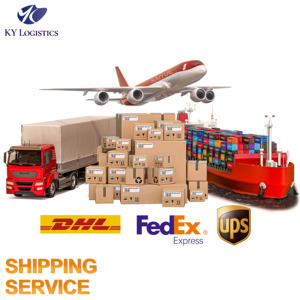
Air & Sea DDP LCL Automotive Component Express Shipping
Direct DDP LCL consolidation from Asia and Europe to major Mexican manufacturing hubs. Comprehensive tax, pedimento, and customs clearance handling.
Inquire NowEngineered for automotive OEMs, Tier-1 suppliers, and manufacturing plants in Mexico. Seamless cross-border handling, maritime container shipping, and expedited air transport under full FMC license.
Direct DDP LCL consolidation from Asia and Europe to major Mexican manufacturing hubs. Comprehensive tax, pedimento, and customs clearance handling.
Inquire Now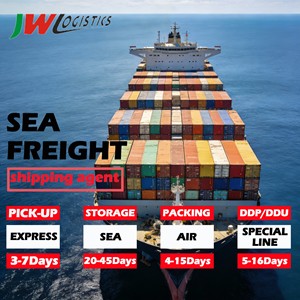
Door-to-door ocean freight combined with bonded cross-docking at Laredo & El Paso. Guaranteed timely delivery to Bajío and Northern industrial belts.
Inquire Now
Heavy machinery and automotive tooling transport via Manzanillo and Veracruz ports. Specialized flat-rack containers and breakbulk project coordination.
Inquire Now
Real-time GPS telematics and dedicated ocean space guarantees for anti-line-down assembly emergencies in Saltillo, Querétaro, and Puebla.
Inquire Now
Customized storage, IMMEX Annex 24 management, and consolidated regional dispatch tailored to OEM dealer networks and assembly plants.
Inquire Now
Flexible air-sea bridge combining transit speed with cost efficiency for semiconductor chips, sensors, and electronic control units (ECUs).
Inquire Now
Next-Flight-Out (NFO) and full air charter services directly to Mexico City (NLU/MEX), Guadalajara (GDL), and Monterrey (MTY) airports.
Inquire Now
Integrated double-stack rail and cross-border FTL/LTL freight seamlessly linking suppliers in USA, Canada, Asia, and European ports to Mexico.
Inquire NowAn in-depth analysis of nearshoring dynamics, USMCA compliance, and multimodal freight engineering for global manufacturers expanding into Mexico.
Mexico has rapidly emerged as the undisputed epicenter for global automotive manufacturing nearshoring. Driven by the United States-Mexico-Canada Agreement (USMCA / T-MEC), OEM giants and Tier-1/Tier-2 automotive component suppliers are aggressively restructuring their global supply networks. Transferring production lines from traditional Asian hubs to states like Nuevo León, Coahuila, Querétaro, Guanajuato, and San Luis Potosí requires unprecedented logistics synchronization.
Managing this modern supply chain demands more than basic freight moving. It requires absolute mastery over IMMEX (Maquiladora) temporary import regimes, specialized customs pedimentos, harmonized tariff codes (HS Codes), and strict adherence to Just-In-Time (JIT) and Just-In-Sequence (JIS) assembly schedules.
In high-stakes automotive manufacturing, an unscheduled assembly line shutdown can cost plant operators upwards of $20,000 per minute. Freight handoff friction, customs clearance bottlenecks at border posts like Laredo or maritime ports like Manzanillo, and missing documentation are catastrophic vulnerabilities.
As a licensed Federal Maritime Commission (FMC) Ocean Transportation Intermediary and Non-Vessel Operating Common Carrier (NVOCC), we eliminate intermediary handoff risks. We operate under published federal tariffs, maintaining direct carrier contracts across ocean shipping lines, rail intermodal operators (KCSM/Ferromex/BNSF), and expedited cross-border trucking fleets.
Built upon transparent regulatory compliance, dedicated human account management, and tailored multimodal routing.
Full regulatory governance by the U.S. Federal Maritime Commission. Published tariffs ensure complete legal protection, contract stability, and financial transparency for high-volume automotive freight.
Seamless customs integration at key border checkpoints (Laredo, Hidalgo, El Paso). Joint U.S.-Mexico inspection management drastically cuts border dwell times for critical component loads.
Deep operational mastery of duty-free temporary imports under the Mexican IMMEX framework, ensuring proper pedimento discharge, V5 customs operations, and zero regulatory tax compliance penalties.
On-demand availability of specialized sprinters, straight trucks, and air charter options for emergency part shortages. 24/7 active control tower tracking with hourly status updates.
Origin consolidation stations across Shenzhen, Ningbo, Hamburg, and Detroit. Combining small supplier sub-assemblies into single ocean FCLs or air pallets to reduce per-unit landed costs.
Zero call-center queues or ticketing delays. Direct access to a named senior automotive logistics expert with deep regional knowledge of Mexican transport regulations and customs practices.
Real-world logistics strategies tailored to specific regional manufacturing ecosystems in North America.
Challenge: A major OEM assembly plant in Guanajuato required continuous daily feeds of imported electronic control modules (ECUs) and wiring harnesses from Asian factories with zero safety stock buffer.
Solution: Implemented a blended sea-air multimodal bridge. Cargo lands at Port of Manzanillo under bonded transit (Transitador Marítimo), customs clears directly at interior dry ports (Puerto Interior Silao), and moves via dedicated armed-escort trucks to plant side under 4-hour delivery windows.
Challenge: A stamped metal body panel supplier needed to move raw steel from US mills to Saltillo stamping plants, and shuttle finished weldments back across the Texas border daily.
Solution: Established a seamless cross-dock operation at Laredo, TX. Managed dual-pedimento customs under IMMEX, utilizing drop-trailer equipment and C-TPAT certified carriers to eliminate border inspection queue times.
Challenge: Transporting UN3480 Class 9 lithium-ion battery modules for EV assembly lines requiring strict temperature management and hazardous materials compliance under Mexican NOM standards.
Solution: Deployed climate-controlled reefer containers equipped with real-time temperature/shock telematics. Handled Class 9 hazmat permits, specialized IMO paperwork at Veracruz port, and direct highway transport under SCT hazardous freight rules.
Challenge: Moving massive 45-ton stamping dies from European tooling manufacturers to an OEM plant in Puebla for new vehicle model tooling.
Solution: Arranged heavy-lift ocean flat-rack transport to Veracruz port, synchronized with specialized multi-axle hydraulic low-boy trailers, route permits, and police escorts for safe over-the-road transport to the plant floor.
Key economic and regulatory shifts impacting procurement directors and logistics managers in 2024 and beyond.
Under USMCA compliance regulations, Regional Value Content (RVC) requirements for passenger vehicles have scaled up to 75%, along with strict core parts purchasing mandates. Automotive manufacturers in Mexico are forced to source sub-components regionally or establish origin traceability. Our logistics network provides detailed audit-ready Certificate of Origin tracking and bill of lading documentation.
With major EV investments pouring into Saltillo and Monterrey, logistics providers must adapt to handle specialized battery chemistry, hazardous component handling (Class 9), and high-value electric drive units. Cold-chain telematics, explosion-proof container storage, and specialized hazmat driver certifications are becoming standard operational requirements across Mexican trade lanes.
Highway congestion at Texas border points has driven a massive surge in railway utilization. Intermodal block trains connecting Lazaro Cardenas or Manzanillo directly to Chicago, Detroit, and Toronto via CPKC and Ferromex networks offer reduced carbon footprints, lower long-haul costs, and bypass highway customs chokepoints through bonded rail corridors.
Modern auto assembly plants no longer accept static daily spreadsheet updates. Real-time IoT sensors embedded inside shipping containers provide continuous tracking of location, humidity, tilt, temperature, and door-open status. Freight platforms must integrate directly into OEM ERP systems (SAP, Oracle) via API to trigger automatic JIT inventory replenishment.
A technical reference guide used by supply chain directors to optimize landed cost versus transit speed for Mexico-bound cargo.
| Freight Mode | Typical Transit Time | Relative Cost | Ideal Automotive Cargo Profile | Customs / Border Dwell |
|---|---|---|---|---|
| Expedited Air Charter / NFO | 12 – 36 Hours | Highest | Line-down emergency spares, prototype parts, critical ECUs | Fast-track clearance at NLU/MEX/GDL (2-4 hrs) |
| Direct Air Freight (Consolidated) | 2 – 5 Days | High | High-value sensors, sub-assemblies, urgent batch replacements | Standard airport bonded warehouse clearance (12-24 hrs) |
| Ocean Freight FCL (Full Container) | 18 – 35 Days | Low | Mass production stamping parts, castings, tires, interior trims | Manzanillo / Veracruz port customs (3-5 days) |
| Ocean Freight LCL (Consolidated) | 22 – 40 Days | Lowest (Per CBM) | Tier-2 sub-supplier components, non-urgent aftermarket stocks | CFS de-consolidation & pedimento clearance (4-6 days) |
| Cross-Border FTL Trucking | 2 – 5 Days | Moderate | North American inter-plant transfers, heavy engine blocks | Border cross-docking / Fast-track C-TPAT lane (4-12 hrs) |
| Intermodal Rail Transport | 5 – 10 Days | Moderate-Low | Bulk Raw Materials, Steel Coils, Finished Vehicles (Auto-Max) | In-bond interior ramp customs clearance (24-48 hrs) |
Expert answers addressing customs regulatory compliance, logistics execution, and cross-border risk management.
Under Mexico's IMMEX program, qualifying automotive manufacturers can import raw materials and sub-components temporarily without paying the 16% Value-Added Tax (IVA) or general import duties, provided the finished goods are exported within specified timeframes (typically 18 months). As your freight forwarder, we ensure that every Bill of Lading, Commercial Invoice, and Customs Pedimento (specifically A1 or V1 pedimento types) correctly reflects your IMMEX program registry and Annex 24/30 inventory tracking numbers to avoid duty assessments.
Under DDP (Delivered Duty Paid), the seller/forwarder assumes total responsibility for paying Mexican import taxes, customs broker fees, and obtaining necessary import licenses (Padrón de Importadores). Under DDU (Delivered Duty Unpaid / DAP), the buyer (the Mexican plant) is responsible for paying import taxes and managing local customs clearance through their official Agente Aduanal. Due to strict Mexican tax authority (SAT) regulations, DDP requires a legally established Mexican entity or a specialized import-of-record partner.
Customs delays are minimized by executing pre-clearance validation (Revisión en Origen / Despacho Conjunto) prior to vessel arrival or truck arrival at the border crossing. We audit all Commercial Invoices, HS Code classifications, and USMCA Certificates of Origin prior to origin dispatch. Furthermore, utilizing C-TPAT / OEA certified logistics corridors grants access to dedicated fast-track customs lanes at border crossings like Laredo World Trade Bridge.
Lithium-ion batteries are classified as Dangerous Goods under UN3480 (Class 9). Transport into Mexico requires UN-certified protective packaging, active thermal monitoring, Hazmat safety data sheets (SDS) translated into Spanish, and transport operators licensed under Secretaria de Infraestructura, Comunicaciones y Transportes (SICT) hazardous haulage guidelines. Ocean shipments must have approved IMO dangerous goods declarations prior to vessel loading.
An FMC (Federal Maritime Commission) license certifies that a freight forwarder or NVOCC maintains mandatory financial bonds, operates under legally published tariffs, and complies with federal maritime laws. This guarantees that your contracts, ocean freight rates, and bills of lading are legally binding and protected under U.S. and international maritime regulations, shielding automotive manufacturers from arbitrary freight rate surcharges or unbonded broker insolvencies.
For imminent assembly line stoppage risks, we deploy Next-Flight-Out (NFO) air freight or dedicated air charters. Cargo is picked up by a dedicated hot-shot vehicle, rushed to the nearest international airport, loaded onto the first available direct flight to Mexico City (NLU/MEX), Guadalajara (GDL), or Monterrey (MTY), and cleared through customs using priority fast-track procedures for direct plant delivery within 12 to 24 hours.
Connect directly with our senior automotive freight specialists to review your Incoterms, audit your cross-border supply chain, or request an instant all-inclusive freight quote.