Export Solutions Catalogue
Featured CE-Compliant Logistics & Export Services
Integrated DDP, ocean freight, air express, and customs clearance protocols customized for Toronto factories and international trade networks.
Cheapest Shipping Agent Sea Freight Forwarder DDP DDU LCL Express Sea Shipping Agent Dropshipping DHL Shipping to UK/USA/FR/CA
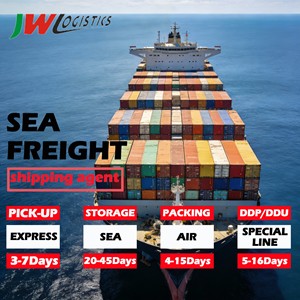
Top Sea Freight Forwarder Agent Shipping DDP Door To Door Transport Maritime International China To Canada Usa Italy Germany UK
Fast Delivery Logistics Forwarder 24-Hour Track Ocean Sea Freight Forwarder Transitaire Shipping Agent From China to USA by Sea
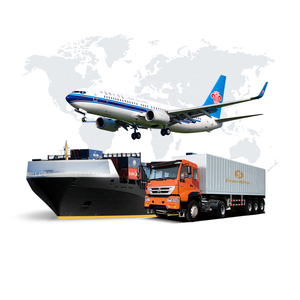
China Sea Freight Forwarder To USA Canada Amazon FBA Door To Door FCL LCL Express Shipping Agent
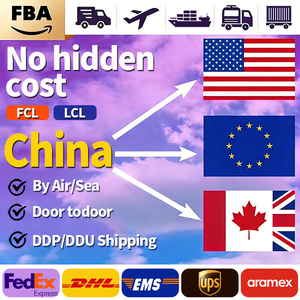
Air Sea DDP LCL International Logistics Service Top 10 China to USA UK Canada Express Freight Forwarder Shipping Agent

Top 10 Air Freight Forwarder China To Usa Germany Spain Ddp Shipping Agent Services Logistique Spedition China Nach Deutschland
Professional Logistics Shipping Agent Sea/air/Express Freight Forwarder From China to USA EU UK CANADA Worldwide
Industry Technical Report
Navigating CE Compliance & Export Customs Clearance in Toronto
An operational framework for enterprise manufacturers exporting industrial equipment, machinery, and technology goods from Ontario to global markets.
Executive Summary & Information Gain Analysis
In the contemporary landscape of global supply chain management, acquiring a CE Certified Export Clearance standard is no longer merely a regulatory requirement—it is a critical commercial lever for manufacturers operating within the Greater Toronto Area (GTA). Navigating the operational intersection between Canadian Export Declarations via the Canada Border Services Agency (CBSA) and European Union CE Conformity Directives (such as 2006/42/EC Machinery, 2014/35/EU Low Voltage, and 2014/30/EU EMC Directives) demands a rigorous legal and logistical infrastructure.
This technical whitepaper outlines how Toronto-based manufacturers can synthesize cross-border ocean freight forwarding, Federal Maritime Commission (FMC) licensed NVOCC oversight, and automated customs documentation to achieve zero-delay export clearance while guaranteeing regulatory compliance at European ports of entry.
99.8%
On-Time Customs Pass
FMC
Licensed OTI / NVOCC
< 24h
EU CE Documentation Review
100%
DDP Door-to-Door Traceability
CE Marking Regulatory Verification
Complete audit of Technical Files, EU Declaration of Conformity (DoC), authorized representative filings, and product safety testing to eliminate European customs border holds.
Multimodal Freight Routing
Seamless intermodal coordination connecting Toronto facilities (CN/CP Rail Terminals, Pearson Air Cargo) with ocean ports in Montreal, Halifax, and US East Coast hubs.
Digital Customs Integration
Automated submission of Canadian B13A/CERS export declarations, commercial invoices, bill of lading generation, and DDP duty prepayment setups.
Why Partner With Us
Toronto’s Premier Export Clearance & Logistics Infrastructure
Combining regulatory precision, tariff transparency, and dedicated logistical personnel for end-to-end operational accountability.
Enterprise shippers across Ontario face multi-faceted supply chain complexities. Freight forwarding delays often stem not from ocean carrier congestion, but from documentation mismatches, improper HS code classification, and non-compliant CE technical dossiers. As an FMC-licensed ocean transportation intermediary and specialized export clearance agency in Toronto, our operational mandate focuses on complete risk mitigation.
FMC Licensed & Published Tariff
Operating as a regulated ocean carrier under U.S. Federal Maritime Commission rules guarantees transparent tariff rates, formal contract enforcement, and buyer protection.
Dedicated Logistics Specialists
No automated ticket queues. Every Toronto client is assigned a senior logistics manager responsible for monitoring your cargo from facility loading to final sign-off.
Full Incoterms Precision
Specialized management of DDP (Delivered Duty Paid), DDU, FCL, and LCL shipping terms ensuring clear liability boundaries and eliminated buyer surcharges.
Localized GTA Application Scenarios
Tailored Export Logistics for Toronto’s Key Industrial Sectors
How our export clearance and freight infrastructure solves sector-specific compliance challenges across Southern Ontario.
1. Automotive & Precision Tooling (Windsor-Oshawa Corridor)
Scenario: Urgent shipment of specialized stamping dies and automated tooling equipment requiring CE Machinery Directive clearance for delivery to an assembly plant in Germany.
Solution: Expedited air freight via Toronto Pearson (YYZ) to Frankfurt (FRA) with pre-verified CE Declaration of Conformity and zero-delay customs release under DDP terms.
2. Medical Device & Life Sciences (Markham-Toronto Biotech Belt)
Scenario: Export of temperature-controlled diagnostic instruments requiring EU Medical Device Regulation (MDR) compliance documents alongside standard CBSA export filings.
Solution: Specialized temperature-monitored LCL consolidation, ATA Carnet handling for global trade show demonstrations, and seamless port-of-entry customs clearance.
3. Industrial CleanTech & Heavy Machinery (Mississauga-Brampton Hub)
Scenario: Out-of-gauge (OOG) industrial water filtration skid transport requiring flat-rack ocean containers from Port of Montreal to Rotterdam.
Solution: Heavy-haul trucking from Brampton to rail yard, marine cargo insurance, ocean breakbulk booking, and complete CE Low Voltage and EMC Directive verification.
Regional Trade Insights
Ontario Export Trends: CETA Expansion & Compliance Mandates
Key market shifts affecting Toronto exporters navigating European and international trade corridors.
Leveraging CETA for Duty-Free European Export
Under the Comprehensive Economic and Trade Agreement (CETA), over 98% of tariff lines between Canada and the European Union are duty-free. However, Toronto manufacturers frequently miss out on preferential tariff treatment due to improper Origin Declarations or incomplete CE marking validation. By integrating export clearance with CE regulatory audits at the factory floor level in Toronto, exporters can securely claim preferential origin while satisfying EU customs authorities.
Digitalization of CBSA Export Declarations (CERS)
The transition to the Canadian Export Reporting System (CERS) has heightened enforcement regarding accurate HS code classification and export licensing. Non-compliance can lead to severe Administrative Monetary Penalty System (AMPS) fines. Our Toronto customs team automates CERS filings simultaneously with ocean Bill of Lading issuing to maintain total legal compliance.
Technical Decision Matrix
Comparing Export Logistics & Clearance Modes
Select the optimal freight mode based on payload volume, urgency, and CE compliance documentation complexity.
| Transport Mode | Transit Time (Toronto Departure) | CE & Documentation Requirement | Cost Efficiency | Recommended Cargo Type |
|---|---|---|---|---|
| Air Freight (Direct / Charter) | 1 – 4 Days (Door-to-Door) | Pre-cleared Air Waybill, Fast-Track EU DoC Audit | Premium | High-value electronics, medical devices, urgent replacement parts |
| Ocean Freight (FCL Container) | 12 – 22 Days (Port-to-Port) | Full Technical File, Container Pack Cert, Bill of Lading | Highest per Container | Heavy industrial machinery, full product runs, bulky goods |
| Ocean Freight (LCL Consolidation) | 14 – 26 Days (Door-to-CFS) | Consolidated Commercial Invoice, CE Marking Audit | Optimal for Small Batches | Mid-volume factory shipments, palette-based exports |
| Cross-Border Intermodal Rail/Truck | 2 – 7 Days (North America) | CBSA CERS Filing, US/Canada Customs Bonded Transit | Highly Economical | Raw materials, regional assembly components, cross-border supply chains |
Purchasing & Logistics FAQ
Frequently Asked Questions by Toronto Exporters
Expert answers to common legal, logistical, and customs inquiries regarding CE certified export clearance.
What does "CE Certified Export Clearance" mean for a Toronto factory?
It refers to the dual compliance process where exported goods manufactured in the Greater Toronto Area meet both Canadian export requirements (CBSA CERS declaration) and European Union CE conformity standards (Demonstrating compliance with directives such as Low Voltage, EMC, or Machinery). This ensures cargo passes through Canadian exit ports and clears EU customs without detention or fines.
How do I know if my machinery exported from Toronto requires CE marking?
Any industrial product, electrical equipment, medical device, or mechanical assembly destined for the 27 EU member states plus EFTA countries must bear the CE mark if it falls under any of the EU single-market directives. Our Toronto compliance team reviews your technical product documentation prior to booking export freight.
What is the difference between DDP and DDU shipping for European exports?
Under DDP (Delivered Duty Paid), the Toronto shipper assumes full responsibility for paying all ocean/air freight costs, import tariffs, customs clearance fees, and European VAT. Under DDU (Delivered Duty Unpaid), the buyer pays import duties upon arrival. DDP is highly recommended for building trust with foreign buyers.
Can you handle trade show freight for Toronto companies exhibiting in Europe?
Yes. We specialize in ATA Carnet logistics, allowing Toronto exhibitors to temporarily export booth displays, equipment, and prototypes to European trade fairs without paying import duties or VAT, with full round-trip transportation returning to Ontario.
Why is an FMC-licensed forwarder important for ocean freight from Canada?
Federal Maritime Commission (FMC) licensing ensures that your freight forwarder is legally recognized, bonded, and operates under strictly regulated tariff guidelines. This prevents arbitrary ocean carrier price spikes, ensures legal recourse, and guarantees standard of care for global ocean transit.
How far in advance should a Toronto factory book ocean export freight?
We recommend initiating export customs document audits 3 to 4 weeks prior to target vessel loading. For ocean container shipping out of Montreal or Halifax rail ramps in Toronto, booking capacity 2 to 3 weeks in advance guarantees container availability and optimal vessel scheduling.
Standard Operating Procedure
Our 5-Step Export Clearance & Freight Workflow
A systematic approach engineered to eliminate supply chain friction and regulatory delays.
1
Product Audit
Verification of CE Declarations, Technical Dossiers, HS Codes, and CETA origin qualification.
2
Mode & Rate Optimization
Carrier price comparison balancing ocean FCL/LCL and air cargo speed against budget parameters.
3
CERS Export Clearance
Electronic filing with Canada Border Services Agency (CBSA) and Bill of Lading issuance.
4
Transit Monitoring
24/7 real-time shipment visibility from Toronto loading dock through ocean/air transit.
5
EU Customs & DDP Delivery
Final import clearance at destination port, duty settlement, and last-mile warehouse delivery.
Ready to Streamline Your CE Export Clearance from Toronto?
Connect directly with our senior logistics and customs engineering team to review your shipping documentation, secure ocean/air rates, and establish seamless DDP export protocols.