Featured Global Freight Forwarding Services
From full container ocean shipping to rapid air freight dispatch, explore our primary carrier-neutral logistics products serving Melbourne importers, Victoria distributors, and global manufacturing networks.
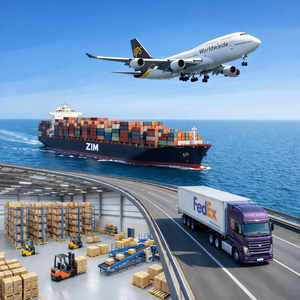
Navigating Melbourne’s Commercial Supply Chain Ecosystem
As Victoria’s primary economic engine, Melbourne demands precise logistics execution across maritime portals, air hubs, and regional distribution networks. We bridge international manufacturing hubs directly to Greater Melbourne’s commercial nodes.
Port of Melbourne Container Optimization
Handling over 3 million TEUs annually, Swanson Dock and Victoria International Container Terminal (VICT) require stringent timing to avoid demurrage and detention charges. Our team orchestrates FCL (Full Container Load) and LCL (Less than Container Load) deconsolidation, managing wharf slots via Vehicle Booking Systems (VBS) for rapid movement into West Melbourne industrial parks.
Melbourne Airport (Tullamarine) Air Cargo
For high-value, time-critical inventory—such as pharmaceutical supplies, automotive components, and urgent retail replenishment—our air freight division coordinates direct flights into Melbourne Airport (MEL). We ensure priority customs release and immediate hot-shot trucking directly to distribution hubs in Laverton North, Dandenong, and Truganina.
Victorian Regional Intermodal Distribution
Connecting ocean gateways to regional manufacturing sectors in Geelong, Ballarat, and Bendigo requires robust intermodal planning. We combine rail intermodal haulage and heavy-fleet road transport, managing oversized project cargo, machinery, and agricultural industrial inputs with comprehensive chain-of-responsibility compliance.
Multimodal Transport Mode Comparison for Victoria Importers
Selecting the appropriate shipping mode is a balance between transit velocity, landed budget, and commodity requirements. Use this practical decision matrix to determine the optimal route for your freight entering Melbourne.
| Transport Mode | Typical Transit Time (China to MEL) | Cost Efficiency (Per KG / CBM) | Best Suited For | Local Customs & Handling Notes |
|---|---|---|---|---|
| Expedited Air Cargo | 1 – 3 Days | Premium High | Line-down emergency spares, high-tech electronics, fashion samples | Direct airport recovery at Tullamarine (MEL); priority ABF clearance. |
| Standard Air Freight | 4 – 7 Days | Moderate High | High-value commercial goods, urgent inventory replenishment | Consolidated air waybill clearance; fast-track deconsolidation. |
| Ocean Freight FCL (20GP/40HQ) | 14 – 22 Days | Maximum Efficiency | Heavy machinery, bulk raw materials, volume retail imports | Wharf pickup at Swanson/Webb Dock; requires pre-lodged import declarations. |
| Ocean Freight LCL (Shared Cont.) | 18 – 25 Days | High (For Small Volumes) | Mid-sized shipments (2 to 15 CBM), startup commercial orders | Deconsolidated at local Container Freight Stations (CFS) in West Melbourne. |
| Specialized Project Cargo | Varies by Route | Project Specific | Over-dimensional equipment, industrial boilers, heavy infrastructure | Out-of-gauge (OOG) permits required for VicRoads transport corridors. |
Local Logistics Trends & Macro Developments in Melbourne
Understanding Australia's evolving trade regulations and Victoria's infrastructure modernization is essential for maintainable supply chain resilience.
1. Port Rail Transformation & Web Dock Expansion
Victoria's ongoing investment in the Port Rail Transformation Project (PRTP) aims to move more freight by rail directly from the Port of Melbourne to metropolitan intermodal terminals. Importers leveraging forwarders with integrated rail links reduce truck queuing delays, lower carbon footprints, and escape rising road congestion levies in inner-city corridors.
2. Strict Biosecurity & BMSB Seasonal Compliance
The Australian Department of Agriculture, Fisheries and Forestry (DAFF) enforces strict biosecurity measures, notably the seasonal Brown Marmorated Stink Bug (BMSB) regulations. Freight originating from target risk countries during peak seasons must undergo mandatory offshore or onshore treatment (Fumigation or Heat Treatment). Strategic forwarders pre-treat cargo at origin to prevent expensive quarantine holds at Melbourne docks.
3. Transition to Near-Dock Logistics Parks in Truganina & Altona
Melbourne’s industrial footprint is shifting westward. Demand for warehousing in Truganina, Altona North, and Ravenhall has surged as importers seek high-cube, automated distribution centers close to the Port of Melbourne. Modern freight logistics mandates direct-to-warehouse cross-docking, reducing double-handling and urban delivery overheads.
4. Supply Chain Transparency & Digital Decarbonization
Australian enterprises are increasingly required to report Scope 3 supply chain emissions while demanding real-time visibility. Modern logistics providers must deliver end-to-end telemetry—combining IoT container tracking with transparent carbon accounting to fulfill corporate governance requirements.
Our 5-Step Operational Shipping Workflow
Freight management failure rarely happens mid-transit; it occurs during administrative and physical handoffs. Our protocol eliminates operational blind spots prior to cargo movement.
Requirement Audit
Evaluation of Incoterms (FOB, EXW, DDP), cargo dimensions, hazard class, and target arrival dates.
Multimodal Routing
Carriers, sailings, and flights are matched for cost, transit time, and space allocation certainty.
Docs & Compliance
Commercial invoices, packing lists, Bills of Lading, and pre-lodged customs entries are verified.
Active Tracking
Continuous tracking during ocean voyage or air transit with proactive exception management.
Final Mile Delivery
Deconsolidation, wharf cartage, tail-lift unloading, and electronic Proof of Delivery (POD) sign-off.
Accountable Logistics Delivered by Real Specialists
We combine institutional regulatory compliance with dedicated personal account management to protect your supply chain investments.
FMC-Licensed Ocean Intermediary
As a Federal Maritime Commission (FMC) licensed ocean transportation intermediary maintaining a published tariff, we operate under rigorous regulatory protocols. This legal framework guarantees tariff transparency, legal security, and contractual reliability for international shippers.
Dedicated Logistics Specialists
Instead of anonymous call centers or ticketing queues, you work directly with a named logistics specialist. Our staff understands your product specifics, local customs requirements, and destination warehouse delivery windows, ensuring direct phone accessibility when schedules change.
Carrier-Neutral Multimodal Routing
Because we remain carrier-neutral, we do not push single-asset routes. We evaluate multiple ocean lines, air carriers, and intermodal operators to engineer tailored options balancing speed, budget, and vessel space availability.
Specialized & High-Value Cargo Control
From temperature-controlled perishables and dangerous goods (DG) to out-of-gauge industrial machinery and time-critical trade show exhibits, our operational team handles rigorous paperwork, packaging checks, and specialized transport equipment.
End-to-End Trade Documentation
We handle commercial invoice verification, packing list reviews, Certificates of Origin, Bills of Lading, and Air Waybills. Resolving potential compliance discrepancies prior to departure ensures frictionless clearance through Australian Border Force (ABF) checkpoints.
Transparent Billing & Clear Analytics
Unexpected logistics surcharges damage profitability. We provide itemized, all-in freight proposals covering freight tariffs, origin charges, fuel adjustments (BAF/CAF), and destination terminal handling fees (THC) without hidden line items.
Frequently Asked Questions by Melbourne Buyers
Answers to common ocean, air, and customs clearance questions encountered when sourcing international freight into Victoria.
Choose air freight when speed, high cargo value, or tight production schedules take precedence over freight expenditure; airport-to-airport transit typically takes 1 to 5 days. Choose ocean freight for heavier, bulkier, or planned inventory shipments. Ocean shipping costs significantly less per kilogram but port-to-port transit from major Asian ports to Melbourne averages 14 to 22 days depending on vessel routing.
FCL (Full Container Load) means reserving an entire 20ft, 40ft, or 40HQ container for your cargo, which becomes cost-effective above roughly 13 to 15 cubic meters (CBM) while eliminating intermediate handling. LCL (Less than Container Load) consolidates your cargo with other shippers' freight into a shared container, allowing you to pay only for the volume used while requiring deconsolidation at Melbourne Container Freight Stations (CFS).
Provide exact pickup and delivery addresses, commodity descriptions, HS codes, gross weight, total volume/dimensions per piece, target cargo ready dates, special handling requirements (such as dangerous goods status or temperature control), and the agreed Incoterms (e.g., FOB, EXW, DDP) with your supplier.
Standard documentation includes a Commercial Invoice, Detailed Packing List, Bill of Lading (for ocean) or Air Waybill (for air), and relevant Certificates of Origin to leverage Free Trade Agreements (such as ChAFTA). Cargo subject to biosecurity inspection may also require packing declarations and fumigation certificates.
During the BMSB seasonal period (September to May), high-risk goods manufactured in or shipped from targeted risk countries must undergo mandatory offshore or onshore treatment before release by the Australian Department of Agriculture, Fisheries and Forestry (DAFF). Pre-treating goods at origin avoids mandatory quarantine delays and extra storage charges at Melbourne ports.
Yes. We operate as a Federal Maritime Commission (FMC) licensed Ocean Transportation Intermediary (OTI) maintaining a published ocean freight tariff in compliance with international shipping regulations, providing transparent and legally sound global logistics management.
Optimize Your Global Supply Chain to Melbourne Today
Speak directly with our multimodal logistics specialists to map your route, streamline Australian customs clearance, and secure competitive ocean or air freight rates.
Inquire Now