Optimized Freight & Factory Shipping Services
End-to-End International Logistics Solutions Connecting Offshore Manufacturing Plants to London & UK Retail Distributions
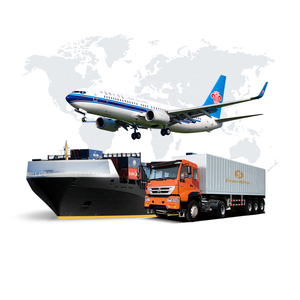
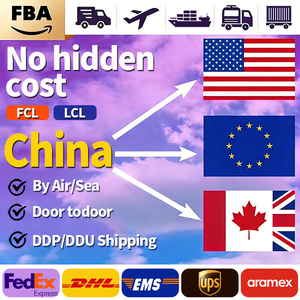
1. The Evolution of Retail Logistics Factories in the Greater London Ecosystem
The convergence of global manufacturing networks with the UK’s primary commercial epicenter has transformed how retail logistics factories operate in the London market. Modern retail supply chains no longer rely on static linear pathways; instead, they function as dynamic, highly synchronized ecosystems. In Greater London—encompassing key logistical arterial corridors such as the M25 orbital, Dartford, Park Royal, and the Thames Gateway—the demand for high-velocity goods movement from overseas manufacturing plants directly to retail shelves and urban fulfillment nodes has reached an unprecedented scale.
Historically, overseas factories dispatched mass production runs via ocean containers to distant regional UK distribution centers in the Midlands (the "Golden Logistics Triangle"), only for goods to be trunked back into London retail stores. Today, urban land scarcity, rising fuel surcharges, and strict environmental mandates like London’s Ultra Low Emission Zone (ULEZ) have forced enterprise retailers to adopt a streamlined Factory-to-Store (F2S) and Factory-to-Consumer (F2C) logistics framework. By leveraging strategic bonded logistics hubs in the London vicinity (such as DP World London Gateway and Tilbury Port), international factories effectively extend their production pipelines directly into the heart of London’s high-street retail sectors—including Oxford Street, Westfield London, Knightsbridge, and Regent Street.
Urban Micro-Fulfillment & Dark Factory Integration
To satisfy the demands of London’s omnichannel shoppers, supply chain operators are establishing "retail logistics factories"—specialized hybrid facilities combining light assembly, automated garment processing, labeling, compliance re-packaging, and rapid micro-fulfillment under a single roof. These facilities operate as regional extensions of overseas origin factories. When raw finished goods arrive from manufacturing hubs in East Asia or Europe via maritime or air lanes, these urban logistics factories execute final-mile customization within hours, ensuring zero latency between factory dispatch and retail shelf placement.
2. Micro-Localized Application Scenarios across Greater London
Navigating the complex infrastructural grid of Greater London requires bespoke freight routing tailored to specific retail verticals. Below are empirical scenarios demonstrating how multimodal logistics architecture bridges overseas production plants with London’s demanding commercial landscape.
Scenario A: High-Fashion Retail in West End & Knightsbridge
Challenge: A luxury apparel brand requires garment-on-hanger (GOH) shipments transferred from overseas textile factories directly to flagship retail boutiques on Bond Street without creasing or storage delays.
Solution: Air Freight DDP consolidation into London Heathrow (LHR), followed by rapid transfer to a bonded logistics factory in Park Royal for quality control, RFID tagging, and zero-emission electric vehicle (EV) last-mile delivery straight to retail floors before morning trading hours.
Scenario B: Consumer Electronics for Amazon FBA & Retail Hubs
Challenge: High-value tech hardware sourced from Guangdong manufacturing plants destined for London fulfillment centers suffers from customs bottlenecks and unexpected UK duty assessments.
Solution: FMC-licensed Ocean FCL/LCL service entering via DP World London Gateway. Utilizing Postponed VAT Accounting (PVA) and pre-cleared Customs Declaration Service (CDS) filings, goods clear customs seamlessly and enter Thames-adjacent logistics hubs within 24 hours of berth.
Scenario C: Fast-Moving Consumer Goods (FMCG) Store Replenishment
Challenge: Seasonal consumer packaged goods require rapid distribution across 50+ retail storefronts inside London’s Congestion Charge and ULEZ zones.
Solution: Ocean LCL consolidation mapped directly to a secondary distribution facility in Dartford. Palletized cargo is cross-docked onto ULEZ-compliant Euro 6 and battery-electric fleets, eliminating non-compliance fines and maintaining 99.8% on-time store delivery windows.
Scenario D: Trade Show & Retail Pop-Up Logistics
Challenge: An international retailer launching a temporary pop-up exhibition at ExCeL London needs custom booth structures and display factory products delivered strictly within a 2-hour drop window.
Solution: Specialized Trade Show Logistics management including ATA Carnet handling, bonded storage, marshaling yard scheduling, and dedicated white-glove offloading at the event venue.
3. Emerging Trends Shaping the London Retail & Logistics Factory Market
The post-Brexit regulatory landscape, combined with the UK's ambitious carbon-neutral targets, has established London as a global testbed for next-generation retail supply chain strategies. Procurement managers and factory directors must align with four macro trends currently restructuring the London market:
A. Post-Brexit Regulatory Mastery: CDS & PVA Integration
Since the transition from the legacy CHIEF system to the UK's Customs Declaration Service (CDS), compliance errors have become a major cause of port delays at Felixstowe, Southampton, and Dover. Leading logistics providers must maintain direct CDS API connectivity and implement Postponed VAT Accounting (PVA). PVA allows UK-registered enterprise importers to account for import VAT on their standard VAT return rather than paying upfront at the port of entry, dramatically improving corporate cash flow for high-volume retail shipments.
B. The Rise of Port-Centric Logistics in the Thames Estuary
To avoid long-distance inland trucking across congested motorways, retailers are shifting toward Port-Centric Logistics. Utilizing facilities at London Gateway and Tilbury2 allows international factory shipments to be un-stuffed, sorted, and processed directly at the sea terminal. Goods are then barged up the River Thames or dispatched via short-haul drayage directly into inner-London fulfillment points, bypassing M25 bottlenecks.
C. Decarbonization & Green Corridor Compliance
London’s strict environmental laws require freight operators to audit and actively reduce carbon intensity. The expansion of the Ultra Low Emission Zone (ULEZ) across all London boroughs means legacy diesel trucks face severe daily surcharges (£100-£300/day). Modern retail logistics factories are integrating green routing software, hydrotreated vegetable oil (HVO) trucks, and zero-emission last-mile vehicles to meet corporate ESG goals and local council mandates.
D. Direct Factory-to-Shelf DDP (Delivered Duty Paid) Models
International buyers in London increasingly reject traditional FOB terms that leave them vulnerable to unpredictable ocean freight rates, demurrage charges, and UK customs disputes. The market has shifted decisively toward turnkey DDP terms. Under a comprehensive DDP model, the forwarder assumes total operational liability—managing factory pick-up, origin customs export, maritime/air transit, UK customs clearance, duty payment, and final-mile retail delivery under one fixed, transparent rate structure.
4. Comparative Analysis: Modes of Freight for London Retail Supply Chains
Choosing the optimal freight mode requires balancing speed, cost per cubic meter (CBM), regulatory oversight, and carbon impact. The following matrix illustrates the performance metrics across major shipping modes from global manufacturing centers to Greater London retail hubs:
| Transport Mode | Avg. Transit Time | Cost Efficiency | Customs Risk Level | Best Suited For |
|---|---|---|---|---|
| Expedited Air Freight | 1 – 3 Days | Premium (££££) | Low (Fast Track CDS) | High-value retail launches, sample runs, line-down emergencies |
| Standard Air Cargo | 3 – 7 Days | Moderate High (£££) | Low | Fashion seasonal shifts, high-margin consumer electronics |
| Ocean Freight (FCL) | 22 – 35 Days | High (£) | Medium (Requires Pre-Filing) | Mass production runs, high-density retail stock, bulky furniture |
| Ocean Freight (LCL DDP) | 25 – 38 Days | Very High (£) | Medium | Mid-sized inventory replenishment, fragmented multi-factory orders |
| Rail & Multimodal Intermodal | 16 – 22 Days | Moderate (££) | Medium-High (Cross-Border) | Eco-conscious brands seeking middle-ground time and cost metrics |
5. Enterprise Logistics Architecture: Why Global Brands Trust Our Operational Expertise
Executing flawless retail logistics between international factories and the London market requires an intermediary that combines deep regulatory knowledge with robust physical asset coordination. As a premier FMC-licensed Ocean Transportation Intermediary and global freight forwarder, our service structure is engineered to eliminate supply chain friction.
FMC Licensed & Fully Regulated
We operate as a fully licensed Ocean Transportation Intermediary (OTI) and NVOCC with published tariff access, protecting your freight contracts and ensuring global maritime compliance.
Dedicated Human Specialists
No automated queues or impersonal ticketing systems. Every shipment is managed by a named logistics professional who proactively oversees transit milestones and resolves exceptions.
Carrier-Neutral Agility
We leverage unbiased relationships across premier ocean alliances, air cargo carriers, and road transport networks to secure optimal rates and space guarantees regardless of market spikes.
End-to-End Visibility
Our digital monitoring tools provide real-time location and milestone tracking, giving procurement managers total oversight from origin factory loading to UK store receipt.
Complex Customs Clearance
Expert handling of UK CDS filings, Commodity Codes (HS Codes), Duty Deferment Accounts, ATA Carnets, and specialized dangerous/temperature-controlled cargo paperwork.
Specialized Logistics Capabilities
Beyond standard freight, we manage trade show exhibits, government defense cargo, and oversized industrial machinery with dedicated white-glove precision.
6. Frequently Asked Questions by London Retail Buyers & Procurement Directors
Expert answers to critical questions regarding international factory freight, UK import regulations, and London localized logistics execution.
Port-to-port ocean transit from major East Asian terminals (e.g., Shenzhen, Ningbo, Shanghai) to UK ports (London Gateway, Felixstowe, Southampton) generally spans 22 to 32 days depending on carrier service loops. Factoring in origin factory loading, UK customs clearance under CDS, and final drayage into Greater London warehouses, buyers should budget an overall door-to-door timeline of 30 to 40 days for ocean shipments.
London's Ultra Low Emission Zone (ULEZ) applies strictly to heavy goods vehicles (HGVs) and vans entering Greater London. Vehicles that fail to meet Euro 6 diesel or Euro 4 petrol standards incur significant daily charges. Our localized delivery fleets utilize fully compliant Euro 6 HGVs and zero-emission electric vans, ensuring your retail products enter central London without unexpected environmental fines or delivery access restrictions.
Under DDP (Delivered Duty Paid), the seller/forwarder takes full financial and operational responsibility for shipping goods, clearing UK customs, and paying all import duties and VAT prior to final delivery. Under DAP/DDU (Delivered at Place / Delivered Duty Unpaid), the London buyer is legally obligated to clear customs and settle duties/VAT with HMRC before cargo release. DDP is strongly preferred by London retailers seeking risk-free, turnkey procurement.
Every international shipment entering the UK requires a Commercial Invoice, a detailed Packing List, a Bill of Lading (ocean) or Air Waybill (air), and the buyer's UK EORI (Economic Operators Registration and Identification) number. Depending on the product category, additional documentation such as Certificates of Origin, Safety Data Sheets (SDS), or import licenses may be required.
PVA allows UK VAT-registered businesses to declare and recover import VAT on their standard quarterly VAT return rather than paying 20% import VAT upfront at the port of entry. This significantly enhances operational cash liquidity for high-volume retail logistics operations.
Transform Your London Retail Logistics Architecture
Connect your global manufacturing factories directly to London’s commercial market with an FMC-licensed forwarder. Request a comprehensive route analysis and transparent freight rate estimate today.