Integrated Global Freight & Houston Logistics Solutions
Direct supply chain connections from global manufacturing hubs to North American retail channels, featuring DDP ocean freight, air express forwarding, and complete customs clearance.

Why Shippers & Retail Procurement Teams Partner with BGI
Operating as an FMC-licensed ocean transportation intermediary and multimodal freight operator, we provide end-to-end operational control for retail supply chains entering North America via Houston.
FMC Licensing & Compliance
Regulated by the Federal Maritime Commission as an Ocean Transportation Intermediary (OTI) and NVOCC. We publish legally bound tariffs to ensure full regulatory compliance and contract protection for overseas buyers.
Dedicated Logistics Experts
We replace automated ticket queues with named freight specialists. Your Houston supply chain is actively monitored by experienced professionals who understand complex retail delivery windows and drayage deadlines.
Multimodal Infrastructure
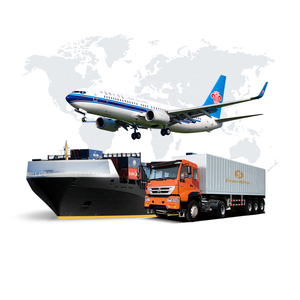
Seamless execution across Air Cargo, Ocean FCL/LCL, Full Truckload (FTL), Less-Than-Truckload (LTL), and Intermodal Rail, giving retail brands complete agility to optimize for speed or cost.
Localized Application Scenarios in Houston & Texas Supply Chain Corridors
Strategic logistics execution tailored to the unique infrastructure of the Port of Houston, George Bush Intercontinental Airport (IAH), and the Texas Triangle distribution network.
1. Port of Houston (Barbours Cut & Bayport Terminals) Port-to-Door Drayage
For international retail suppliers shipping ocean containers into North America, the Port of Houston serves as the primary maritime gateway to the Gulf Coast. BGI provides direct container handling out of Barbours Cut and Bayport Container Terminals. By securing priority drayage routing, our operational team mitigates demurrage and detention fees, moving FCL (Full Container Load) and LCL (Less-Than-Container Load) cargo straight into regional distribution hubs in Katy, Baytown, and North Houston.
Retail goods arriving via ocean freight—ranging from consumer electronics to apparel and home furnishings—are swiftly de-consolidated at local container freight stations (CFS), sorted by SKU, and palletized for immediate cross-docking to major regional distribution centers.
2. Cross-Border Nearshoring & the I-10 / I-45 Freight Corridors
Houston’s geographical positioning makes it an essential node for nearshoring operations moving through Mexico. BGI integrates cross-border truckload services via Laredo and El Paso with local Houston warehousing. Goods manufactured in overseas industrial hubs are imported through DDP (Delivered Duty Paid) protocols, stored in bonded facilities, and dispatched across the Interstate 10 (East-West) and Interstate 45 (North-South) corridors.
This localized network supports fast-turnaround retail fulfillment across the "Texas Triangle" (Houston, Dallas-Fort Worth, Austin-San Antonio), home to over 21 million consumers. By leveraging intermodal rail ramps connected to Union Pacific and BNSF rail lines in Houston, high-volume retail suppliers achieve significant freight savings compared to long-haul trucking alone.
3. Air Cargo Integration via George Bush Intercontinental Airport (IAH)
When supply chain disruptions or rapid retail demand cycles require urgent inventory replenishment, BGI activates expedited air freight solutions terminating at IAH. Our direct relationships with commercial airlines and cargo freighters ensure priority space allocations during peak seasonal rushes (Q3/Q4 retail volume surges). Combined with local hot-shot trucking services, air shipments clear customs within hours of landing and reach retail store shelves or e-commerce fulfillment centers on the exact same day.
Key Logistics Trends Shaping Houston Retail Procurement
Understanding the structural shifts in Gulf Coast trade, ocean carrier routing, and automated warehouse fulfillment.
West Coast to Gulf Coast Diversification
Retail brands are increasingly shifting import allocations away from heavily congested US West Coast ports (Los Angeles/Long Beach) toward the Port of Houston. Expanded Panama Canal locks now accommodate larger container vessels (Neopanamax), allowing direct East Asia to Houston ocean lanes that reduce domestic overland freight costs by up to 28% for Southern and Midwest retail distribution.
Growth of DDP & Turnkey Supplier Logistics
Local Houston buyers are moving away from traditional FOB terms to DDP (Delivered Duty Paid) shipping models. Retail procurement teams prefer overseas suppliers who manage customs clearance, Section 301 tariffs, ISF bonds, and final delivery under a single transparent invoice, transferring transportation risk to licensed forwarders.
Omnichannel & Amazon FBA Cross-Docking
With major e-commerce fulfillment hubs expanding in Greater Houston, retail suppliers require strict compliance with Amazon FBA prep rules, pallet labeling, and appointment booking via CARP. Forwarders must possess direct systems integration to manage real-time inventory visibility and precise delivery windows.
Retail Shipping Mode Comparison Guide
Evaluate transit times, relative cost structures, and operational fit for Houston-bound cargo to select the optimal transportation mode for your inventory.
| Transport Mode | Avg. Transit (China to Houston) | Relative Cost | Best Suited For | Customs & Drayage Requirement |
|---|---|---|---|---|
| Air Express / Direct Air Cargo | 2 – 5 Days | Highest | High-value retail electronics, season launch samples, urgent inventory stock-outs | Fast-track customs clearance at IAH Airport; immediate air courier pickup. |
| Ocean Freight (FCL - Full Container) | 24 – 32 Days (via Panama Canal) | Lowest (Volume) | High-volume retail inventory, bulk manufactured products, heavy merchandise | Pre-filed ISF; ocean drayage booking at Barbours Cut / Bayport terminals. |
| Ocean Freight (LCL - Consolidated) | 28 – 35 Days | Economical (Small Volume) | Mid-sized retail shipments under 15 CBM; multi-supplier consolidation | De-consolidation at Houston CFS warehouse prior to final door delivery. |
| Cross-Border Intermodal / FTL | 3 – 7 Days (Mexico/US) | Moderate | Nearshored retail assembly, components, regional store distribution | Laredo/El Paso border customs clearance; bonded line-haul trucking to Houston. |
Frequently Asked Questions by Houston Retail Buyers
Essential guidance on international shipping protocols, customs clearance, and FMC regulatory standards.
Why should I choose DDP shipping over FOB when importing retail goods to Houston?
Delivered Duty Paid (DDP) places full operational responsibility on the shipping forwarder and seller. All freight charges, ocean transit costs, U.S. Customs duties, harbor maintenance fees (HMF), merchandise processing fees (MPF), and final Houston door drayage are covered under a single unified price. This eliminates unexpected billing surprises, detention penalties, or complex customs hurdles for local buyers.
How does BGI mitigate Port of Houston container congestion and demurrage charges?
We mitigate port fees by maintaining dedicated drayage driver networks, pre-lodging Importer Security Filings (ISF), and utilizing off-dock container yards for rapid container pull-out. Our automated tracking monitors vessel discharge schedules in real time, guaranteeing chassis availability as soon as your container clears Customs at Barbours Cut or Bayport terminals.
What is the difference between FCL and LCL ocean shipping for retail suppliers?
FCL (Full Container Load) reserves a dedicated 20ft, 40ft, or 40ft High-Cube container for your cargo, maximizing security and minimizing handling. It is the most cost-effective option for shipments exceeding 13–15 cubic meters (CBM). LCL (Less-Than-Container Load) consolidates smaller retail shipments with other freight inside a shared container, allowing you to pay only for the exact space (CBM or weight) you occupy.
What documentation is mandatory for importing retail products into the United States?
Standard documentation includes the Commercial Invoice, Itemized Packing List, Ocean Bill of Lading (B/L) or Air Waybill (AWB), and Importer Security Filing (ISF 10+2). Depending on the specific retail commodity, additional clearance documents such as FDA declarations, EPA compliance certs, or CPSC safety certificates may be required. BGI pre-audits all paperwork prior to origin departure.
Is BGI Worldwide Logistics fully licensed by the Federal Maritime Commission?
Yes. BGI Worldwide Logistics operates as an FMC-licensed Ocean Transportation Intermediary (OTI) and NVOCC. We publish our ocean tariffs in strict accord with U.S. federal regulations, providing shippers with legal protections, transparent pricing standards, and complete accountability.
Optimize Your Houston Retail Supply Chain Today
Connect directly with our senior freight forwarding team for customized door-to-door rate estimates, ocean container quotes, or expedited air freight planning.
Send an Inquiry