Featured Freight Services & Intermodal Solutions
Direct ocean, air, and multimodal transport options tailored for China-to-Peru trade lanes with complete DDP/LCL/FCL execution.
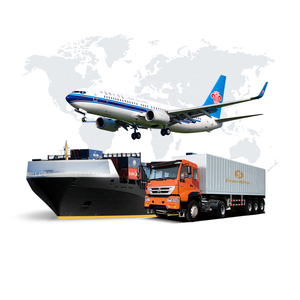
Why Enterprise Shippers Partner With Our Intermodal Network
Combining China’s top manufacturing corridors with specialized South American destination control.
FMC-Licensed NVOCC Authority
Operating under strict Federal Maritime Commission regulations with published tariffs, providing fully legally compliant Ocean Bills of Lading for international commercial banking and credit security.
Chancay & Callao Dedicated Hubs
Direct ocean booking allocations at major Chinese ports (Ningbo, Shanghai, Shenzhen, Qingdao) connecting straight into Peru's premier maritime gateways with bonded warehouse clearance.
End-to-End Intermodal Inland Fleet
Seamless transition from sea container to rail and heavy-haul truck transport across Peru’s challenging topography, servicing Lima, Arequipa, Trujillo, Cusco, and Andean mining sites.
Industry Whitepaper: The Evolution of China-Peru Intermodal Supply Chains
The trade corridor connecting China’s industrial manufacturing centers with South America’s Pacific coast is undergoing a historic structural shift. Importers, project managers, and procurement leads sourcing goods from China to Peru no longer look at freight forwarding as a simple point-to-point booking service. Today, supply chain success requires an integrated, multimodal intermodal strategy capable of absorbing maritime market volatility, navigating complex Peruvian customs regulations (SUNAT/ADUANAS), and executing complex inland transport across diverse geographic zones.
As leading China intermodal freight factories and specialized factory logistical partners serving Peru, our enterprise freight architecture bridges the gap between Chinese factory floors and Peruvian end-destinations. Whether moving heavy industrial equipment for mining operations in the High Andes, telecommunications gear to metropolitan Lima, or agricultural processing machinery to coastal agribusiness hubs, intermodal transport represents the backbone of modern cross-border commerce.
1. The Megapuerto de Chancay Game-Changer for China-Peru Maritime Trade
Historically, ocean cargo moving from major Chinese ports—such as Shanghai, Ningbo-Zhoushan, Shenzhen, and Qingdao—to Peru’s primary gateway at Port of Callao (Puerto del Callao) required transshipment through intermediate hubs in Mexico, Panama, or Central America. This multi-stop ocean routing extended overall transit times to 35–45 days, introduced cargo handling risks, and created friction in schedule reliability.
The development and opening of the mega-port complex at Chancay (Megapuerto de Chancay), positioned approximately 78 kilometers north of Lima, marks a revolutionary inflection point. Engineered specifically to accommodate Ultra Large Container Vessels (ULCVs) carrying up to 18,000–24,000 TEUs, direct express service corridors between China and Chancay cut ocean transit times down to an unprecedented 23 to 28 days.
- Transit Time Reduction: Express direct lines bypass intermediate transshipment hubs, saving up to 12–15 days of total door-to-door transit time.
- Lower Freight Volatility: Direct vessel calls eliminate double-handling and port congestion surcharges associated with legacy transshipment ports.
- Dedicated Intermodal Arteries: High-capacity tunnel networks and direct arterial connections bypass downtown Lima congestion, feeding cargo straight onto the Pan-American Highway (Carretera Panamericana) for nationwide distribution.
Multimodal Logistics Performance & Route Matrix (China to Peru)
Selecting the appropriate transport mode depends heavily on cargo volume, urgency, commodity valuation, and final delivery topography within Peru. The table below outlines our standardized shipping configurations:
| Logistics Mode | Origin Corridors (China) | Entry Port (Peru) | Transit Duration | Optimal Industry Application |
|---|---|---|---|---|
| Direct Ocean FCL (Full Container) | Ningbo, Shanghai, Shenzhen, Qingdao | Chancay / Callao | 23 – 28 Days | Bulk industrial machinery, construction raw materials, retail inventory. |
| Ocean LCL Consolidation | Yiwu, Guangzhou, Shenzhen, Tianjin | Callao Bonded CFS | 28 – 33 Days | SME commercial goods, spare parts, low-volume machinery imports. |
| Over-Dimensional (OOG) / Breakbulk | Shanghai, Tianjin, Zhangjiagang | Callao / Matarani | 30 – 38 Days | Mining excavators, heavy transformers, infrastructure bridge girders. |
| Expedited Multimodal Air Freight | Zhengzhou (CGO), Shanghai (PVG), HKG | Jorge Chávez Int'l (LIM) | 3 – 6 Days | High-value tech components, emergency replacement mining spares, medical supplies. |
| Intermodal Sea-Land DDP | Factory Pickups Nationwide China | Chancay → Inland Truck/Rail | 28 – 35 Days (Door) | Turnkey factory equipment delivered direct to inland Peruvian job sites. |
2. Technical Breakdown: Intermodal Logistics Architecture & Customs Integration
Intermodal freight efficiency relies on unified documentation, seamless equipment repositioning, and pre-cleared customs workflows. Moving goods under a single Through Bill of Lading (TBL) guarantees that liability, tracking, and cost management remain under a single accountable partner from factory dispatch in China to site delivery in Peru.
DDP (Delivered Duty Paid) vs. FOB/CIF in Peru Trade:
While legacy trading often relied on FOB (Free on Board) terms—leaving foreign buyers to independently decipher Peruvian import tax compliance—modern enterprise buyers increasingly request complete DDP Door-to-Door logistics. Under DDP, our local Peruvian operational team handles all clearance obligations with SUNAT (Superintendencia Nacional de Aduanas y de Administración Tributaria), managing:
- IGV (Impuesto General a las Ventas): Standard 16% value-added tax application.
- IPM (Impuesto de Promoción Municipal): 2% municipal promotion tax integration.
- Ad Valorem Customs Tariffs: Applied accurately according to specific HS Code classifications (ranging from 0% to 6% or 11% depending on Free Trade Agreement preferences under the China-Peru FTA).
- Percepción del IGV: Advance VAT perception levies applicable to first-time or specialized commercial importers in Peru.
Localized Peru Application Scenarios
Peru’s unique geography—stretching from arid coastal highways to mountain passes exceeding 4,000 meters in altitude—demands specialized logistics strategies tailored to regional industrial demand.
Southern Andes Mining Corridors
Locations: Arequipa, Moquegua, Cajamarca, Cusco.
Logistics Demand: Heavy-duty intermodal low-boy transport for crushing machinery, flotation cells, and spare parts. Requires specialized axle-load permits and altitude-adapted engine transport fleets navigating mountain passes.
Greater Lima Industrial & Retail Hubs
Locations: Lurín, Villa El Salvador, Callao Bonded Zones.
Logistics Demand: High-frequency LCL consolidation and FCL container de-stuffing. Rapid distribution of consumer electronics, textiles, home goods, and commercial fixtures directly into distribution centers.
Coastal Agricultural Infrastructure
Locations: Ica, Trujillo, Piura, La Libertad.
Logistics Demand: Temperature-controlled reefer container management and factory equipment logistics for agro-export facilities. Moving automated sorting machines, irrigation piping, and cold-storage infrastructure.
3. Emerging Trends in China-Peru Supply Chain Optimization
As trade volumes expand under the upgraded China-Peru Bilateral Free Trade Agreement, several operational trends are redefining competitive advantages for local Peruvian buyers and Chinese exporters:
A. Digitalization and Telemetry Visibility: Enterprise shippers now mandate real-time IoT tracking on ocean containers and intermodal trucks. Our 24/7 visibility portals monitor GPS locations, container ambient temperature (for reefer shipments), and milestone clearance updates at SUNAT control checkpoints.
B. Green Freight Corridors & Carbon Footprint Reduction: Transitioning long-distance highway transport over to intermodal coastal feeder shipping and electrified rail corridors connected to Port Chancay substantially reduces carbon emissions per ton-kilometer, aligning with global ESG standards.
C. Integrated Origin Quality Control & Staging: Leading Peruvian buyers utilize our Chinese warehousing facilities in Ningbo, Yiwu, and Shenzhen to consolidate purchase orders from multiple manufacturing factories into unified FCL containers, eliminating fragmented customs clearance charges upon arrival in Peru.
Frequently Asked Questions (FAQ) • China-Peru Intermodal Logistics
Clear, authoritative answers to common regulatory, cost, and operational questions from Peruvian importers.
Optimize Your China-to-Peru Freight Strategy Today
Speak directly with an FMC-licensed logistics specialist. Get instant access to direct vessel allocations, competitive ocean freight tariffs, and tailored intermodal door-delivery solutions.