Featured Multimodal Shipping & US Customs Solutions
Explore our FMC-licensed freight forwarding and export clearance product suites tailored for seamless import entry into United States ports and inland destinations.
Air & Sea DDP LCL Freight Solution to USA
DDP/DDU Sea Freight Forwarding & Express
Global Door-to-Door Maritime Transport
Fast-Track Ocean Freight with 24-Hour Tracking
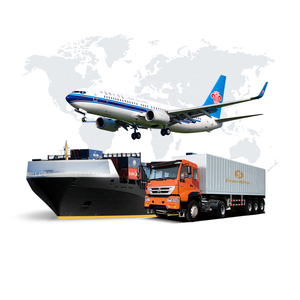
US Amazon FBA Door-to-Door FCL/LCL Service
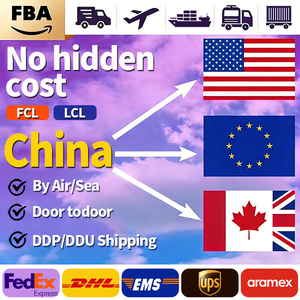
Multimodal DDP Freight & Customs Brokering
Expedited Air Cargo & Priority Clearance
Worldwide Express & Heavy Cargo Forwarder
Navigating US Export Clearance, CBP Compliance & Import Protocols
An authoritative guide for enterprise procurement officers, supply chain directors, and overseas exporters shipping commercial goods into the United States marketplace.
1. CBP Automated Commercial Environment (ACE) Integration
Securing smooth export and import entries requires direct integration with the US Customs and Border Protection (CBP) portal. Electronic data interchange via ACE eliminates manual documentation delays, facilitating rapid release of cargo across US ocean ports and airports.
Proper electronic manifests ensure compliance with anti-terrorism acts and trade security frameworks, protecting shipments from costly hold orders or secondary physical inspections.
2. Strict Importer Security Filing (ISF 10+2) Compliance
For ocean shipments bound for the United States, filing the mandatory ISF 10+2 submission at least 24 hours prior to vessel loading at origin is a non-negotiable legal requirement. Failure to file accurately can trigger liquidated damages of $5,000 per violation from CBP.
Our logistics experts verify container stuffing locations, consolidator data, HTS numbers, and importer of record metrics to ensure zero compliance penalties.
3. HTS Classification & Section 301 Tariff Mitigation
Harmonized Tariff Schedule (HTS) precision directly dictates your duty rate, merchandise processing fees (MPF), and harbor maintenance fees (HMF). With complex Section 301 punitive tariffs impacting goods from key manufacturing regions, accurate classification is vital.
We perform systematic tariff engineering, exploring legal duty avoidance, Section 321 de minimis options, and duty drawback structures to maximize enterprise profitability.
US Entry Port Scenarios & Strategic Inland Logistics Corridors
Different entry gateways across North America present distinct clearance challenges. Below is how our specialized forwarding network manages localized clearance operational flows.
| US Trade Hub / Gateway | Primary Cargo Modes | Customs Clearance Complexity | Localized Clearance & Drayage Strategy |
|---|---|---|---|
| Port of LA & Long Beach (San Pedro Bay) | Ocean FCL, LCL, Transloading | High (PierPass, Clean Truck Fund, Congestion) | Pre-cleared ISF entries with off-dock container yard transloading to avoid demurrage and detention fines. |
| Port of NY & NJ (East Coast Corridor) | Ocean FCL, Breakbulk, RoRo | Medium-High (PGA inspections, FDA food safety) | Direct coordination with regional CBP officers and FDA inspectors at Newark hubs for rapid agricultural/pharma releases. |
| Chicago Intermodal Hub (Midwest Rail) | Rail Intermodal, IPI Containers | Medium (In-Bond Transportation - IT Entries) | Execution of Immediate Transportation (IT) permits allowing goods to move in-bond from coastal ports to Chicago before tax entry. |
| LAX / JFK / ORD International Airports | Expedited Air Cargo, Next-Flight-Out | High (Time-Sensitive, High-Value Verification) | Pre-arrival wheels-up EDI filing allowing instant gate release upon plane touchdown for high-tech components and medical devices. |
| Amazon FBA Nationwide Fulfillment Network | DDP LCL, Floor-Loaded Containers | Medium (Strict Amazon Delivery Windows) | FBA-compliant palletization, CARP appointment scheduling, and custom clearance under unified DDP shipping terms. |
Key Shifts Impacting US Export Suppliers & Importers
Staying ahead of regulatory updates implemented by federal agencies ensures your supply chain remains resilient, compliant, and cost-effective.
Uyghur Forced Labor Prevention Act (UFLPA) Enforcement
CBP has significantly escalated its tracing requirements for raw materials, textiles, polysilicon, and electronics. Exporters must maintain robust, traceable supply chain documentation from raw material origin down to final assembly.
Our compliance auditing helps suppliers construct comprehensive Chain-of-Custody mapping to prevent cargo seizures at US ports of entry.
Type 86 De Minimis & E-Commerce Regulatory Reform
With the surge in direct-to-consumer parcel shipping, CBP Entry Type 86 has faced intense scrutiny. Pending administrative changes aim to tighten informal clearance rules for goods valued under $800.
We assist overseas exporters in transitioning from unvetted informal entry models toward structured, compliant formal entry DDP logistics frameworks.
Nearshoring Expansion via USMCA & Cross-Border Mexico Trade
Manufacturing nearshoring to Mexico has transformed North American logistics channels. Goods crossing via Laredo or El Paso require dual-country export and import clearance under USMCA rules of origin.
We offer seamless cross-border drayage, twin-plant customs warehousing, and bilingual customs compliance management.
Why Top Global Brands Partner with BGI Logistics
We eliminate supply chain friction by combining official maritime licensing, deep regulatory knowledge, and dedicated personal account manager oversight.
FMC-Licensed NVOCC & Published Tariff Integrity
As a Federal Maritime Commission (FMC) licensed Ocean Transportation Intermediary, we operate under strict US federal maritime laws. Our published ocean tariffs protect importers against arbitrary rate spikes and hidden destination charges.
Real People Execution & No Automated Call Queues
Unlike digital-only platforms that bury customer service in automated ticketing queues, BGI assigns a dedicated human logistics specialist to your account. You receive direct phone and email access to experts who own your shipment from origin to final delivery.
Complete End-to-End Multimodal Capabilities
From ocean FCL/LCL and expedited air freight to heavy-haul trucking, domestic LTL, and rail intermodal, we manage all transportation nodes under one master bill of lading, simplifying billing and operational oversight.
Frequently Asked Questions by US Importers & Overseas Suppliers
Clear, authoritative answers regarding US export clearance, customs bonds, tariffs, and shipping mode selection.
Should I ship by air freight or ocean freight for US import entry?
Choosing between air freight and ocean freight depends primarily on your transit timeframe, product value, and total volume. Select air freight when speed, rapid inventory turnaround, or strict production deadlines are paramount; typical airport-to-airport transit from major international hubs to the US takes 1 to 5 days.
Choose ocean freight (FCL or LCL) for heavier, bulkier, or planned inventory replenishment. Ocean transportation offers vastly lower cost per kilogram, though port-to-port transit times range between 14 to 35 days depending on coastal routing (West Coast vs. East Coast via Panama Canal).
What is the technical difference between FCL and LCL ocean freight?
FCL (Full Container Load) reserves an entire 20ft, 40ft, or 40ft High Cube container exclusively for your cargo. FCL is highly economical for cargo volumes exceeding 13–15 cubic meters (CBM), providing faster transit because it avoids consolidation delays and reduces risk of damage.
LCL (Less than Container Load) consolidates your cargo with goods belonging to other shippers into a shared container. You pay strictly for the cubic space occupied, making it cost-effective for smaller volumes under 13 CBM, though it involves additional handling at Container Freight Stations (CFS) during origin loading and destination devanning.
What information is required to request an accurate freight quote and clearance estimate?
To generate an accurate, all-inclusive freight and customs estimate, provide: precise origin pickup address, destination delivery address (identifying if it is a commercial dock, residential address, or Amazon FBA warehouse), full commodity description, 6-digit or 10-digit HTS codes, total gross weight, total volume/dimensions, ready date, agreed Incoterms (e.g., FOB, EXW, DDP), cargo commercial value, and whether the goods are classified as dangerous (hazmat) or require temperature control.
What mandatory documents are required for US import customs clearance?
Standard US customs clearance requires a Commercial Invoice (detailing buyer, seller, HTS code, currency, value), a detailed Packing List (specifying piece count, net/gross weights, dimensions), and a Master/House Bill of Lading (B/L) for ocean freight or Air Waybill (AWB) for air cargo.
Depending on product specifics and Partner Government Agency (PGA) oversight, additional documentation may include: Importer Security Filing (ISF 10+2), Certificate of Origin, FDA Registration/Prior Notice (for foods and medical devices), FCC Form 740 (for radio electronics), EPA declarations, or Safety Data Sheets (SDS) for chemical commodities.
Is BGI Worldwide Logistics officially licensed for US ocean freight forwarding?
Yes. BGI Worldwide Logistics operates as an FMC-licensed Ocean Transportation Intermediary (OTI) functioning as both a licensed Non-Vessel Operating Common Carrier (NVOCC) and an ocean freight forwarder. We maintain legally published tariffs under US Federal Maritime Commission rules, guaranteeing compliance, transparent pricing, and robust contract protection for all importers.
How far in advance should trade show freight be booked for US exhibitions?
For domestic US trade shows, book freight services at least 2 to 3 weeks prior to the advance warehouse receiving window to avoid late surcharges. For international exhibitors shipping booth displays, collateral, and machinery into US exhibition halls, initiate logistics planning 6 to 8 weeks in advance.
This timeline accommodates ocean transit, ATA Carnet temporary duty-free import processing, marshalling yard queuing, and target-date delivery onto the show floor.
Optimize Your US Export Clearance & Global Logistics
Partner with an FMC-licensed freight forwarder that delivers door-to-door control, tariff accuracy, and real-person accountability for every shipment.